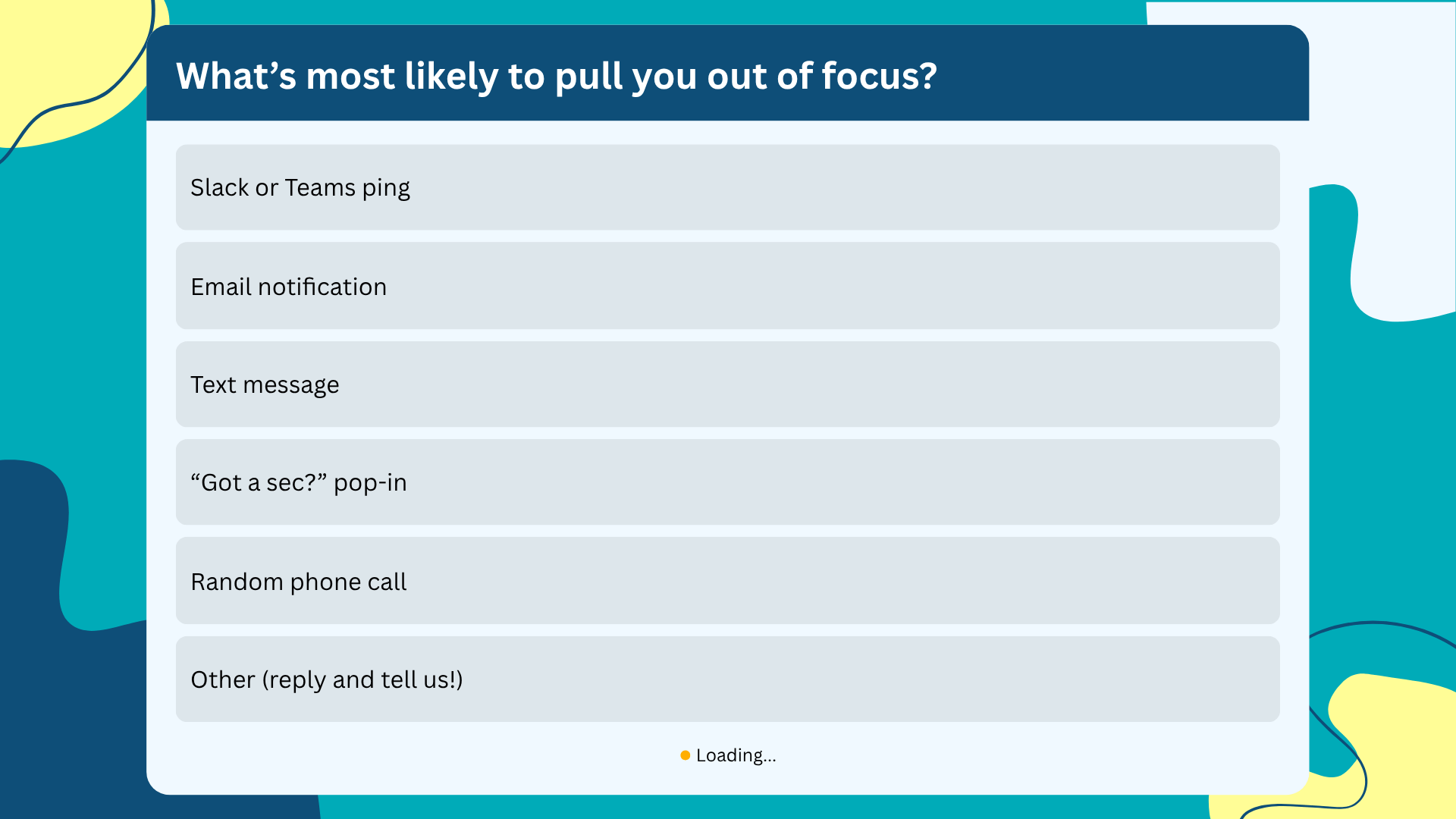
Amanda G. shared this with us recently:
“I get an email from one person, I start working on that. An IM from another comes in, distracts me. Someone calls my phone, I answer. I get a text in the middle of that phone call. The email that was first is then last.”
The result? Everyone gets a slice of your attention, but no one gets the full version (especially not you).
Most of us are drowning in pings, pop-ups, and overlapping priorities. The tech was supposed to streamline things. But without clear norms, every tool becomes one more interruption disguised as urgency.
So let’s give your brain a little buffer. Think of this as a mini comms reset — a way to stop letting incoming messages dictate your entire day.
1. Match the message to the medium
Email is great for summaries or shared doc links. Slack? Good for fast Qs or async check-ins. Video calls? Use them when tone or emotion matters. The problem starts when we treat every tool like it’s for everything. This breakdown can help your team stop misusing channels.
2. Make “timely” less vague
Set expected reply windows by channel. Slack might mean “same day,” but not “right now.” Email? Within 24–48 hours. Shared docs? Feedback by X date. These types of norms help reduce the pressure to always be on—and still keep things moving.
3. Quit the multi-tasking Olympics
Your brain’s not built for 12 open tabs of half-finished convos. Mute non-critical apps during deep work blocks. Disable banners and badges unless they’re mission-critical. Info overload contributes to burnout in 80% of workers. Protect your focus like it pays the bills (because it does!).
4. Create a team-wide cheat sheet
One page. Clear rules. What tool is for what. How fast to respond. Where decisions get documented. It doesn’t need to be fancy, just consistent. Here’s a framework you can adapt to align your internal comms so you’re not piecing together threads from four platforms.
Remember: you’re not a customer service hotline. You don’t need to be available 24/7 to everyone, everywhere.