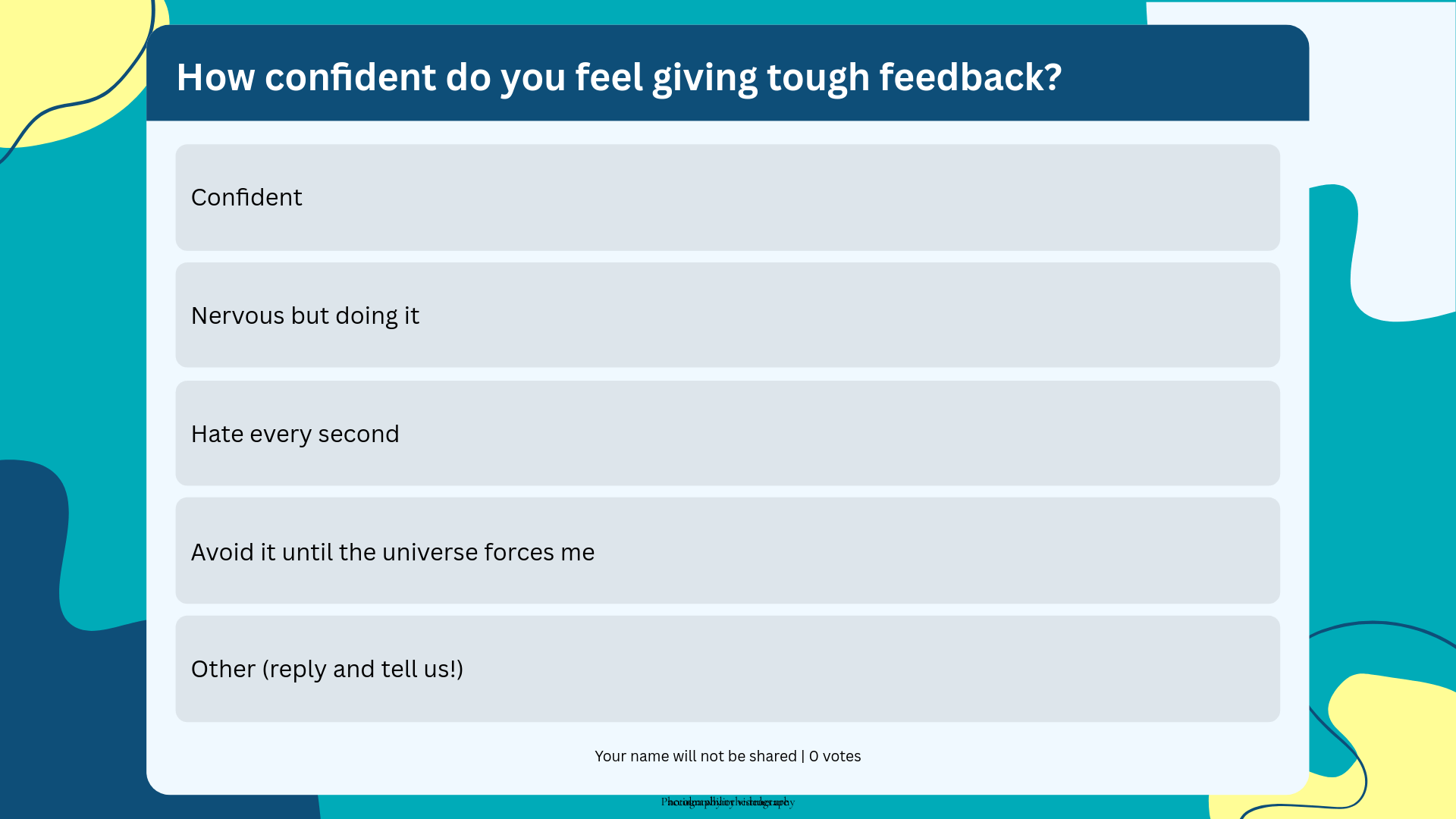
“My biggest hurdle with leadership is negative feedback. I tend to steer away from delivering this until things are too far gone.” — Samantha Cason
Same, Sam. Tough conversations aren’t fun, and most of us would rather eat a soggy salad than tell someone they’re missing the mark.
But the longer you wait, the heavier everything gets for you, for them, and for your whole team.
Here’s how to approach these conversations, with scripts you can actually use.
1. Start With What You’ve Actually Seen
Skip the “I feel like…” language. Stick to the facts so people know exactly what you’re talking about.
Script: “I want to go over a few areas where I’m seeing gaps. Three deliverables were late this quarter, and last month’s client report missed several agreed-on data points.”
Why it helps: it focuses the conversation on reality, not interpretation.
2. Ask for Their POV Before You Problem-Solve
People shut down when they feel talked at. Ask early, and you’ll get way more honesty.
Script: “I’ve shared what I’m seeing. How does this land for you? Anything you’d add from your side?”
Slow down, let them talk, and don’t fill the silence.
3. Figure Out What’s Actually Getting in the Way
Most performance issues aren’t about “effort.” They’re about clarity, bandwidth, skills, or personal stuff no one’s named yet.
Script: “Help me understand what’s getting in your way. Is it workload, unclear expectations, a skill gap, or something else?”
This is where real progress starts.
4. Define What ‘Good’ Looks Like Together
People can’t hit a target they can’t see.
Script: “Before we talk next steps, let’s align on what strong performance looks like in this role. Here’s the standard I’m expecting going forward.”
This prevents future “I didn’t know” moments for both of you.
5. Give Coaching, Not Generic Advice
“Just improve” is not a plan. Tell them how to get there.
Script:
“For the next month, use the project checklist before submitting anything. Build in a 24-hour buffer for review, and let’s do weekly 15-minute check-ins so we can catch issues early.”
Clarity reduces anxiety for them and you.
6. Name Their Strengths (Seriously, Don’t Skip This)
Stay balanced in your positive and negative feedback. This keeps people from walking away thinking you only see the negative.
Script: “You’re genuinely strong at client communication. I want to keep building on that while we tighten the execution side.”
People want to feel seen, strengths included.
7. Remind Them You’re in Their Corner
Hard feedback lands better when it’s paired with belief.
Script: “I’m having this conversation because I know you can turn this around. You’ve shown the potential, now we just need consistency.”
This keeps the door open instead of slamming it shut.
8. Be Clear About Stakes Without Sounding Like HR Doom
No vague warnings. No sugarcoating to “be nice.” Just real talk with care.
Script: “I want to be upfront. If we don’t see real progress next quarter, we may need to move into a more formal process. I want us to avoid that, which is why we’re starting now.”
Or: “With current performance levels, bonus eligibility will be impacted. Improvement between now and review cycles can change that.”
Honesty builds trust, even when it’s uncomfortable.
9. End With a Plan You’ll Both Actually Follow
This is where things fall apart if you’re not intentional.
Script: “Let’s meet in two weeks. Come with a draft plan for how you’ll tackle these areas and what support you need. After that, we’ll review monthly so we both stay accountable.”
Structure keeps momentum alive.
Avoiding tough feedback feels kinder in the moment, but it sets people up to fail.
It creates resentment. It stresses the team. And it often turns something fixable into something final.
Hard conversations don’t make you harsh. They show you care enough to tell the truth early and clearly.
Start sooner. Be specific. Stay human.
Your team will respect you for it.