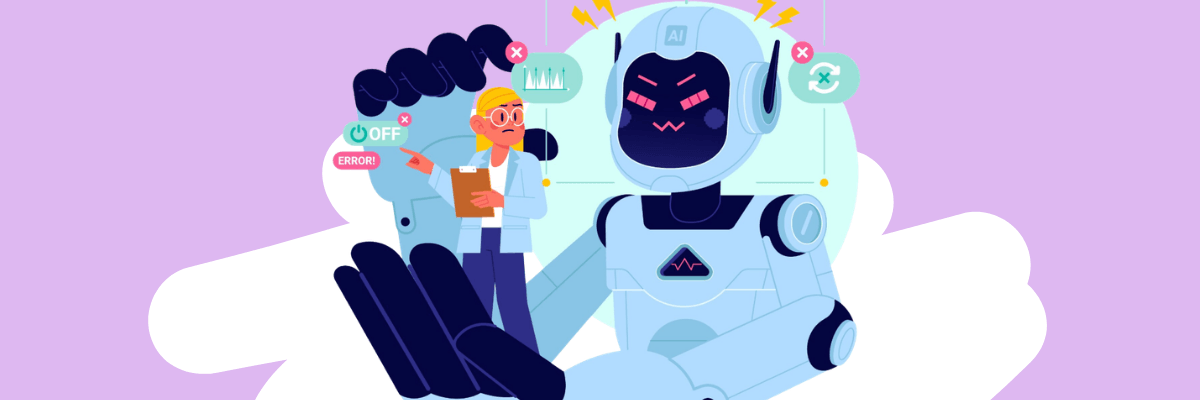
AI is everywhere right now, and so is the anxiety that comes with it. We heard from a lot of you about the fears keeping you up at night: job security, privacy, the planet, being replaced. And instead of dismissing those concerns or hyping them up, we wanted to be honest with you.
The truth is, some of your fears are valid, some are overblown, and most of them make a lot more sense once you understand what’s actually going on. So let’s get into it.
“I’m scared AI is going to take my job”
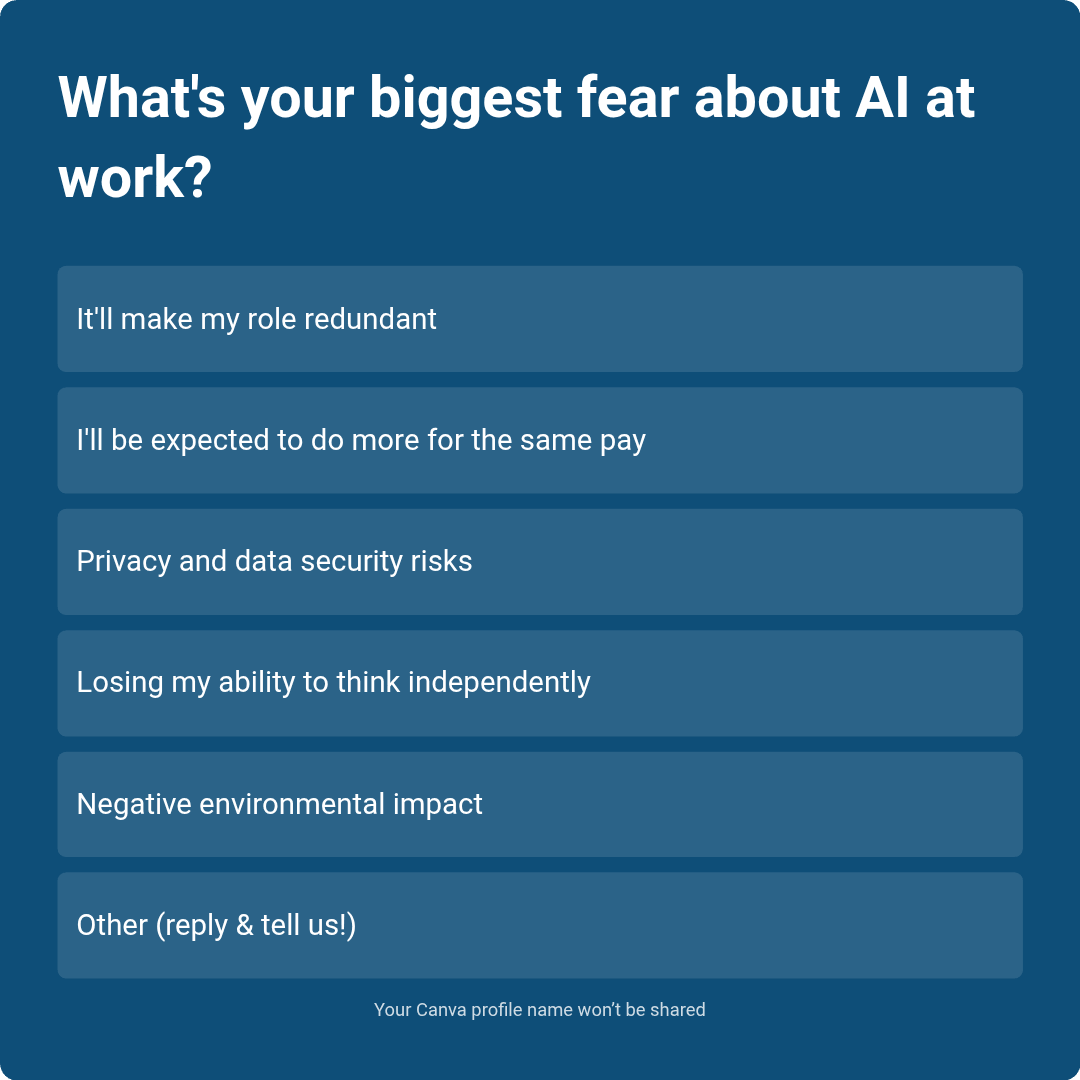
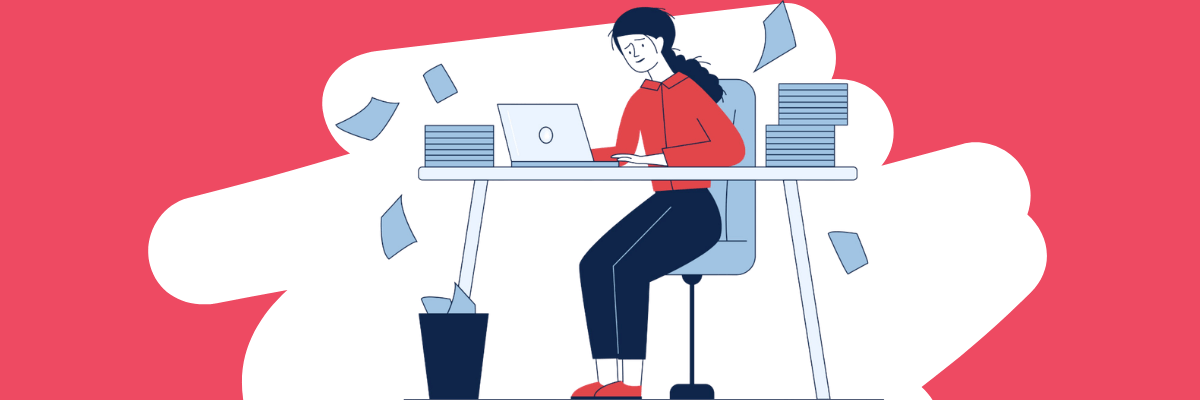
This is the most common fear we heard, and it deserves a real answer. But here’s something that might surprise you: a survey of 6,000 tech professionals found that the number one AI fear isn’t losing your job, it’s being expected to do significantly more work for the same pay. AI raised the bar for output, and for many workers, the reward was just more work.
That said, certain tasks are being automated, and pretending otherwise doesn’t help anyone. What’s also true is that AI tends to change jobs more than eliminate them entirely. The roles that survive are the ones requiring human judgment, emotional intelligence, and relationship-building, things no algorithm has figured out yet.
The best move right now is to get curious rather than defensive. Learn which AI tools exist in your field. Understand what they can and cannot do. The people who struggle most will be the ones who refuse to adapt. Technical skills matter far less than the willingness to keep learning.
“I’m afraid AI will replace me as a person”
This one runs deeper than job security. It’s about identity, relevance, and what it means to be human in a world where machines can write, create, and think.
A fascinating piece of research published in the American Psychologist surveying 10,000 people across 20 countries found that AI fears are deeply tied to psychology, not just economics. People fear AI most in roles they believe require distinctly human traits like warmth, sincerity, and moral judgment.
And that tells us something important: as author Pinar Seyhan Demirdag writes, the human spark — the part that dreams, connects, moves people, and makes moral calls — is not something that can be replicated by an algorithm. Your presence, your story, your specific combination of experience and judgment: those things matter now more than ever, precisely because they are the things AI cannot fake.
“I’m worried about losing my ability to think for myself”
This one came up over and over again in our reader community, and honestly it might be the most underrated concern on this list.
A Reddit thread asking people about their biggest AI fears surfaced this as the top concern: that we’ll slowly stop thinking for ourselves because it’s easier not to. ZDNet calls it “cognitive rot”, the pattern of seeing AI’s output, accepting it without applying judgment, and gradually letting critical thinking atrophy.
The antidote is being intentional about how you use AI. Use it as a thinking partner, not a thinking replacement. Push back on its outputs. Ask it to argue the other side. The people who will thrive are the ones who use AI to sharpen their thinking, not outsource it entirely.
“I’m worried about cybersecurity and privacy threats”
This one is legitimate, and we’re not going to sugarcoat it. A major MIT study surveying 272 AI experts found that AI-enabled cyberattacks ranked among the highest-severity risks over the next five years, with a 12 percent probability of catastrophic outcomes even under best-case mitigation scenarios. The information and finance sectors are considered especially vulnerable.
What does that mean practically? Be intentional about what you share with AI tools. Read the privacy policies on platforms you use. Avoid inputting sensitive personal or company data into public AI tools without understanding where it goes. And stay informed, because the regulatory landscape is moving fast.
The good news is that accountability and oversight are part of the conversation at every level right now, from individual companies to international policy. The risk is real, but so is the response.
“What is AI doing to the environment?”
AI systems require enormous computing power to train and run. That computing power requires data centers. Those data centers consume significant energy and water. The same MIT expert survey flagged environmental harm as one of the risks maintaining a 12 percent probability of catastrophic outcomes even with mitigation efforts.
The balanced view: technology companies are also investing heavily in renewable energy to power those data centers, and AI itself is being used to optimize energy systems and accelerate climate research. The environmental cost is real. So is the potential for AI to be part of the solution.
So what do we actually do with all of this?
Fear makes sense. AI is moving fast, the stakes are high, and nobody has a perfect crystal ball on where this goes. But living inside that fear without taking action doesn’t protect anyone. It just keeps us stuck while the world moves around us.
Stay informed. Stay adaptable. Protect your data. Keep thinking for yourself. And remember that the qualities that make you irreplaceable like your judgment, your humanity, and your relationships, are the exact things AI will never be able to replicate.
The future belongs to the people who stay curious enough to figure out how to work with the tools.



 Upcoming Events
 Work Wisdom of the Week: “Busy doesn’t equal effective. When priorities pile up, don’t speed up, simplify. Focus on what matters most and execute with excellence. Because high-quality work scales. Low-quality work compounds problems.”