Some nights I just sit still and watch them.
My daughter, 11. My son, 9. I trace their little faces with my eyes and try to freeze time. I know I can’t, but my heart tries to anyway.
Because I love being their mom. I love the way they still reach for me, how they run to me first, how I am wrapped into every part of their world. I don’t want this to end. I don’t want to let go.
I come from a culture where we don’t really have to. We stay close. We live near our parents. We raise our children together, across generations. Family isn’t a season; it’s forever. That’s how I was raised. That’s what love looked like.
And that’s what I imagined for my life too.
But living in a place where independence is expected (where 18 often means goodbye) I feel something heavy sitting on my chest. I see other parents preparing for the launch, and I ache. Because I don’t want them to go far. I want them close. I want to help raise their children one day, the way I always assumed I would. I want to be there—not just in spirit, but in the room.
This attachment I feel, it’s not unhealthy. It’s not about control. It’s about love. It’s about legacy. It’s about the way I was mothered.
My own mom was my best friend. The kind of mom who was always there. I never had to question if I was loved. I never felt alone. Losing her to cancer changed me in a way nothing else ever has. That deep connection, and that deep grief, is part of why I hold my kids so close. I know what it means to have that kind of bond. And I know what it feels like to lose it.
Maybe that’s why I struggle to stay fully present. Instead of soaking in the moment, I sometimes jump ahead. I picture the day they leave. I wonder what it will feel like to wake up to a quiet house. I already miss them, and they haven’t even gone.
And when I ask myself why this hurts so much, the answer is clear:
Because being their mom has given me a sense of purpose like nothing else ever has.
Because their love makes me feel whole.
So what happens when they grow up?
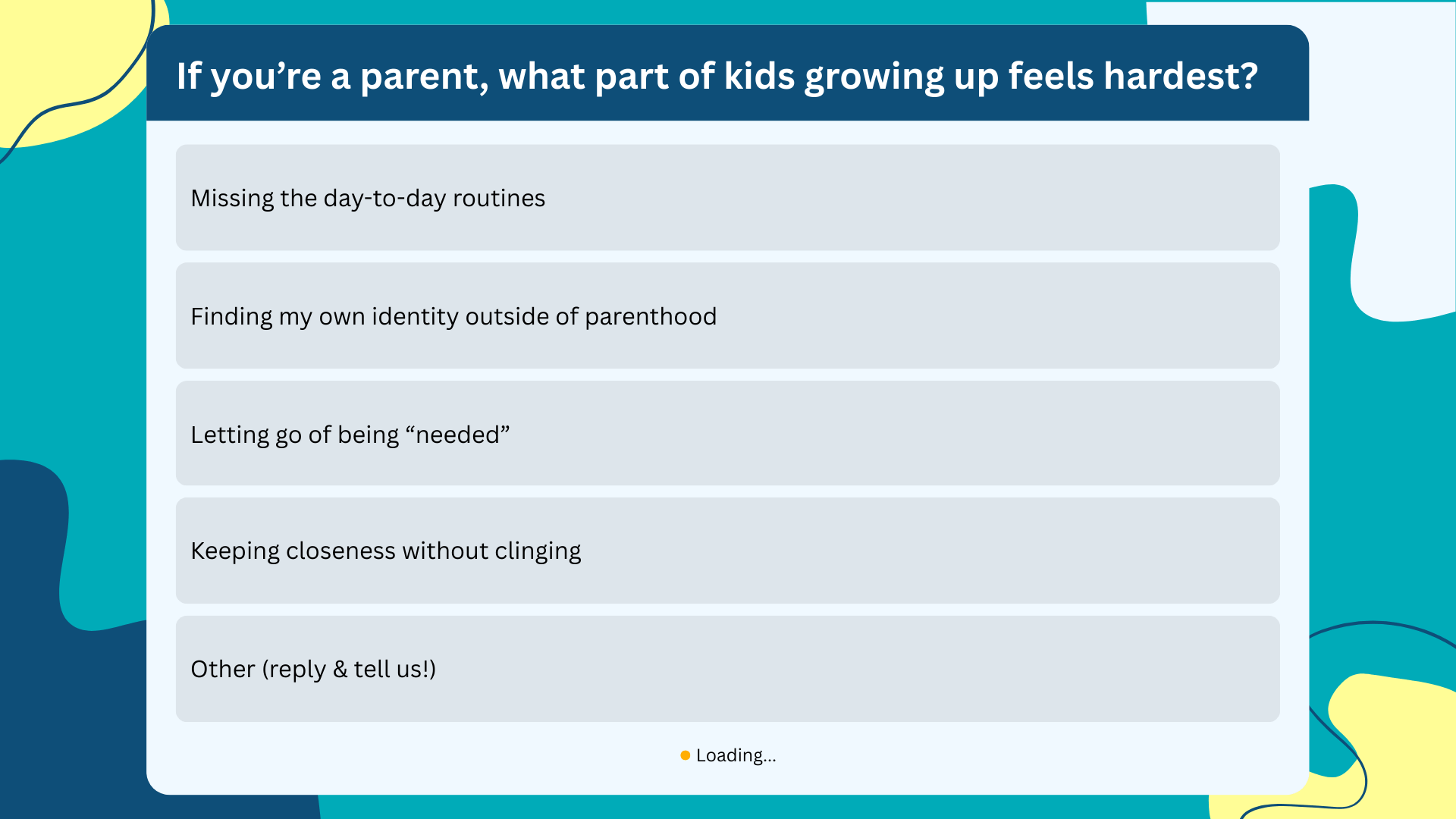
Not just logistically, but emotionally. What happens when the day-to-day routines I’ve built my life around begin to fade? When the lunch boxes go away, the hand-holding stops, and the house grows quieter? What happens when they don’t need me in the same way they do now…not because anything is wrong, but simply because they’re growing, as they should?
Who am I then?
I’m not trying to replace motherhood. I’m not looking to distract myself from it or run from the change. Being their mom has always felt like the most natural thing in the world. It’s never been something I wanted to balance with a million other things; it’s been my joy, my center, my calling. But I can feel this chapter slowly shifting, and I want to be emotionally prepared for that shift. I want to walk into it with love, not fear.
Even as they grow into their own lives, I want to stay connected in ways that still feel meaningful. I want to be someone they turn to, not out of habit, but out of trust. I want to remain close, even if the closeness looks different. Not hovering, not holding on too tight, just present, steady, and available. The kind of presence that doesn’t demand anything, but always welcomes everything.
Maybe you’ve felt this, too.
Maybe your kids are already in high school or college. Maybe you’ve had that moment, walking through a quiet house and realizing the noise, the mess, the constant need…was something sacred. Something you now miss more than you expected.
Maybe you’ve found yourself wondering: How do I stay close without clinging? How do I support their independence without losing the parts of myself that have always felt most at home in this role?
If you’ve been through this shift—or if you’re right in the middle of it—I’d love to hear how you moved through it. What helped you redefine your purpose when the day-to-day parenting started to change? How did you stay rooted in love while giving your kids the space to grow?