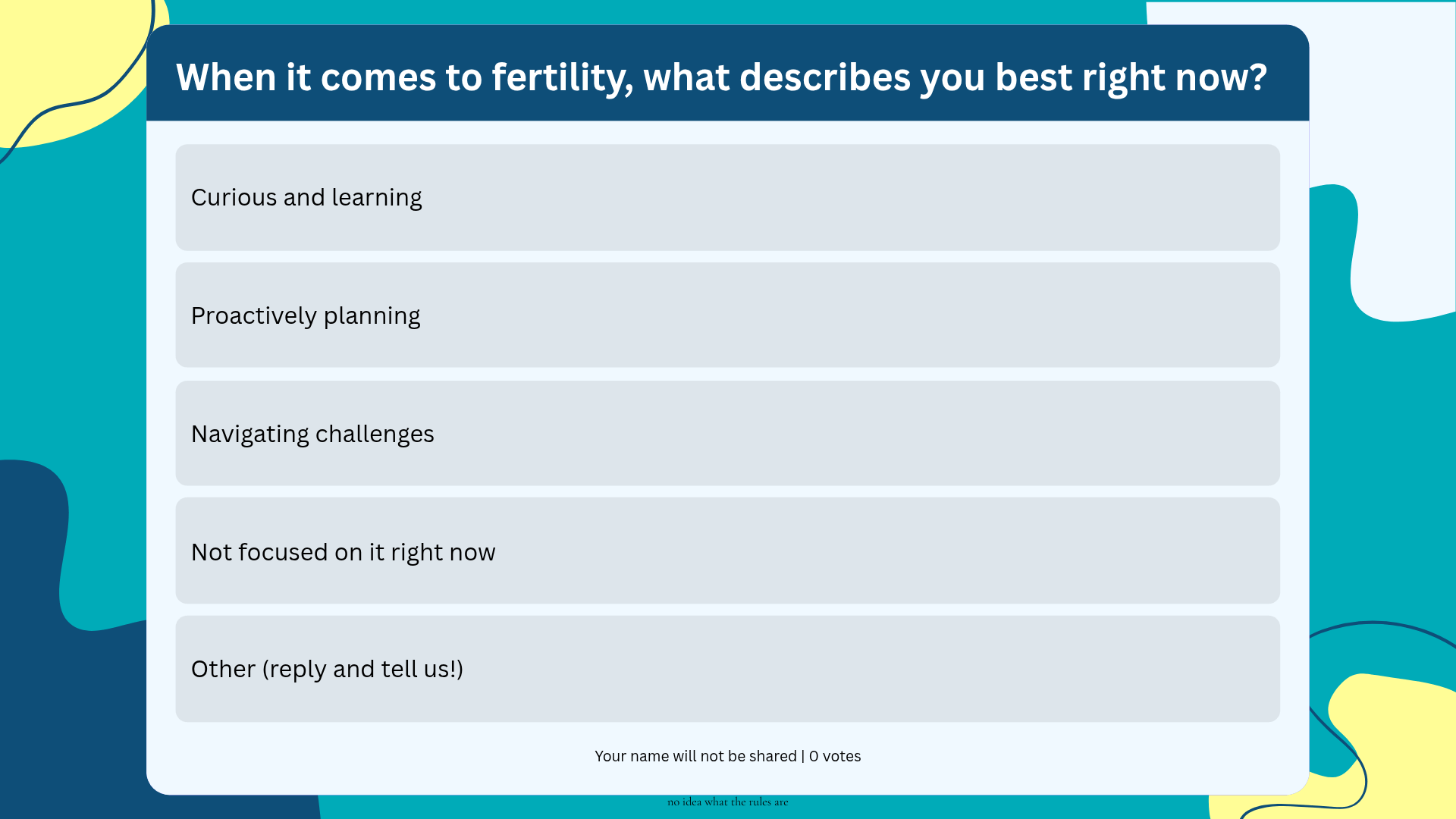
October is National Infertility Awareness Month, and we (Joanna & Thania) wanted to talk about something that’s still whispered about too often: fertility.
We’re at different stages of life but on the same path: pursuing egg and embryo freezing. Not because we’re struggling, but because we want to be proactive about our fertility and the futures we hope to build.
We’re both healthy, wellness-minded women who trust our bodies. But we also trust science. We’ve seen friends face fertility challenges, and we’ve experienced loss directly or through people we love. It’s opened our eyes to how common (and how complicated) fertility can be, even when everything “looks fine.”
A Little Context
Most people think of IVF and egg freezing as tools for women delaying motherhood, but that’s not how it started.
IVF was first developed to help cancer patients preserve fertility before chemotherapy (treatment that often caused infertility). Over time, those same medical advances became available to more people. Today, they give anyone the ability to understand and plan for their reproductive future.
That’s where we are: grateful to have options, and time to act on them.
Joanna’s Story
I got married at 32, and honestly, I thought I’d have at least one baby by now.
But life had other plans. My husband and I wanted time to just be married: to travel, grow our business, and enjoy our life together before kids. Then COVID hit, and those two lockdown years pushed our timeline back.
Now I’m 36, and I’m taking IVF stimulation meds and doing my egg retrieval this week (it was actually yesterday!). My doctor recommended I consider freezing eggs or creating embryos if I want more than one child and we’re still planning to wait a bit. The research supported it: fertility changes faster than most of us realize, especially after 35.
For me, this isn’t about fear. It’s about choice. I don’t love the term “insurance policy,” but that’s essentially what it is — an investment in our future family. I’m grateful that we can afford to do this, that I have access to the information early enough, and that science gives me the ability to plan on my own terms.
My hope is that more women feel empowered to have these conversations with their doctors sooner, not because there’s pressure to rush, but because knowing your options changes everything. I should be finished with my first cycle and get results by mid Nov, so I’ll be sharing more then.
Thania’s Story
I’m turning 37 in November, single, and realistically looking at having kids around 40. I feel confident and at peace with my body’s capabilities. I’m a big believer in the mind-body connection, and I trust that my body will be ready when the time comes. But I want more than one child, and doing IVF is about insurance that it will happen. I don’t want to look back at 42 filled with regret that I didn’t take action when I could. I myself have experienced a type of miscarriage, and while my pregnancy wasn’t planned, the aftermath of what it did to my body and hormones was eye-opening. It gave me deep empathy for those who have experienced all kinds of infertility, pregnancy loss, and the physical and emotional toll these journeys take. The financial reality for me? I’m self-employed without access to an employer-sponsored plan. I’ll need to take out a loan and pay in installments. It’s not cheap, but it’s an investment in my future that feels worth it.
Why We’re Sharing This
Infertility isn’t just about loss, it’s about awareness, education, and proactive care. Yet many of us only learn about these things when it’s already hard to make informed choices.
There’s still a huge gap in how we talk about fertility, especially among women who aren’t actively trying to conceive. No one teaches us about egg quality, hormone testing, or how fertility actually changes over time (at least not until we’re in the thick of it).
We’re sharing our stories because we wish more women did. The women who’ve been open about their own journeys gave us the knowledge and courage to take charge of ours.
We’re hopeful for continued medical advances, for better access and affordability, and for a cultural shift that normalizes these conversations. Fertility isn’t just a women’s issue, it’s a life issue.
To anyone navigating infertility, IVF, or pregnancy loss: we see you. You’re not alone. The more we talk about fertility in all its forms—prevention, planning, preservation—the more power we give each other to make decisions with confidence, compassion, and community.
— Joanna & Thania (TA Team)