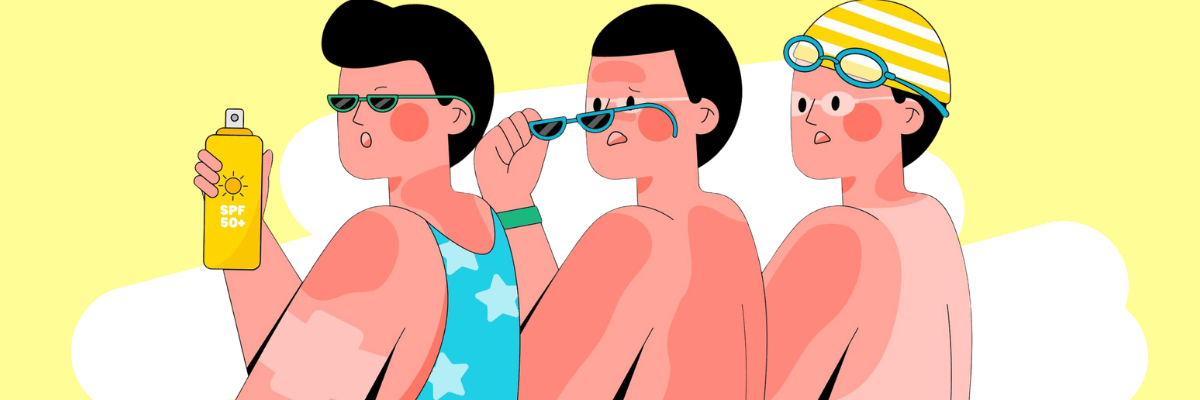
I showed up to a charity event last week and came home with the most embarrassing sunburn. I didn’t even think to put it on; it just wasn’t part of my mental checklist for that kind of event. I’m a Latina with a lot of melanin and a good base tan, and applying SPF isn’t always top of mind when I’m not planning extended time in the sun. SPF 15 on a regular day, SPF 50 when I’m at the beach actively trying to tan my butt off. Otherwise? I lean into the idea that some direct sun without sunscreen has real benefits.
But the sunburn sent me down a rabbit hole, because I’ve been noticing there’s a lot of conflicting noise around sunscreen right now — some people saying it’s toxic, others saying skipping it is reckless. I wanted to actually figure out where the truth is, so here’s what I found.
The “sunscreen is toxic” conversation has real science behind it
Sunscreen doesn’t cause cancer (the evidence doesn’t support that). The real worry is specific chemical ingredients and whether they’re safe to absorb into your body.
The FDA has flagged 12 common chemical sunscreen ingredients (including oxybenzone, avobenzone, homosalate, and octinoxate) as not yet “generally recognized as safe and effective.” That doesn’t mean they’re banned, but it means manufacturers haven’t submitted the safety data to prove they’re fine. The CDC found oxybenzone in the urine of over 90% of people tested, and a 2025 review noted concerns about its link to reproductive harm. Oxybenzone is now banned from sale in Hawaii, Palau, and Thailand over reef damage.
Of the full sunscreen ingredient library, only two have been FDA-recognized as safe and effective without reservations: zinc oxide and titanium dioxide. Both mineral, and the ones that leave the white cast.
Is getting some direct sun without sunscreen actually okay?
For me personally, yes, in moderation because melanin functions as a natural sunscreen. Darker skin has a built-in SPF equivalent of about 13, which provides meaningful protection for short exposures. And direct sunlight is how your body produces vitamin D, a nutrient that supports your immune system, bone health, and more. Sunscreen, even when applied correctly, reduces that production.
The British Skin Foundation recommends 25–40 minutes of unprotected sun exposure for people with darker skin tones to get adequate vitamin D. For lighter skin, it’s 10–15 minutes. After that window, protection matters because melanin is not a substitute for sunscreen on extended exposure, and skin cancer affects people of all skin tones (just gets diagnosed later in darker skin, which is its own problem).
So the hybrid approach isn’t wrong. A short daily window of direct sun, then SPF for anything longer. The mistake is treating melanin like a full shield and skipping protection entirely, which is exactly what I did at that charity event.
How to pick sunscreen that isn’t full of stuff you don’t want
The short answer: go mineral, look for zinc oxide and/or titanium dioxide as the active ingredients, and verify the rest of the label.
A few things that actually help:
- Check EWG’s sunscreen database. The Environmental Working Group reviews thousands of sunscreens for safety every year. In their 2025 guide, only about 1 in 4 met basic safety standards. The EWG Verified seal is a reliable shortcut: Best daily SPFs + Best recreational SPFs + Best Kid/Baby SPFs
- Don’t trust “reef-safe” on the label. That term is completely unregulated; a 2020 analysis found nearly half of all sunscreens labeled reef-safe actually failed NOAA’s environmental standards. Check the ingredients yourself. If it lists oxybenzone, octinoxate, or octocrylene, it’s not reef-safe, whatever the label says.
- Avoid spray and powder formulas with titanium dioxide. Titanium dioxide is safe on skin, but the International Agency for Research on Cancer classifies it as a possible carcinogen when inhaled, so the spray and powder versions are a different risk profile.
- Broad-spectrum zinc oxide is your best all-around bet. It covers both UVA and UVB, it’s FDA-approved as safe, it doesn’t absorb into your bloodstream, and it won’t kill the coral reef. The white cast issue is real, but tinted formulas and newer mineral sunscreens have gotten significantly better.
A few brands that consistently rate well with EWG: Thinksport, ATTITUDE Mineral, and 4ocean Reef Safe.
‘It depends’ is the takeaway here
Some direct sun is fine, especially for those of us with more melanin who need more of it to produce vitamin D. The mistake is treating “I probably won’t burn” as the only reason sunscreen exists; UV damage accumulates without you feeling it, and skin cancer doesn’t discriminate by skin tone.
For what you do put on: ditch the chemical filters and go mineral. Zinc oxide. Read the ingredient list. Don’t let a pretty “reef-safe” label do your homework for you.
And, unlike me, remember to apply it before the event!

Thania (TA Content Mgr)
This article is for informational purposes only and is not medical advice. Consult a dermatologist for guidance specific to your skin.





 Upcoming Events