October is National ADHD Awareness Month, so let’s talk about something people love to criticize: “You make ADHD your whole identity.”
Well, yes. Because it’s the actual genetic makeup of my brain.
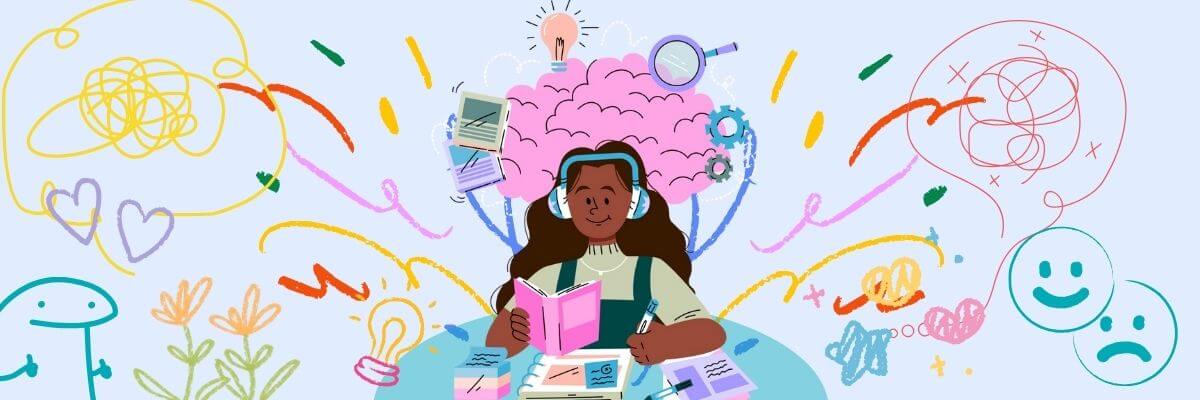
The executive function—you know, the part that allows you to either DO or NOT do things— of the brain is affected. Meaning every action, thought, and decision I make daily is impacted by this ADHD thing.
So basically, yes, a lot of my personality and identity revolves around my brain’s chemistry.
ADHD Is My Superpower
There are so many cool things about my ADHD. ADHD allows me to hyperfocus and become an expert on things in a 24-hour period that a non-ADHD person wouldn’t be able to do. I can digest massive amounts of information, synthesize it, and make it relevant in a short amount of time.
I can help you solve problems like it’s nothing. I can exert endless amounts of energy on things I’m passionate about. I can know a little bit about a million topics and find ways to connect all of them in any given situation. I’ll remember the tiniest detail you told me eight years ago.
But There Are Also Daily Challenges
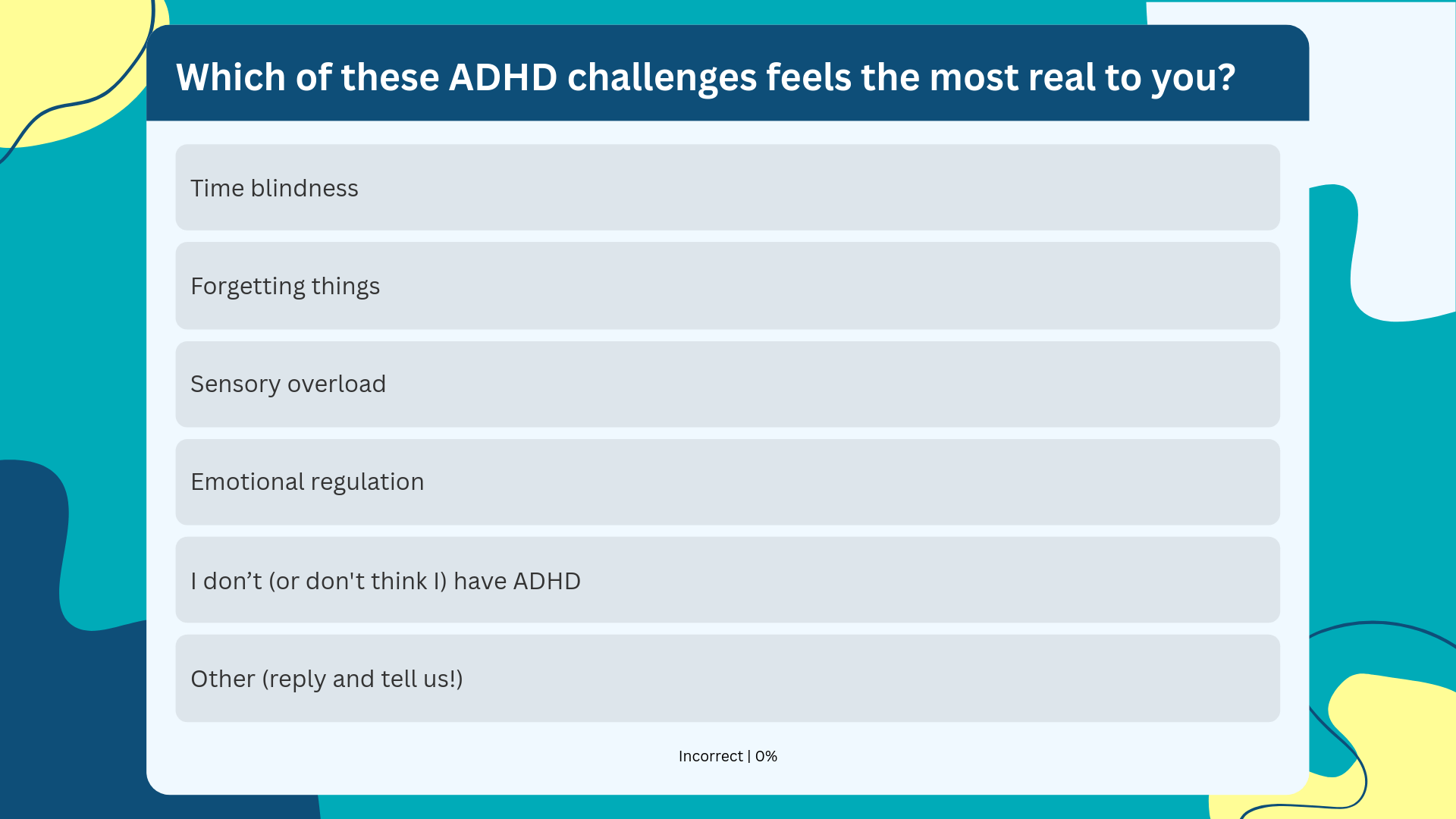
Time blindness: Is that shower going to take me 5 minutes or 55 minutes? We’ll never know.
Forgetting things: I’ll get distracted by our amazing conversation and leave my purse behind at the bar. But I also forget complete conversations if they’re uninteresting because instead of listening, my mind wanders. But if I’m really into a topic, I’ll remember every single word they said (hyperfocus). So you see, it’s not a memory issue, it’s an attention issue.
Sensory overload: Can we please turn off the bright light in my face, and the blaring TV, and the three people all talking at once, while the dog is barking and the microwave is beeping? I can’t concentrate on what you’re saying with all that in the background.
Emotional regulation: Oh, cool, you cancelled at the last minute, and I spent all day preparing for this one event, and now I’m really frustrated by your lack of consideration…but I’ll never say it out loud. I’ll just feel it in my body for the next hour and not know why I’m so agitated.
Spatial issues: I run into everything. Okay, maybe not everything, but I’m always ready to run into everything. So I’ll likely have random bruises here and there. And when I successfully avoid something, I’ll make quirky noises like “aha!“, almost like “you didn’t get me, you stupid couch corner!”
The Systems That Keep Me Functional
Messiness management: I’m actually really clean and like a clean house. However, if there’s too much clutter or not enough systems in place, it’s easy for my brain to ignore piles of clothes and objects in weird places. It’s got to do with impulsivity and time blindness. My brain prioritizes the “right now,” so it’s likely that I’ve got more pressing things going on and will get to that load of laundry later.
As a result, I keep a minimalist home where everything has a designated place. When things don’t get put back into their respective spots, it bothers me. Not because I’m OCD about cleanliness, but because I know how disruptive clutter is to my environment and therefore my brain.
Processing delays: I regularly say “what?” or “huh?” when someone asks a question. As soon as they start repeating it, I interrupt and start answering. It’s like my brain takes an extra second to process what they just said.
Built-in systems: Instead of frequently checking to make sure I have essentials, I have systems for everything. I always say “phone, keys, wallet, watch” when I leave the house. At work, I always start with a daily to-do list and put it into my Google calendar so it reminds me at the top of each hour.
Energy patterns: I have exponential amounts of energy for things that excite me. Put me at a concert or weekend activity with some of my favorite people, and I can stay out till all hours of the night — yes, even sober. It’s not that I like the late night per se; it’s that I love the company I’m with and the memories being created. It’s such a dopamine hit for my brain.
Why Understanding ADHD Matters for Everyone
When people say “you make ADHD your whole identity” like it’s a bad thing, they’re missing the point. Understanding and talking about how my brain works isn’t limiting—it’s liberating. It helps me build systems that work, communicate my needs clearly, and find people who appreciate how my mind operates.
But here’s what’s in it for you: when you understand how ADHD brains work, you become someone we can actually be ourselves around.
You’ll know that when I interrupt you mid-sentence, I’m not being rude; my brain just processed what you said and got excited to respond. When I need to fidget during meetings or take notes on everything, it’s how I focus.
You’ll understand that my “all or nothing” energy isn’t flakiness. When I’m hyperfocused on a project, I can be your secret weapon. When I’m overstimulated, I need space, not judgment. When I ask you to repeat something, it’s not because I wasn’t listening. It’s because my brain needed that extra beat to catch up.
The people who get this become our safe spaces. They’re the colleagues who text important details instead of just mentioning them in passing. They’re the friends who plan quieter hangouts when we’re overwhelmed. They’re the managers who let us work in whatever way gets results, even if it looks different from everyone else.
Empathy and compassion go a long way. Not just in making us feel seen, but in creating environments where our ADHD brains can actually thrive.