I manage my family’s duplex, and for the last two years we couldn’t build ANYTHING on it because of a parcel problem with the city. When my great-grandmother wrote her trust decades ago, one tiny 10-by-10 piece of land got added at the last minute and never made it into the documents. The attorney didn’t know it existed, so nobody caught it. Twenty-something years later, it became our problem.
That one missing detail has cost us at least $5K in attorney fees and around $30K in potential rent plus the special kind of tension that shows up when your father and aunt own property together and yours truly is the trustee 🫠.
Even with that mistake, the trust did its job. It protected the property, it let us apply for exemptions instead of drowning in property tax, and it kept generational wealth inside the family. An imperfect plan still beat having no plan at all.
It has nothing to do with how rich you are
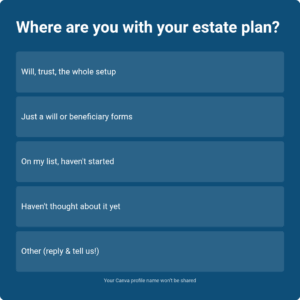
More than half of Americans don’t have any estate planning documents, usually because they procrastinate or don’t know where to start. A lot of us assume this stuff is for old people or rich people. But if you own anything at all, a car, a savings account, a pet you’d want looked after, or you love anyone who’d have to clean up after you, you need a plan.
I know it sounds morbid, but it’s genuinely one of the most loving gifts you can leave the people who outlive you. There is nothing more precious than handing the people you love the time and freedom to simply grieve, instead of being buried in paperwork and court dates while they’re already heartbroken.
You really don’t have to overthink it
Start by getting clear on the basics: who you’d want to inherit what, who you trust to make decisions if you can’t, a rough list of your assets and debts, and your health-care wishes. If the whole trust-versus-will question makes your eyes glaze over, here’s a plain-English breakdown.
✅ I made a checklist of everything to gather so you’re not staring at a blank page.
AI prompt to try today
Open ChatGPT or Claude and paste: “Act as an estate planning guide. Ask me one question at a time about my family, my assets, and my wishes, then draft a plain-English outline of what my will, trust, powers of attorney, and health-care directive should each cover, plus a checklist of what to bring to a lawyer.”
📝 I’ve created a fuller version of this prompt right here.
That gets you organized. To make it official, find a good estate planning attorney, and know that you don’t need a big-name firm. Look for a solo or boutique practice where estate planning is at least half of what they do, and ask for a flat fee so there are no billing surprises. Word of mouth works, and Reddit is surprisingly great for local recommendations too.
If the full package feels like too much right now, ask about phasing it: start with a will, power of attorney, and health-care directive, then add the trust down the road.
I’m not a lawyer, just a trustee who has lived the cost of a small oversight. Put this on the calendar this month.
Future-you, and everyone who loves you, will be so glad you did.

Thania (TA Content Mgr)

 ✅ Today’s Checklist: