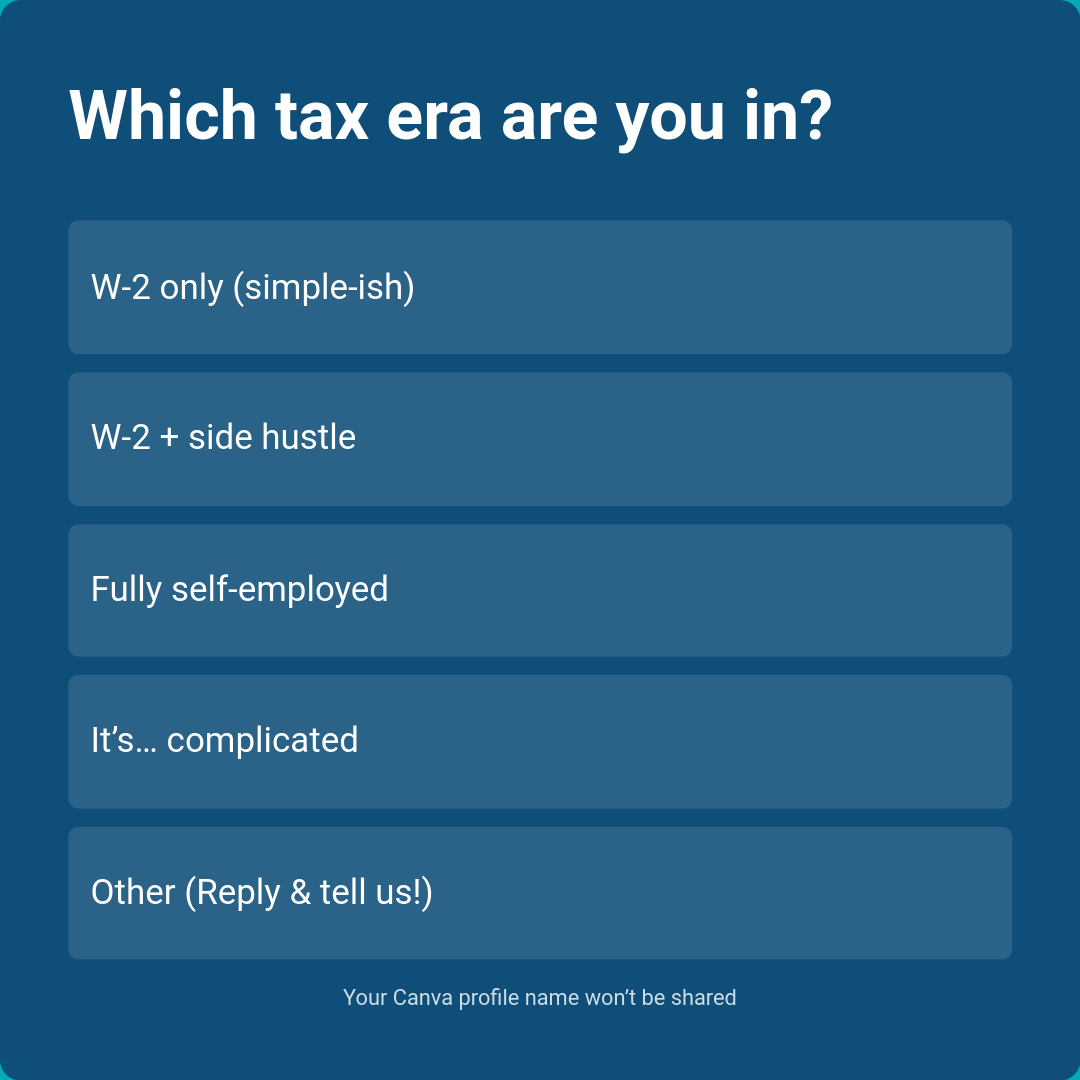
As a girly who has been just a W-2 employee, then a W-2 + side hustle girl, and now a full-blown entrepreneur, I can tell you I’ve experienced the entire spectrum of tax season.
I’ve had years where filing felt like checking a box.
I’ve also had years where I was frantically searching my inbox at 11:47pm at night for receipts and whispering, “Why didn’t I open a separate account like an adult?”
I’ve learned the trick to stress-free, low-drama tax season is two things: preparation and good tools.
So here’s what you can do right now before April, and what you should know heading into 2026.
What You Can Do Right Now (Before April)
First, breathe. You still have time.
When you’re a W-2
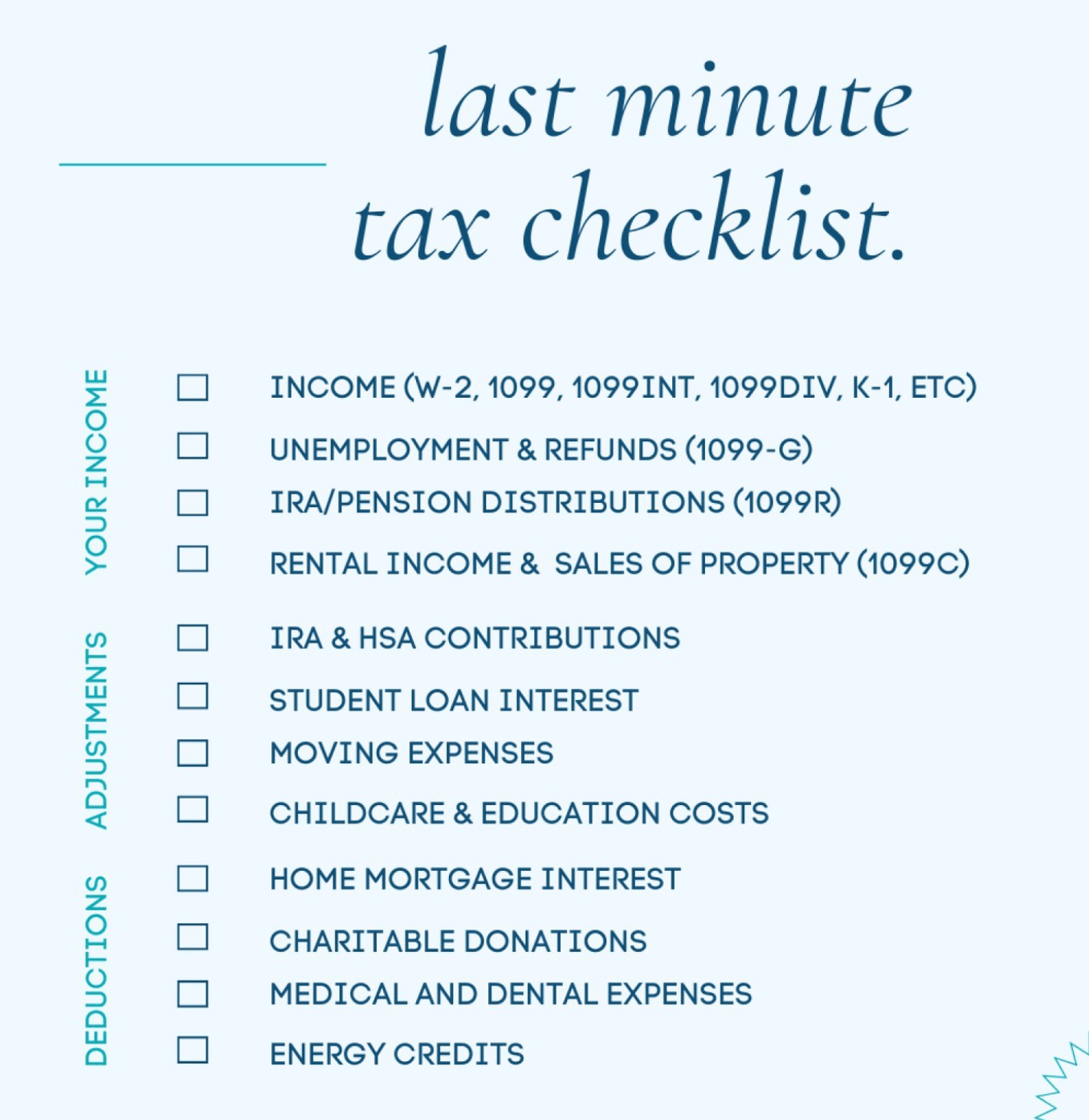
If you’re a straight W-2 employee, taxes are usually checklist energy. You gather: W-2s, 1099s for any side gigs, donation receipts, mortgage interest, student loan interest, HSA or retirement contributions.
It’s mostly organization. The overwhelm usually comes from procrastination, not complexity. See our checklist article here.
When you add a side hustle
If you have freelance income or a side hustle, now we’re talking strategy:
- Separate business expenses from personal
- Pull mileage logs
- Review all subscriptions, software, supplies, and contractor payments
- Double-check digital payment platforms (Venmo, Stripe, PayPal, etc.)
If you’ve been messy? It’s okay. Just clean it up now.
When you’re fully entrepreneurial
Once revenue grows, taxes shift from filing to strategy. This is where you consider S-Corp elections, payroll structure, quarterly estimated payments, retirement strategy for self-employed income, and legitimate write-off optimization.
Taxes become less about paperwork and more about systems. You need a separate credit card or bank account, clean expense tracking, mileage logs, and a basic understanding of deductions.
This is also the stage where you ask yourself: do I need bookkeeping software? Should I be talking to a tax pro? Am I operating like a business or like a hobby?
Tools that made my life easier
TaxSlayer: Easy to use and cheaper than the big ones. I used this back when I was W-2 + 1099.
Relay Bank: Separate buckets to track spending across accounts (checking, savings, taxes, contractors). It emails you when you need to upload a receipt.
Wave Accounting: software that tracks expenses automatically. Systems reduce anxiety. Guessing creates it.
What’s shifting for 2026?
The One Big Beautiful Bill has created some big tax changes you should know about.
- New deduction for seniors (65+): If you’re 65 or older, you might qualify for up to $6,000 (individual) or $12,000 (joint) in additional deductions. This phases out if your income is over $75,000 for single filers or $150,000 for joint filers.
- Car loan interest deduction: If you financed a new car in 2025 and it was assembled in the U.S., you can deduct up to $10,000 of car loan interest. This is temporary (2025-2028) and phases out for higher earners.
- SALT deduction cap increased: The State and Local Tax deduction cap jumped to $40,000 in 2025, up from $10,000. Huge for high-tax states like New York, New Jersey, and California.
- Charitable donations for standard deduction filers: Starting in 2026, cash donations to nonprofits will be deductible up to $2,000 for joint filers and $1,000 for single filers—even if you take the standard deduction.
- Higher standard deduction: For 2026, it’s $32,200 for married couples filing jointly and $16,100 for single taxpayers.
- Retirement contribution limits increased: 401(k) limits rise to $24,500 in 2026. Catch-up for 50+ is now $8,000. IRA limit increases to $7,500 with a $1,100 catch-up.
Plus, the IRS is tightening reporting on digital payments. More platforms are sending transaction data automatically. Enforcement around business deductions is getting stricter, not looser.
Translation? Sloppiness will cost you more than ever. Clean books are no longer optional if you’re self-employed.
Shift your mindset around it
I used to think tax season was something that “happened” to me. Now I see it as a reflection of how well I ran my year.
If you want a smoother April:
- Open the separate account
- Track expenses monthly
- Schedule quarterly check-ins with yourself
- Build retirement contributions into your calendar
- Stop mixing business with personal spending
Tax season doesn’t have to bring the drama. Invest a little time in it now so 2027 you is grateful and gets to enjoy April stress free.

Thania (TA Content Mgr)







 Upcoming Events