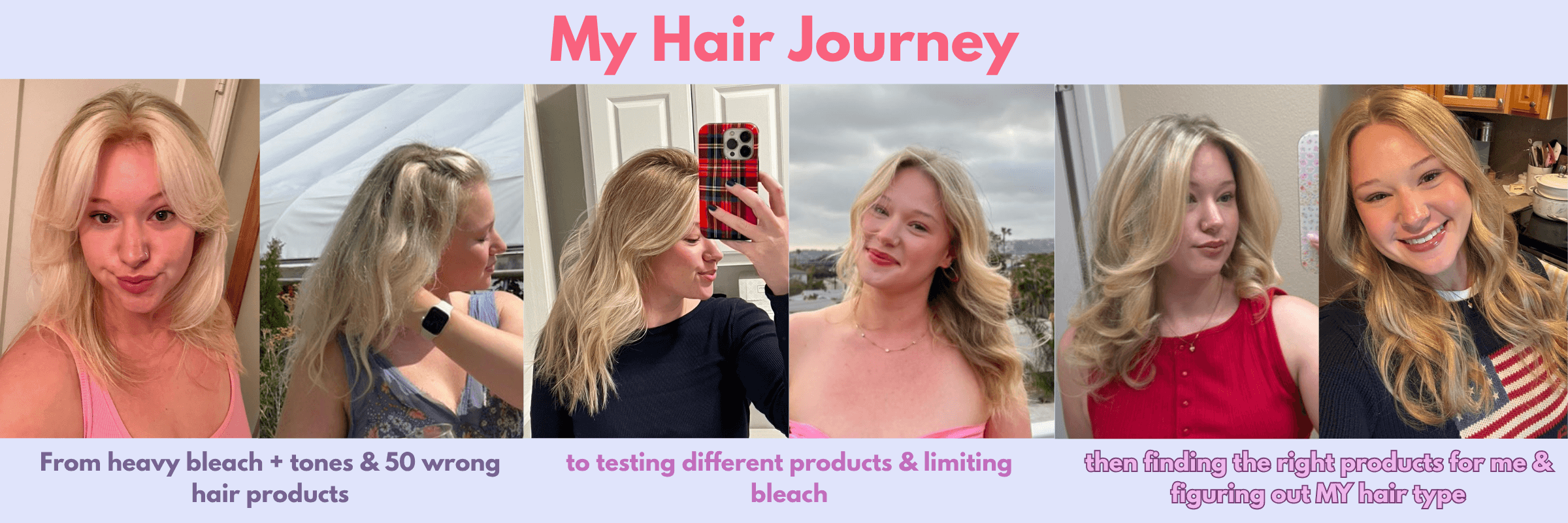
You’ve bought the curl cream because your favorite influencer swears by it. The volumizing shampoo because your coworker’s hair looked amazing that one time. The leave-in conditioner because it was on sale.
None of it worked the way it was supposed to because none of it was actually for your hair.
Hair typing isn’t a TikTok trend. Stylists have used a version of this system for decades, and once you know your number, shopping for products stops being a guessing game.
The 4 hair types
Hair falls into four broad categories, each with sub-types (A, B, C) based on how tight the pattern gets.
Most people are a blend. You might be 2B at the crown and 2C underneath.
Two things that matter more than your type
Ask any stylist why 2 people with the exact same curl pattern can need completely different products, and the answer rarely has anything to do with type. It usually comes down to 2 things: porosity and strand thickness.
Porosity is how well your hair absorbs and holds moisture.
Low porosity hair resists product. It sits on top and never sinks in. High porosity hair soaks it up fast and loses it just as fast.
Quick test: drop a clean strand in a glass of water. Sinks fast, high porosity. Floats, low porosity.
Strand thickness is a different measurement entirely, and it’s the one people mix up most. You can have fine strands but a lot of them (thick density, fine texture), or thick individual strands but not many (thin density, coarse texture).
Fine strands weigh down and go greasy fast under too much product, no matter how much hair you actually have. Coarse strands can handle richer formulas and often need them.
What to actually buy
Fine strands: look for words like “volumizing” or “weightless” on the label. Living Proof’s Full Density shampoo/conditioner and Olaplex No. 4 shampoo and No. 5 conditioner both cleanse without coating the strand.
My personal fav for my fine hair is OUAI’s Fine Hair shampoo and conditioner. Skip anything labeled “intense moisture,” that’s built for a different hair type entirely.
Coarse or thick strands: richer is right here. Briogeo’s Don’t Despair Repair mask or Shea Moisture’s Manuka Honey line can handle regular use without weighing down.
Low porosity: heat helps product actually absorb instead of sitting on top. Apply conditioner or masks after a warm shower when the cuticle is more open, and look for lighter, water-based formulas rather than heavy butters that just sit on the surface.
High porosity: seal in what you just added. A leave-in like Mielle’s Pomegranate & Honey, followed by a lightweight oil (argan or grapeseed), helps hold moisture in instead of losing it within the hour.
Curl types (2-4), the LOC method: liquid first (a water-based leave-in like Kinky-Curly Knot Today), oil second to seal (jojoba or argan or blend, like Olaplex No. 7), cream or gel third to define (Rizos Curls Defining Cream or their Strong Hold Gel for firmer hold on tighter patterns).
One rule holds across every type: sulfates are powerful cleansing agents that strip natural oils. They clear out sebum, dirt, and product buildup effectively, but that same strong detergent action can leave hair and scalp drier than they need to be.
A sulfate-free option, like Briogeo’s Scalp Revival Pre-Wash Oil or QUAI’s Detox Shampoo, still cleans without the strip.
You don’t need twelve products, just the two or three that match your type, your porosity, and how much your strands can actually hold.
For the full breakdown—from figuring out your type to building the right routine—we’ve got you covered here.

Cameron (TA Team, Newsletter Operations)






 Upcoming Events