In eleven months, I lost my dad, my mom, and my grandma. My dad passed in April 2019, my mom that November, my grandma the following February. My mom was my best friend, and I’d already spent years before that as my parents’ caretaker, on top of raising toddlers and teaching full-time. By the time I actually needed to grieve, I didn’t know how to fit it in.
I’m not going to pretend I handled it well. I cried in my car in the school parking lot more mornings than I can count, then walked in and taught a full day like nothing had happened. I kept the happy face on for my kids at home and my students at school, because that’s what felt required of me at the time.
The person who saw through that front, every single time, was my principal. She was, hands down, the most empathetic manager I’ve ever had. She never made me explain myself or prove I was struggling before she’d help. She’d take one look at me in the hallway and just say, go home. No paperwork, no justification needed, just permission to fall apart on my own time. That kind of support is why I got through it at all.
August 30 is National Grief Awareness Day, and it’s a good prompt to ask what your own workplace actually does for people going through this. Most companies have a bereavement policy.
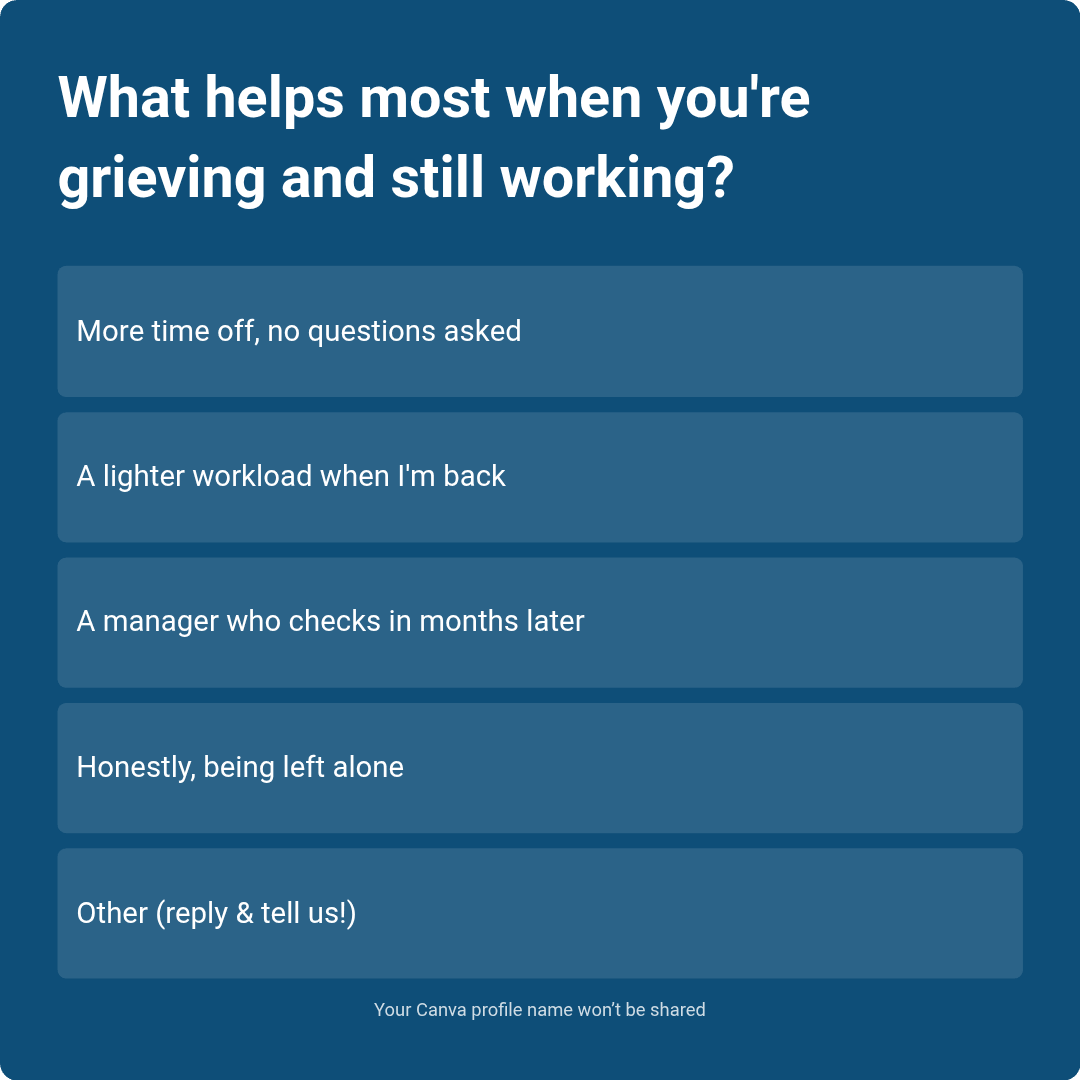
Fewer have a culture that makes it safe to use it, or to keep needing support long after the standard three days run out. A few things that would have helped me. Some are policy, some are just what one person can do for another, and you don’t need a title for those.
1. Extend bereavement leave past the standard days. Grief doesn’t run on that clock. If your policy caps out fast, build in a path to extend it, whether that’s unused PTO, an unpaid extension without penalty, or a manager’s discretion to make an exception.
2. Train managers to notice before anyone asks. Not everyone will ask for help directly. Some will show up anyway and try to push through, the way I did. Give managers the language and the permission to say “go home” before someone has to.
3. Offer flexibility that outlasts the leave. A lighter workload, remote days, or a smaller meeting schedule for a few weeks can matter more than the time off did, especially once someone’s back at their desk and still not okay.
4. Point people to your EAP, out loud. Grief counseling shouldn’t be a buried line in a benefits packet. Mention it directly when someone on your team experiences a loss.
5. Check in after the funeral, not just before it. The support people need in month four or month ten looks nothing like what they need in week one. Put a reminder on the calendar for the anniversary, the holidays, the days that get harder without warning.
6. Count grief that doesn’t come with a funeral. Caretaking, miscarriage, pet loss, and anticipatory grief while someone is still sick are all real, and treating only certain losses as “legitimate” leaves people carrying a lot alone.
I still think about my principal sending me home. She didn’t have a policy for exactly what I was going through. She just paid attention, and she acted on it. That’s really the whole ask.

Kristel (TA Marketing Ops)







 Upcoming Events