

✅ Today’s Checklist:
- Scripts to brag about your work without the cringe
- Why you keep jumping in (and how to stop)
- Two boundary lines worth keeping on a sticky note
🤔 Riddle me this: I cover most of the Earth, hide countless mysteries, and never stay still for long. (Find the answer on the bottom).
QUICK LINKS
📌 Want recognition that people actually notice? These visible wall and board ideas make it stick.
🚫 Saying no at work (without guilt or drama), with clear examples you can borrow.
📅 A landmark study just made the case for a 4-day workweek (and we’re here for it).
🪞 The guide to finding your color season so your wardrobe actually flatters you.
OWN YOUR WINS

How to Brag About Your Work Without Sounding Like a Jerk
Most high performers have the same problem: they do great work and then say nothing about it. They assume the work speaks for itself, that the right people are paying attention, that staying heads-down and delivering is enough. Then, performance review season rolls around and they’re frustrated that their contributions aren’t being recognized the way they deserve.
Sharing your wins is how you make sure the people around you have accurate information about what you are actually contributing. Bragging only feels gross when it is about ego, and this is not that.
The trick is knowing how to do it in a way that feels natural, not performative. Here are the scripts to get you there.
After you shared an idea the team ran with
You pitched something, people liked it, and now it’s in motion. Don’t let that moment pass without naming your contribution.
Say this: “Really glad this idea got traction. I’ve been thinking about [problem it solves] for a while and I’m excited to see where it goes. Happy to stay close to it as we move forward.”
After you delivered a project successfully
Don’t just close out the project and move on. Take a moment to note what you actually pulled off.
Say this: “Wanted to flag that [project] is officially wrapped. I’m proud of how it came together, especially [specific challenge you navigated]. The outcome was [result] and I think it sets us up well for [what comes next].”
After you saved the company money through negotiating or research
This one has a number attached to it, which makes it even easier to share. Numbers do the bragging for you.
Say this: “I wanted to share a quick win: I did some research on our contract with [vendor] and was able to negotiate us down to [amount], saving us [X]. Happy to apply the same approach to any other vendor relationships if it would be helpful.”
After you mentored a direct report or colleague to a win
Leadership shows up in how you develop the people around you. Make sure that’s visible too.
Say this: “Really proud of [person] for [what they accomplished]. I worked closely with them on [specific piece of it] and it’s been great to watch them step up. I think they’re ready to take on more of this going forward.”
After you did something above your job description
Going beyond your role is worth naming, not because you’re keeping score, but because it signals the kind of contributor you are.
Say this: “I want to flag that I took on [task or responsibility] this week, which is a bit outside my usual scope. I’m glad I did it because [outcome or reason it mattered], and I’m happy to keep owning it if that’s useful.”
After you did something that wasn’t technically anyone’s job
Coordinating the team happy hour, ordering the birthday cake, organizing the offsite logistics: these things don’t show up in anyone’s job description but they make the team run better. They’re worth a light mention.
Say this: “I pulled together [thing] for the team this week. I know it’s a small thing but I love doing it and I’m happy to keep being the person who makes sure we actually celebrate each other and show up for each other outside of the work.”
Where and how to actually say these things
Having the script is one thing. Knowing when and where to deploy it matters too.
In your one-on-ones, build a brief wins update into every meeting rather than waiting to be asked. “I wanted to flag something I’m proud of this week” is a perfectly natural way to open it. Your manager can only advocate for you with what they know, so make their job easier.
In team meetings, you don’t need to dominate the room. A quick project update framed around what you specifically drove is enough. “Quick update on [project]: we hit milestone this week. The piece I’m most proud of is [your contribution]” lands without feeling like a performance.
In writing, Slack and email are actually the easiest places to advocate for yourself because you have time to think about how you frame things. A brief “flagging a small win” message or a project recap that names your specific role takes two minutes and creates a paper trail of your contributions that people can actually refer back to.
The mindset shift that makes all of this easier
Bragging feels uncomfortable when it’s about ego. It feels completely different when you reframe it as giving your team and your manager accurate information. Your manager can only advocate for you in rooms you’re not in if they know what you’ve been doing. Your teammates can only collaborate with you effectively if they understand what you bring to the table.
Sharing your work is a service to the people around you. Once that clicks, the scripts start to feel a lot more natural.
CONFLICT CONTROL

One Tense Interaction Can Derail a Team’s Whole Day
A customer’s voice climbs, a coworker snaps in a meeting, and the room shifts. Most people freeze.
Left alone, one tense exchange can eat an afternoon, rattle a team, and follow people home. Telling employees to “stay professional” and hoping it sticks isn’t a plan.
Traliant’s De-Escalation Training hands your team a real playbook for those moments: scenario-based practice they can use on the next hard call, whether they work in an office, in retail, in hospitality, or on the floor.
Your team will learn how to:
- Catch escalation early, before it stalls the work
- Stay calm and steady under pressure
- Steer a heated conversation toward resolution
- Know when to step back and bring in support
BIGGEST CHALLENGE

How to Stop Jumping In And Start Actually Leading
“My biggest challenge is pulling team members out of the weeds. When they become so focused on non material details, I don’t trust their ability to prioritize and get things done, so I jump in.” — Melissa S.
The real challenge here might not be the one you think it is. When a manager keeps feeling the need to jump in and save the day, there are usually two explanations (and naming the right one changes everything):
Either the team is genuinely struggling, or the manager has a trust problem.
Figuring out which one applies to you is the most important thing you can do right now.
Ask yourself the harder question first
Why do you not trust them? And if you hired them knowing they could not be trusted to prioritize correctly, why did you hire them?
These are not comfortable questions, but they’re necessary. If your team is consistently dropping the ball, that is a hiring problem, a training problem, or a morale problem. If your team is doing the job reasonably well but not exactly how you would do it, that is a you problem.
Both are fixable, but they require very different solutions.
Check if you are leading or just managing
There is a meaningful difference between the two. Managing sounds like “do this, do that.” Leading sounds like “here is how we approach this, here is why it matters, and if you have a better way I genuinely want to hear it.”
Anyone can give directives. A leader builds other leaders. The goal is not a waterfall of instructions flowing down from you. The goal is a team that is empowered enough to make good decisions without you in the room.
If your team keeps getting lost in the weeds, ask yourself whether your expectations, priorities, and reasoning are actually clear to them. Sometimes people focus on the wrong things because nobody told them what right looks like.
Build visibility and accountability into the workflow
If trust is the issue, the solution is transparency. Create a shared dashboard, document, or project tracker where everyone can see what is being worked on, what the priority level is, and what the deadlines are. When priorities are visible to the whole team and tied to clear reasoning, there is far less room for people to wander into non-material details.
When someone misses the mark, there needs to be a conversation about it. Not a punishment, but an honest accountability moment. What happened, why did it happen, and what changes going forward. That feedback loop is what builds a high performing team over time.
Know the difference between a standard and a preference
This one’s critical. If you’re jumping in because something genuinely matters to the quality, efficiency, or outcome of the work, that is a legitimate standard worth communicating clearly.
If you’re jumping in because someone used a different color on the spreadsheet or formatted something slightly differently than you would have, that’s micromanagement. Micromanagement deteriorates morale and trust, the very things you need your team to have in order to perform well without you hovering.
Ask your team how you are doing
This might feel uncomfortable, but it’s one of the most powerful things a leader can do. Ask your direct reports for honest feedback on your leadership. Where are the expectations unclear? Where do they feel unsupported? Where do they feel micromanaged?
The answers will tell you more than any outside assessment ever could.
A team that trusts their leader does not need to be pulled out of the weeds. They already know what matters and why.
LOW-LIFT BEAUTY

61% of You Just Want an Easy Everyday Lift. Same.
We asked what you actually want from makeup, and 61% of you said the same thing: an easy everyday lift, in and out. No twenty-minute routine, no drawer full of products you used once.
Jones Road makes that the default. It’s makeup built for real life, not ring lights or people with a spare hour before work.
Its cult-favorite Miracle Balm gives skin a healthy, lit-from-within glow that never looks glittery or caked on. People notice something looks good. They just can’t figure out what you did. Best part: it looks like skin, the kind that says you’ve been drinking water and minding your business.
Right now, our code ASSIST gets you a free mascara at checkout.
👉 Shop Jones Road and use code ASSIST for a free mascara.
P.S. New to the line? The build-your-own mini set is the low-commitment way in.
STAFF PICKS
Stuff We’re Loving This Week
📆 Get the reporting framework for showing AI ROI on your team for free. Join this free event on 6/17.
🧹 Dusting feels slightly less offensive once a microfiber feather duster set arrives.
👕 A linen shirt that looks three times more expensive than it is.
💪 The quick-dry gym towels that wick sweat fast, skip the funky smell, and come five to a pastel set.
JUST FOR FUN

COMMUNITY
 Upcoming Events
- Wed 6/17 @ 11AM PT: Co-working Session (SGS Only* | Join the waitlist)
- Thurs 6/18 @ 4PM PT: Craft Night (SGS Only* | Join the waitlist)
- Tues 6/23 @ 7PM PT: Virtual Happy Hour (SGS Only* | Join the waitlist)
* Smart Girl Society is our private community for women who want deeper conversations, accountability, and tools that actually make life easier. Join the waitlist to get in the next round.
 Work Wisdom of the Week:
“My two favorite quotes: ‘If you don’t prioritize your life, someone else will.’ and ‘No is a complete sentence.” — Barbara Grealish (Fractional EA)


SPILL THE TEA
Take Our Poll
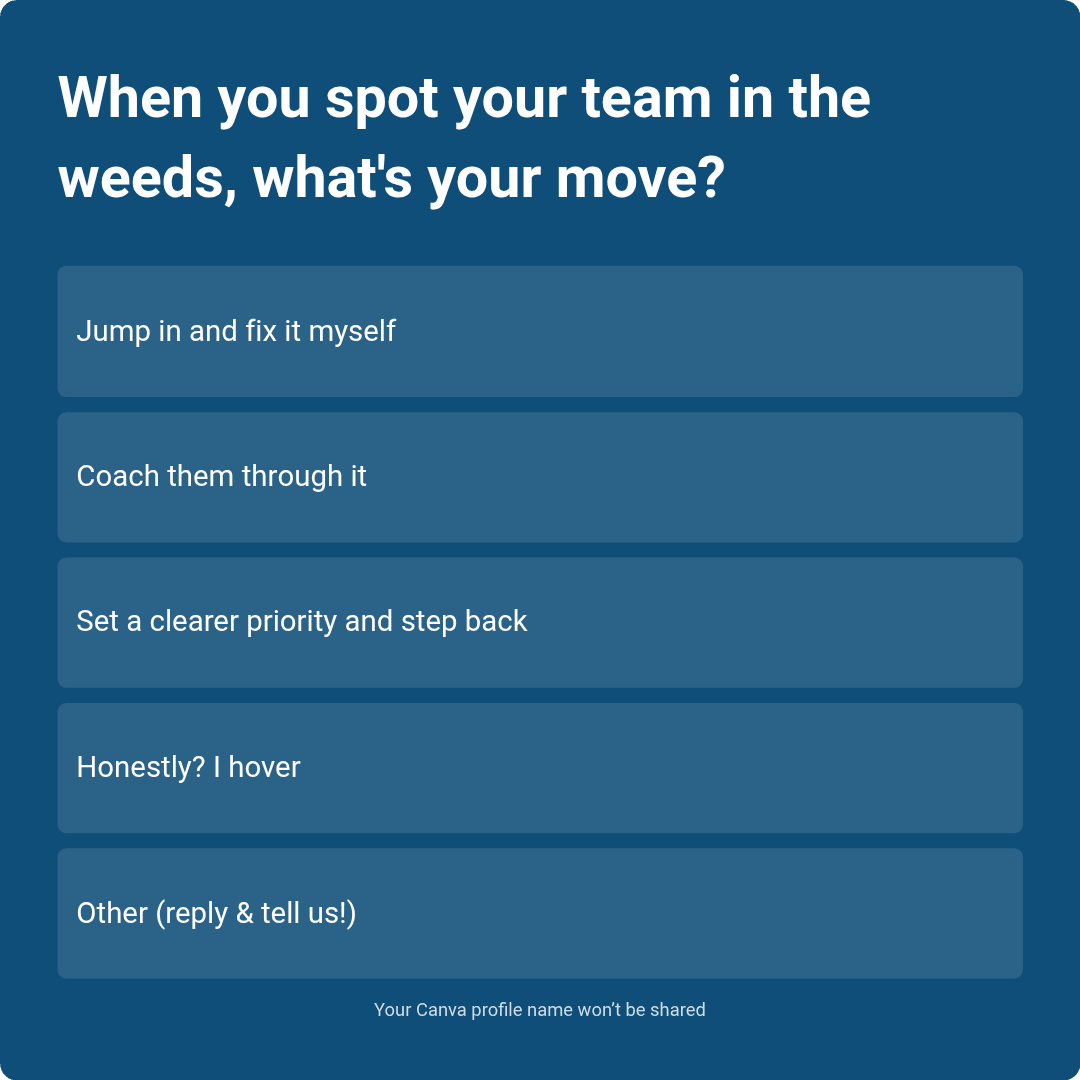
Have more feedback? 💌 Reply to this email and tell us.
✨ P.S. Want more inspiration and positivity to kick off your week? Sign up for our Motivational Monday texts (U.S. only).

👀 Want to see if your company is a good fit for our 250k+ ambitious readers? Join our Sponsor Waitlist here.