
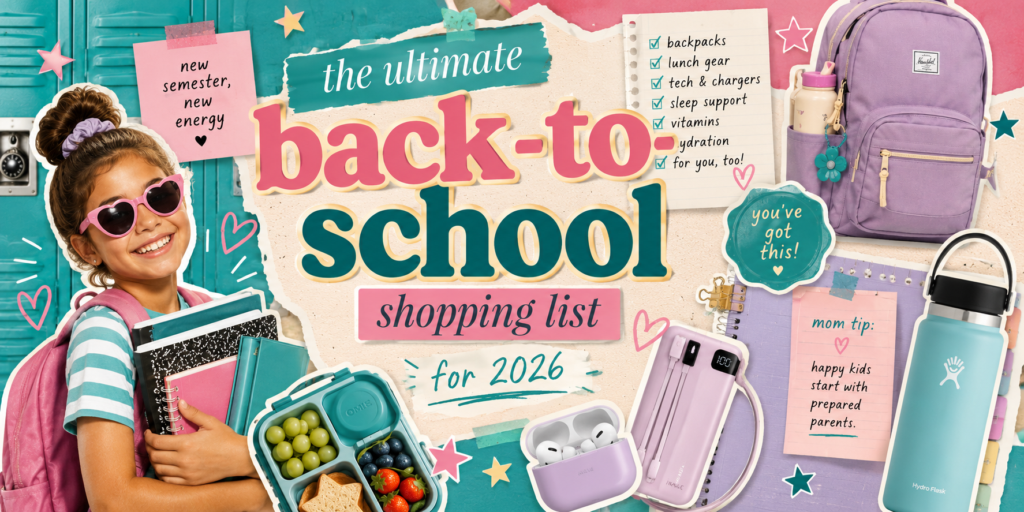
Somewhere between the last day of camp and the first day of school, every parent has the same realization at 11 p.m.: the backpack has a broken zipper, the water bottle can’t be found, and you have exactly zero energy left for yourself. Back-to-school shopping always starts as “get the kids ready” and ends as “wait, what about me?”
So this list is both. It’s the gear that actually earns its spot in the cart — not just what’s trending — plus the sleep, hydration, and energy essentials that keep the adults in the house functional through September. Consider it the shopping list you wish someone had handed you before the chaos started.
Table of Contents
Key takeaways
- Start with the non-negotiables: a backpack that survives the year, a lunch system that doesn’t leak, and a water bottle your kid will actually refill.
- Tech essentials matter beyond the laptop — a reliable portable charger and a low-EMF headset for calls and homework help save real headaches.
- Sleep is the most underrated back-to-school purchase. A better pillow and a melatonin-free bedtime routine can matter more than any planner.
- Kids’ daily nutrition gets harder to control once school starts; sugar-free chews and multivitamins are an easy way to close the gap.
- Parents need their own back-to-school kit too — hydration, steady energy, and small self-care wins that don’t require a spa day.
What backpacks and lunch gear are worth buying?
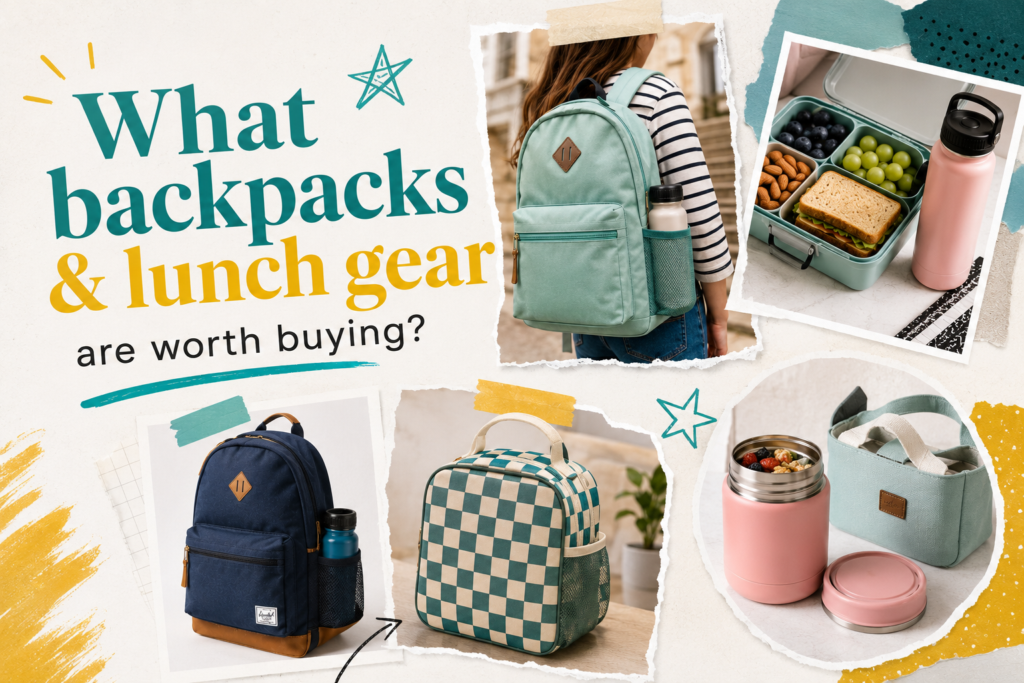
This is where most shopping lists start, and for good reason — a backpack and lunch setup that fails in October means you’re doing this shopping trip twice. A few categories worth prioritizing:
1. Backpacks
Look for padded straps, a dedicated laptop or tablet sleeve, and water-resistant fabric — the difference between a backpack that lasts one semester and one that lasts three years usually comes down to stitching at the stress points (zippers, strap attachments) rather than the brand name on the tag.
❤️ These are some of our favorite durable, laptop-ready backpacks:
2. Lunch gear
Insulated, leak-proof lunch bags with a bento-style container inside solve the two biggest lunch complaints: soggy sandwiches and mystery liquid at the bottom of the bag.
❤️ These are some of our favorite insulated lunch boxes:
- Bento Lunch Box with 8oz Soup Thermo
- OmieBox Insulated Leakproof Lunch Box
- BABHAMNESS Stainless Steel Lunch Box
- Stainless Steel Bento Lunch Box
3. Meal prep that doesn’t take over your counter
Packing five lunches a week gets a lot easier if Sunday-night prep actually survives until Thursday. SEALPRO is a compact, rechargeable food sealer built on the same space-saving idea as those slim vacuum sealers you’ve seen for closets, just sized for the fridge — it seals leftovers, pre-portioned snacks, and batch-prepped lunch components without adding another bulky appliance to the counter, and it cuts down on the food waste that tends to spike once everyone’s schedules get busier.
4. Water bottles
The trick isn’t finding the “best” bottle — it’s finding one your kid will actually carry and refill. A wide mouth (easier to clean and fill from a fountain) and a handle or clip (so it doesn’t get left in a locker) matter more than insulation claims.
❤️ These are some of our favorite kid-friendly water bottles:
- Owala Kids FreeSip Insulated Stainless Steel Water Bottle with Straw
- HydroJug Ease2o 14oz Kids Water Bottle with Straw & Chug Lid
- BrüMate Rise 18oz Water Bottle with Covered Silicone Straw
- Simple Modern Kids Water Bottle
5. Organization
A few $10-$15 fixes — over-door hooks for backpacks, a wall-mounted family calendar, a charging station by the door — cut down more morning chaos than most people expect.
❤️ These are some of our favorite entryway organization fro backpacks and shoes:
- Hall Tree with Bench and Shoe Storage + Coat Rack
- Over The Door Backpack Hanger
- LEYAOYAO Shoe Cabinet Storage for Entryway with 2 Flip Drawers
- 29″ Coat Rack Wall Mount with Shelf & 11 Hooks
What tech and charging essentials do kids (and parents) actually need?
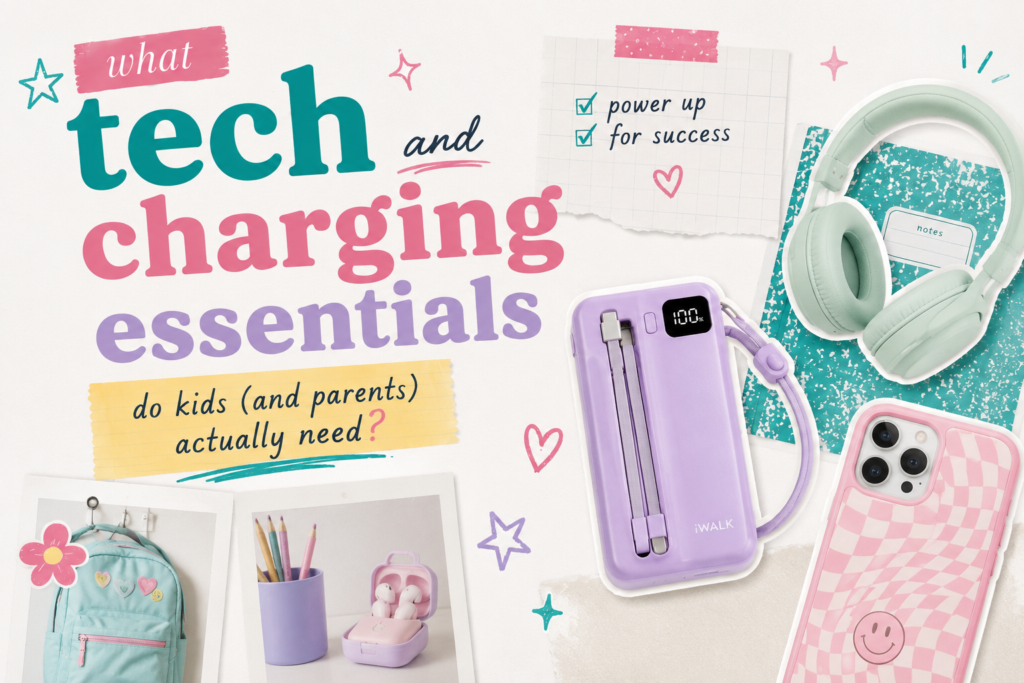 Once school starts, “my phone died” becomes the household’s most common crisis. A couple of upgrades are worth the money:
1. A real portable charger
The Rush Charge Universe is built around a genuinely useful idea for a house full of different devices: it has Lightning, USB-C, and Micro-USB connectors built directly into the unit, so nobody’s hunting for the right cable at 7:45 a.m. It can also charge itself while charging a device, which matters when the charger itself is always the thing that’s dead when you need it.
2. Lower-EMF options for calls and screen time
If you (or your teenager) are on video calls, virtual tutoring, or just spending a lot more time on the phone once school ramps back up, Anti-Radiation Air-Tube Headphones route sound through a hollow air tube instead of a speaker sitting directly against the ear, which is designed to reduce electromagnetic exposure during long calls — a reasonable swap for anyone spending hours a day on headphones.
❤️ These are some of our favorite wired headphones:
- Sony ZX Series Wired On-Ear Headphones
- ARTIX Wired Headphones
- Apple EarPods Headphones with USB-C Plug
3. The basics
A spare charging cable in the backpack and a labeled AirTag or tracker for the backpack itself will save at least one “where did I leave it” meltdown before winter break.
❤️ These are some of our favorite trackers and spare cable:
How can you help your kid (& yourself) sleep better once school starts?
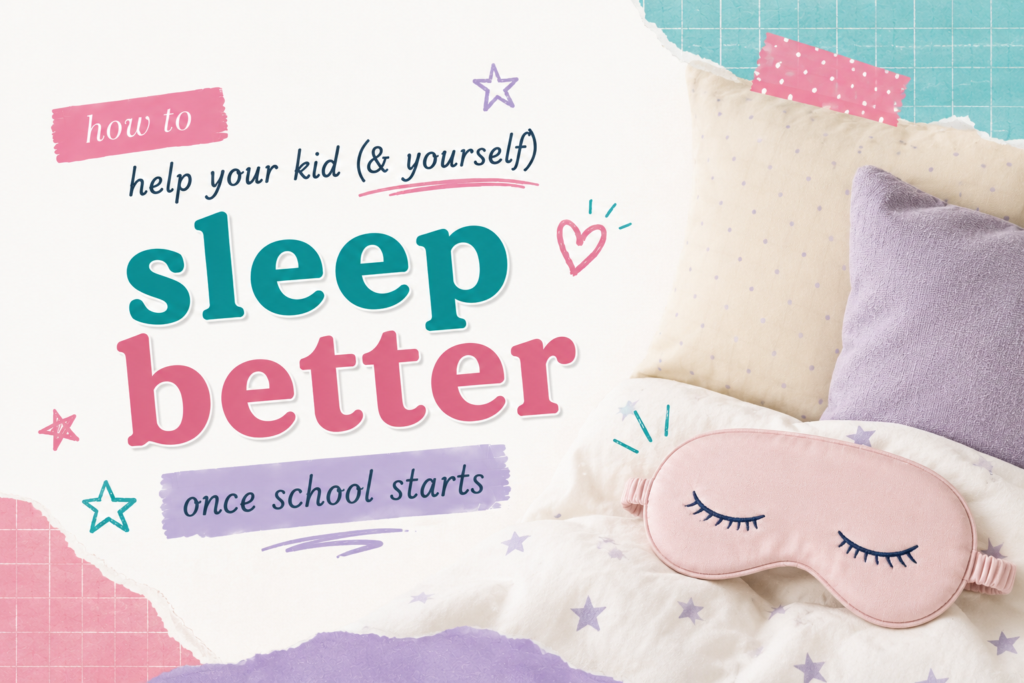
The transition from summer bedtimes to a 6:30 a.m. alarm is genuinely hard on kids’ sleep cycles, and it shows up fast as crankiness, meltdowns, and a rough first few weeks of the school year.
1. A better bedtime routine, without melatonin
Hiya Bedtime Essentials is a melatonin-free chewable built around ingredients like magnesium, L-theanine, and chamomile — all of which are commonly used to support relaxation before sleep without the grogginess some kids get from melatonin. It’s worth talking to your pediatrician before adding any new supplement to your child’s routine, especially if they’re already taking something else.
2. Better sleep positioning for parents
Parents lose sleep during back-to-school season too — between earlier alarms and later nights finishing forms and packing lunches. VelaSleep is a contoured memory foam pillow designed to support neck alignment, which is a low-effort upgrade if your own sleep quality has quietly gotten worse from a pillow you’ve had since college.
3. Set the room up for sleep, not just bedtime
Blackout curtains and a white noise machine matter more in August, when it’s still light out at 8 p.m. and bedtime suddenly needs to happen anyway.
❤️ These are some of our favorite blackout curtains and white noise machines:
- Linen Textured Total Blackout Curtains
- MIULEE 100% Blackout Linen Textured Curtains
- MYSKY HOME 100% Blackout Curtains
What daily vitamins actually help kids handle the school grind?
 Snack time gets shorter, lunch gets rushed, and picky eating doesn’t take a break just because school started. A daily multivitamin isn’t a replacement for real food, but it’s a reasonable insurance policy during the messiest eating months of the year.
Mighties makes a zero-sugar daily chew (rather than a sticky gummy) fortified with vitamins A, C, D3, E, and B12, plus zinc and magnesium — a straightforward option if you want to avoid the sugar load that comes with traditional gummy vitamins. It’s designed for daily use alongside meals, not as a stand-in for them.
If sleep is the bigger issue than daytime nutrition, that’s where Hiya’s bedtime chew (above) is the more targeted pick — it’s worth choosing based on which problem you’re actually trying to solve rather than stacking every supplement at once.
How do you keep the whole family hydrated and energized?

Kids come home from a full day of school (plus practice, plus homework) legitimately depleted, and “just drink more water” doesn’t always land. Liquid I.V. Hydration Multiplier uses electrolytes and a bit of glucose to help water absorb faster than plain water alone — useful after sports practice, or during the first few weeks back when everyone’s immune system is getting reintroduced to a classroom full of germs. One stick mixed into 16 ounces of water is an easy habit to build into the after-school routine.
What should parents add to their own back-to-school list?
 This is the part of the shopping list that usually gets skipped — but the parent running point on forms, carpool, and packed lunches needs their own back-to-school kit too.
1. A gentler caffeine option for the early mornings
If school mornings mean earlier alarms and you’re relying on a second or third cup of coffee to get through drop-off, Everyday Dose blends low-acidity coffee with lion’s mane and chaga mushroom extracts and collagen, with meaningfully less caffeine than a standard cup — aimed at steadier energy without the mid-morning crash that hits right around the time you’re trying to answer emails.
2. Oral care that fits a busier routine
Great Gums is a microcurrent toothbrush designed to support gum health, which is worth a look if your dentist has ever mentioned your gums during a checkup you didn’t have time to think about again until the next one.
3. Hydration for you too
Liquid I.V. isn’t just for kids — a stick in your water bottle on the mornings you’re doing school drop-off, then straight into a full workday, does more for your 10 a.m. energy than a fourth cup of coffee will.
4. A five-minute stress reset
Pulsetto is a wearable neck device that delivers gentle electrical pulses to stimulate the vagus nerve, which plays a role in shifting your body out of “fight or flight” mode and toward calm. It’s worth knowing the science here is still early — Pulsetto hasn’t been evaluated in peer-reviewed clinical trials, so think of it as a relaxation tool built around a plausible mechanism, not a clinically proven treatment for anxiety or stress.
5. Relief for the “on your feet all day” grind
Between carpool lines, grocery runs, and standing through back-to-school night, your legs take a real hit. The Air-C Compression Massager uses air-compression therapy — similar to what physical therapy clinics use — to inflate and deflate around the calves in cycles that support circulation, which can help with that heavy, achy feeling after a long day on your feet.
None of this needs to be complicated or expensive. Even one or two small additions — better sleep, steadier morning energy — tend to matter more over a full school year than anything you can buy in a single trip to Target.
Final thoughts
The best back-to-school shopping list isn’t the longest one — it’s the one that actually solves the problems your family had last year. If mornings were the issue, start with sleep and energy. If the backpack fell apart by October, start there instead. And if you made it through last year’s back-to-school season running on fumes, this is your reminder that the list is allowed to include something for you too.
People also ask these questions
1. When should I start back-to-school shopping?
A: Most retailers run their biggest sales in late July and early August, but starting two to three weeks before school starts gives you enough time to test things (like a new backpack or lunch box) before the first day, rather than discovering a leaky water bottle on morning one.
2. What’s the difference between melatonin and melatonin-free sleep aids for kids?
A: Melatonin is a hormone that directly signals the body it’s time to sleep, while melatonin-free options (like those built around magnesium, L-theanine, or chamomile) work by promoting relaxation rather than directly altering hormone levels. Pediatricians often suggest starting with non-hormonal options for younger kids and discussing melatonin specifically before use, since dosing and long-term effects in children are still being studied.
3. Do anti-radiation headphones actually reduce EMF exposure?
A: Air-tube headphones physically separate the speaker from the ear by routing sound through a hollow tube instead of wires or Bluetooth signals near the head, which is designed to reduce electromagnetic field exposure during calls. Research on low-level EMF exposure from everyday devices is still evolving, so these are best thought of as a reasonable precaution rather than a medically necessary swap.
4. Is a multivitamin necessary if my kid eats a mostly balanced diet?
A: Not necessarily — a daily multivitamin is generally framed as a supplement to fill occasional gaps, not a replacement for meals. It’s worth checking with your pediatrician if you’re unsure whether your child’s diet needs a boost, particularly around iron, vitamin D, or B12.
5. What’s the single easiest back-to-school purchase to start with?
A: If you only make one change this year, most parents find hydration and sleep improvements pay off faster than any organizational gadget — a kid who’s sleeping and hydrated well handles a hard homework night far better than one with a perfectly labeled binder.