
✅ Today’s Checklist:
- Get ahead of Q3 planning
- The reframe that makes asking for more money feel less terrifying
- Why the strongest leaders surround themselves with people who challenge them
🤔 Riddle me this: I shimmer in backyards all summer long, but too much running near me usually ends badly. What am I? (Find the answer on the bottom).
QUICK LINKS
🎁 These luxury gifting companies make client, exec, and employee gifts feel anything but corporate.
🍪 What if your gut (not your self-control) is driving your cravings?
⚡ Build the workflow that runs while you focus on the work only you can do.
💰 Five money moves that calm the anxious-about-the-economy spiral.
Q3 PLAYBOOK

The Q3 Plan That Actually Holds Up
Q3 starts July 1, which means you have a few weeks to get intentional about what you actually want to accomplish in the next 90 days. That window matters more than most people realize, and it closes fast.
The professionals who hit their quarterly goals usually share one habit: they get clear on what they’re going after, and why, before the quarter even begins.
Here’s how to build a Q3 plan that actually holds up.
Start with the big picture, then work backwards
Before you can set good quarterly goals, you need to know what you’re working toward at a higher level. What do you want to have accomplished by the end of the year, whether in your career, your team, or your personal growth? Your quarterly goals should be direct stepping stones toward those bigger outcomes.
From there, break your year into four parts and assign specific milestones to each quarter. Within each quarter, map out what needs to happen month by month so the work feels manageable rather than overwhelming. A useful approach is the 30-30-30 structure: the first 30 days for setup and laying the groundwork, the middle 30 for reviewing what’s working and adjusting, and the final 30 for executing and finishing strong.
Aim for one to three goals per quarter, not ten. Focusing on fewer things and actually completing them will always beat an ambitious list that stalls out halfway through.
Use the OKR framework to make your goals stick
One of the most effective structures for quarterly goal-setting is OKRs, which stands for Objectives and Key Results. The idea is simple: your Objective is the qualitative direction you’re heading, and your Key Results are the specific, measurable outcomes that tell you whether you got there. The distinction matters because Key Results should be about outcomes, not just a checklist of tasks.
For example, an Objective might be “become a more visible leader on my team.” A Key Result isn’t “attend more meetings.” It’s “lead two cross-functional projects this quarter” or “present findings to senior leadership once a month.” The more specific and quantitative, the more useful.
AI prompts to build and pressure-test your goals
This is where things get genuinely useful. Instead of staring at a blank page, use these prompts to build your quarterly plan, stress-test it, and review it at the end of the quarter.
To break your annual goals into a 90-day plan:
Try this prompt:”Act as a productivity strategist specializing in goal decomposition. I will give you my high-level annual objectives, and I want you to break them down into a concrete 90-day plan for the upcoming quarter. For each objective, provide: three specific, measurable quarterly outcomes; a month-by-month milestone timeline; and the smallest weekly actions required to maintain consistent momentum. Keep the weekly actions highly realistic so they can be accomplished even during a busy week. Here are my objectives: [insert your goals]”
To build OKRs from scratch:
Try this prompt:”Act as a strategic planning expert specialized in OKR frameworks. I want to establish clear quarterly OKRs for my [personal life / business / career]. Help me design three core objectives for this quarter. Under each objective, write three distinct, highly quantitative key results that measure success. Ensure the key results focus on outcomes rather than just a to-do list of tasks. Ask me clarifying questions about my current metrics and baseline if you need more context before generating the OKRs.”
To identify what might derail you before it does:
Try this prompt:”Act as a performance psychologist and risk analyst. Review these quarterly goals: [insert your goals]. Analyze this plan and flag three potential psychological or logistical bottlenecks, such as burnout, procrastination patterns, or conflicting priorities, that might cause me to fall off track. For each bottleneck identified, provide a proactive mitigation strategy, a plan B routine, and a habit-stacking trigger to keep me moving forward.”
To review the quarter before you close it out:
Try this prompt:”Act as an executive coach. I want to conduct a comprehensive quarterly review of my last 90 days. Ask me a series of reflective questions, one by one, covering: strategic wins and what drove them; where I missed targets and the root cause; energy leaks that drained my time or motivation; and what I learned that requires me to change my approach next quarter. Wait for my response to each question before asking the next one. After our conversation, summarize my key insights into a one-page action plan for the next quarter.”
For a deeper look at how to use AI to plan and execute in 90-day sprints, this video walkthrough is worth your time.
Review, adjust, repeat
The last piece is the one most people skip: actually reviewing your progress before jumping into the next quarter. Before you set new goals, look back honestly at what you accomplished, where you fell short, and what got in the way. Use those answers to set smarter targets next time, not just more ambitious ones.
Quarterly planning done right gives you a clear, realistic framework to make progress on the things that actually matter to you, ninety days at a time.
FOUNDER TAKE
The Tool 1,000+ of My Coworkers Actually Loved
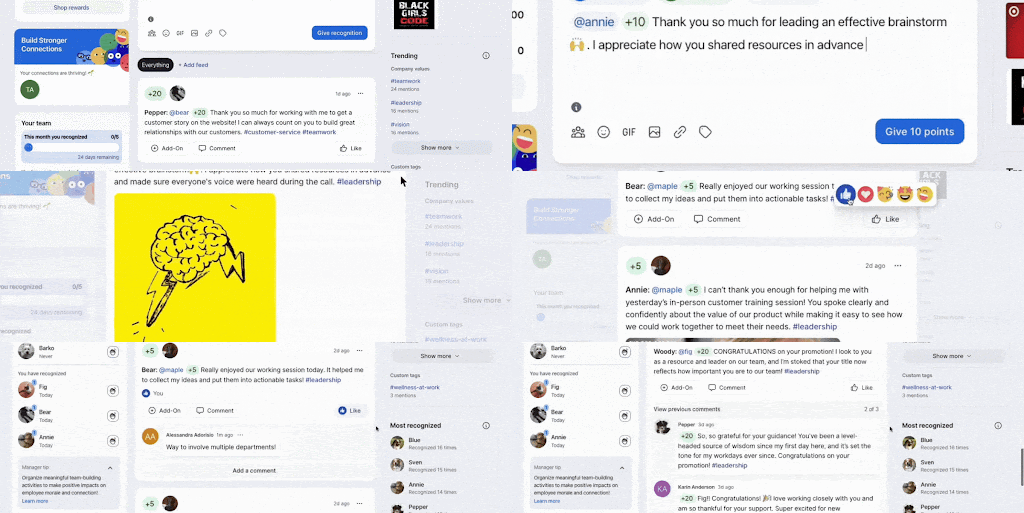
At the last company I worked at, we used Bonusly, and my coworkers were obsessed with it. It’s a recognition platform where you give each other points for good work, and people would genuinely do things to earn them. Basically an HR-approved bribe, and it worked.
The points cashed out for real rewards (I redeemed mine for a flight to Cabo 🙌), so there were real stakes. The recognition feed became something people checked on their own, and managers handed out shoutouts without being asked.
Running my own company now, I know how rare that is. Most tools get ignored, forgotten, or dropped. Bonusly just… stuck.
And because people actually use it, leaders get a real picture of who’s collaborating and where connection is fading.
Bonusly’s new AI companion, Bizy, makes that picture even easier to see. Think of it as an extra set of eyes on your team: it turns the recognition people are already giving into a real sense of what’s happening, and it flags the patterns worth a look on its own, so you get that “you should probably look at this” nudge before something becomes a bigger problem.
My team reviewed Bonusly properly so I could share it with you. (Spoiler: still a yes.)
BIGGEST CHALLENGE

How To Negotiate Your Salary Without Feeling Like You’re Asking For A Favor
“I recently landed the manager role for my team after the higher managers urged me to apply. I am so nervous about negotiating my salary. I KNOW I am capable and the right person for the job, but I feel like I am going to fumble and not be able to confidently negotiate without sounding ungrateful.” — Bri M.
Let’s start with the most important thing: you were urged to apply by the people above you, you are already doing the job, and you got it! You earned it.
So before we talk strategy, let’s talk about the story you are telling yourself, because that’s what needs to shift first.
Do the two column exercise
Grab a piece of paper and draw a line down the middle. On the left, write every single reason you are great at this job. On the right, write every doubt or fear you have about your abilities.
Fill both in honestly. What you will almost certainly find is that the left column is longer, more specific, and more compelling than the right. And when you look at the right column objectively, many of those fears will reveal themselves for what they are: small, vague, and not nearly as powerful as the evidence sitting right across from them.
This exercise is not just feel-good advice. It is the foundation of your negotiation. That left column is your case.
Reframe what a negotiation actually is
The mindset shift to make: A salary negotiation isn’t a moment to perform gratitude, and it’s not you asking for a favor. It’s a business conversation between two parties who both want something, where you present a case for why the number on the table should reflect the value you bring.
Being humble and appreciative are wonderful traits, but a negotiation isn’t the place to lead with them. You earned this role. Nobody handed it to you out of charity.
Come in with data to back you up
Confidence without evidence is hard to sustain under pressure. So back yourself up with numbers.
Research what managers in your role, industry, and region are earning using tools like Glassdoor, LinkedIn Salary, or levels.fyi if you are in tech. Come in with a specific number or range anchored in market data, not just what feels reasonable to you.
Then combine that data with your left column. You are already doing the manager job without the manager title or pay. That is your strongest argument and you should say it plainly.
Know your ask if they push back
If they come in below your number, do not just accept it in the moment. It is completely professional to say: “I appreciate the offer. If this is where we are starting, can we agree on a timeline to reassess my compensation once I am in the role?”
Get that timeline in writing if you can.
Remember: anybody can learn negotiation tactics
Scripts, frameworks, and talking points are everywhere. What is harder to teach, and what will actually carry you through that conversation, is the energy you walk in with.
You already know you are the right person for this job. The only thing left is to make sure the room knows it too.
MIDLIFE WELLNESS

The Brain Fog and 3am Wake-Ups Aren’t Just “Getting Older”
You have been blaming stress for the brain fog, telling yourself the weight gain is just getting older, and treating 3am as your new normal… but it doesn’t have to be.
Midi is a virtual clinic built for women navigating perimenopause and menopause, and the clinicians there specialize in exactly this. Specialists who will actually listen, run through your full history, and put together a care plan built around your symptoms, whether that’s HRT, non-hormonal options, supplements, or lifestyle changes.
First visit is 30 minutes. Most visits are covered by insurance.
STAFF PICKS
Stuff We’re Loving This Week
🗞️ The Hustle serves up the business stories and overlooked opportunities other newsletters skip.
🧴 Sun protection meets skincare in this mineral SPF 50 sunscreen.
💻 The laptop stand that fixes your hunching without redesigning your whole desk.
🚗 Car cleaning gel that grabs every crumb and dust pocket your hands can’t reach.
JUST FOR FUN

COMMUNITY
🗓️ Upcoming Events
- TODAY 6/9 @ 1PM PT: Co-working Session (SGS Only* | Join the waitlist)
- Thurs 6/11 @ 9AM PT: Management Workshop: Employee Development
- Thurs 6/11 @ 12PM PT: Speaking Like an Executive (SGS Only* | Join the waitlist)
- Wed 6/17 @ 9AM PT: AI and Your Money: The New Financial Skill Nobody Taught You
- Wed 6/17 @ 11AM PT: Co-working Session (SGS Only* | Join the waitlist)
* Smart Girl Society is our private community for women who want deeper conversations, accountability, and tools that actually make life easier. Join the waitlist to get in the next round.
👑 Work Wisdom of the Week:
“This isn’t advice I’ve ever been given but is something I’ve learned by observing poor leadership at various points in my career: A true leader surrounds themselves with talent rather than feeling threatened by it.
Similarly: You’re only as strong as the team you build. You can’t expect to create greatness with a foundation of yes-men. True leadership welcomes constructive input that challenges the status quo.”

Amy Routson (Creative Director)


SPILL THE TEA
Take Our Poll
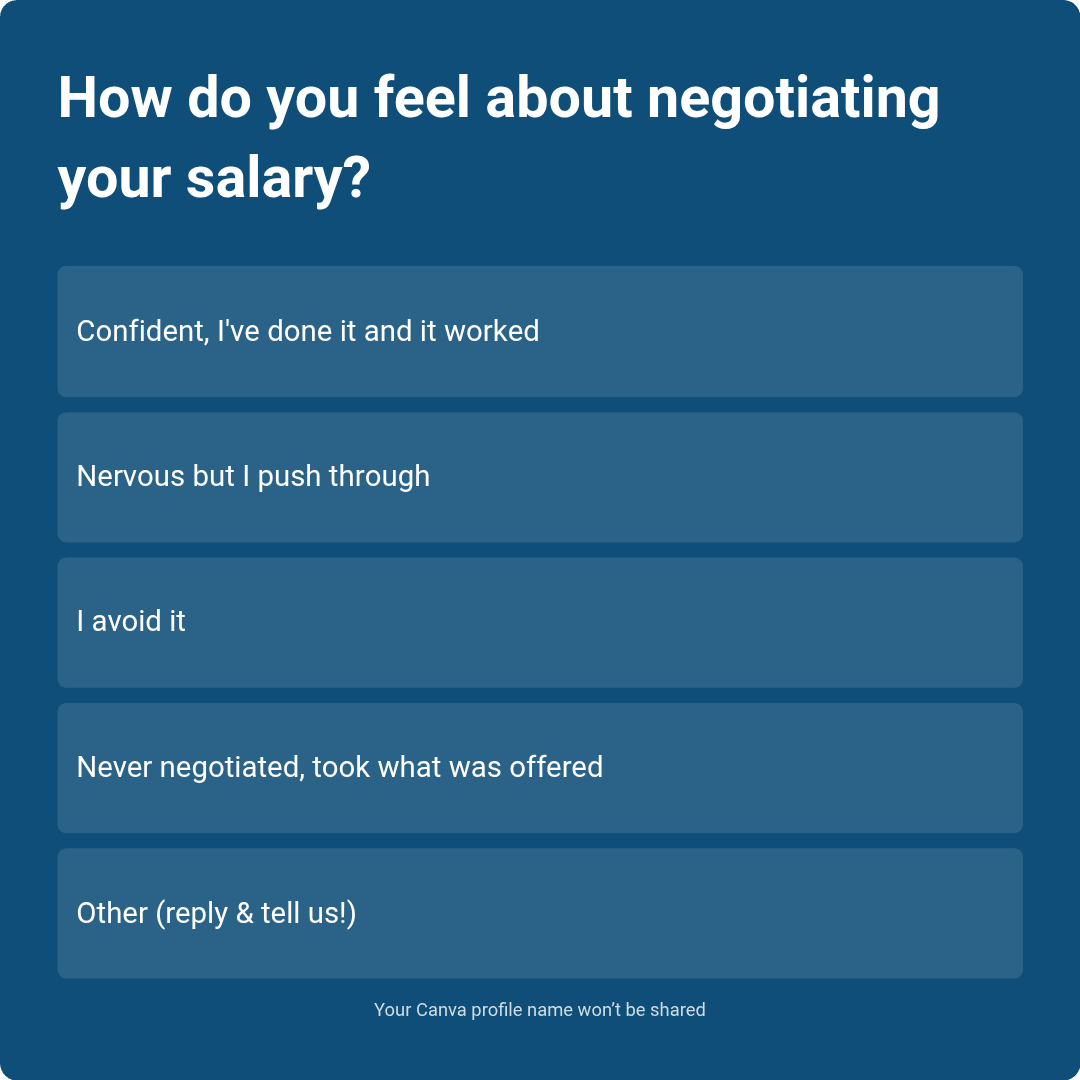
Have more feedback? 💌 Reply to this email and tell us.
✨ P.S. Want more inspiration and positivity to kick off your week? Sign up for our Motivational Monday texts (U.S. only).
👀 Want to see if your company is a good fit for our 250k+ ambitious readers? Join our Sponsor Waitlist here.