
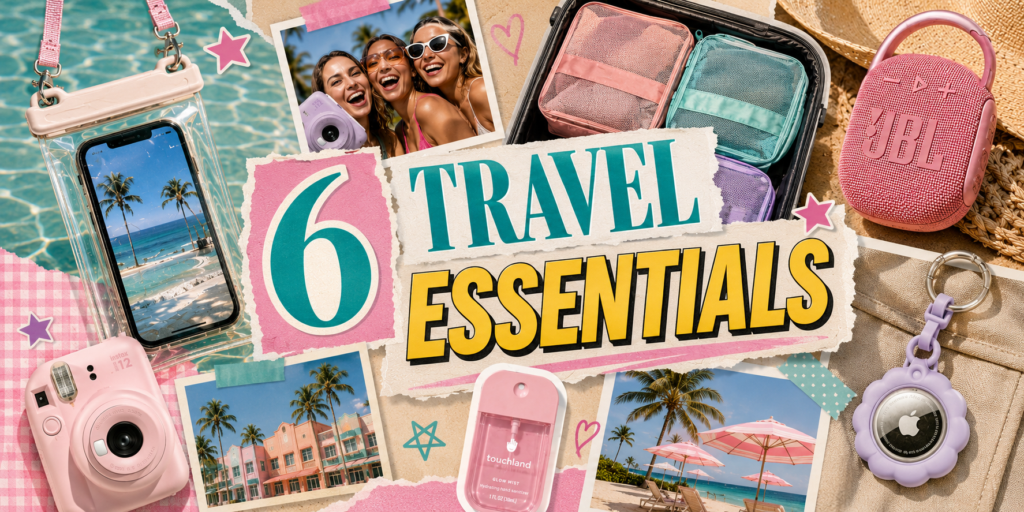
You know the packing list by heart at this point — passport, charger, sunscreen, the one outfit you’ll actually wear twice. And you still land at the hotel and realize the trip has a problem none of that solves: the phone that’s one splash away from disaster, the silent room with no speaker, the suitcase you’ll be repacking from scratch by day two.
A normal packing list doesn’t cover any of that, because it’s not about forgetting something obvious. It’s about six small, specific things that end up making or breaking a trip once you’re actually in it.
We asked around the office — and our group chats, if we’re honest — which of those small things people actually reach for on every trip. Not what photographs well in a “what’s in my bag” post. What gets used. Here’s what made the cut, and why.
Table of Contents
What’s the best waterproof phone case for travel?
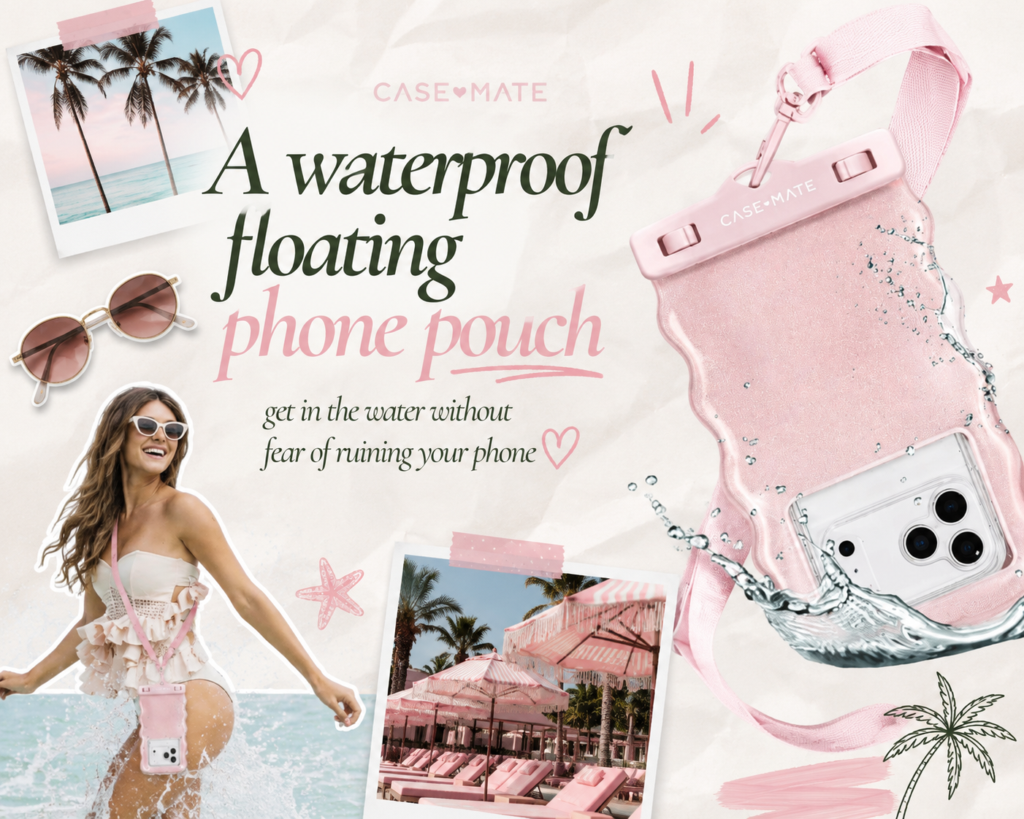
A waterproof floating phone pouch is a sealed, submersible case that keeps your phone dry and afloat if it goes overboard — literally.
Here’s the scenario it’s built for: you’re on a boat, at a lake, in line for a waterslide, and your phone is either in your hand or nowhere, because pockets don’t exist in swimwear. The Casemate Pouch is built to stay submersible down to two meters for up to an hour, with built-in floatation so if you do lose your grip, it surfaces instead of sinking. You can still use your touchscreen and camera through the pouch, which is the whole point — you’re not sacrificing the photo to protect the phone.
If you want something with a strap for hands-free wear at the pool, the Case-Mate Silver Chrome floating pouch comes with a crossbody lanyard and won a 2026 travel award for exactly this reason. Either way: this is the $15-ish item that saves a $1,000 phone, and it earns its spot in every beach bag from here on out.
Do packing cubes actually make packing easier?
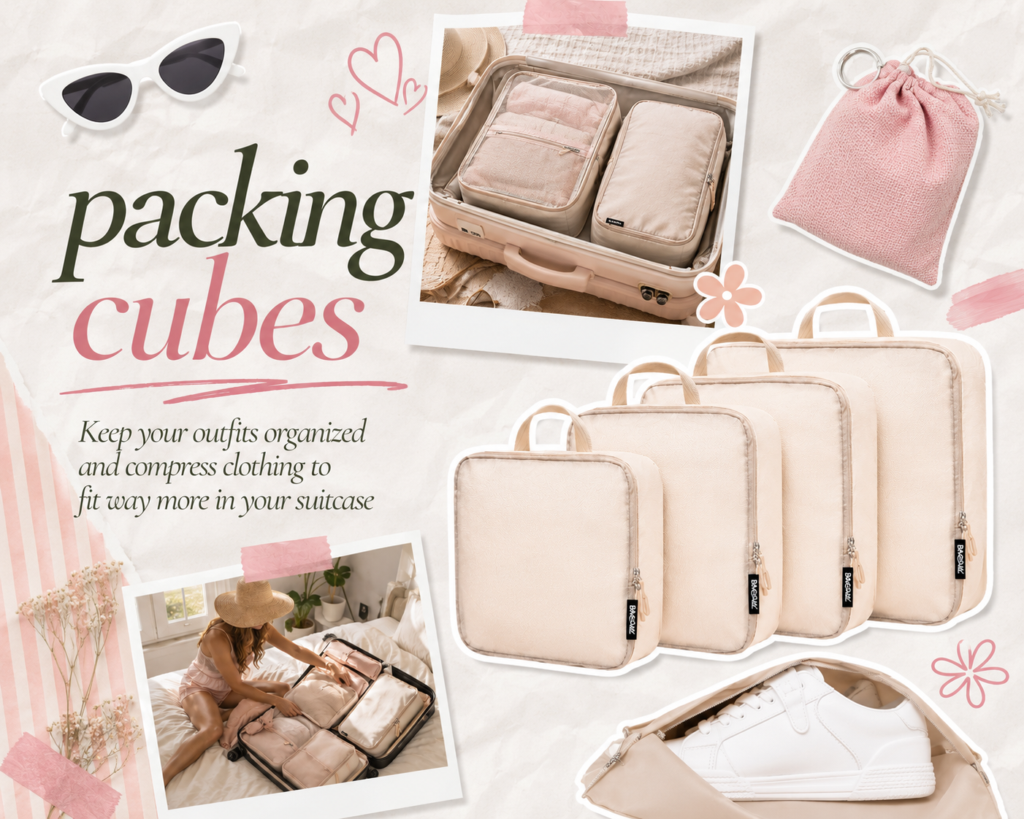
Yes — packing cubes compress your clothes into labeled, stackable units so your suitcase functions like a dresser instead of a pile.
The unlock isn’t really about fitting more in your bag (though compression cubes do that too). It’s about not unpacking your entire suitcase onto a hotel bed to find one shirt. Color-code by category — tops, bottoms, “unmentionables” — and unpacking a five-day trip takes two minutes flat.
If you’re a light packer or a backpacker, ripstop nylon cubes shave real weight off your bag. Business travelers should look for a flatter, compression-light design that won’t wrinkle a blazer. And if you’re traveling with family, a color-coded set means everyone claims their own cubes and stops digging through yours. Whatever set you land on, the test is simple: can you find your charger cable in the dark without waking up your travel companion? If yes, the cubes are doing their job.
Which portable speaker should you actually bring on vacation?

The best travel speaker balances sound quality, battery life, and size — you’re optimizing for “fits in the bag” as much as “sounds good.”
For most trips, the JBL Flip 7 is the sweet spot: solid sound, genuinely portable, and a battery that clears 14 hours, which means it survives a full pool day without needing a charger mid-afternoon. If you’re trying to shave every ounce out of your carry-on, the JBL Go 4 is small enough to disappear into a toiletry bag and still waterproof enough to survive a spilled piña colada.
This is the essential that turns a hotel room into a getting-ready-for-dinner scene instead of silence while you both scroll your phones. Small object, disproportionate impact on the vibe.
Is an Apple AirTag worth it for luggage?
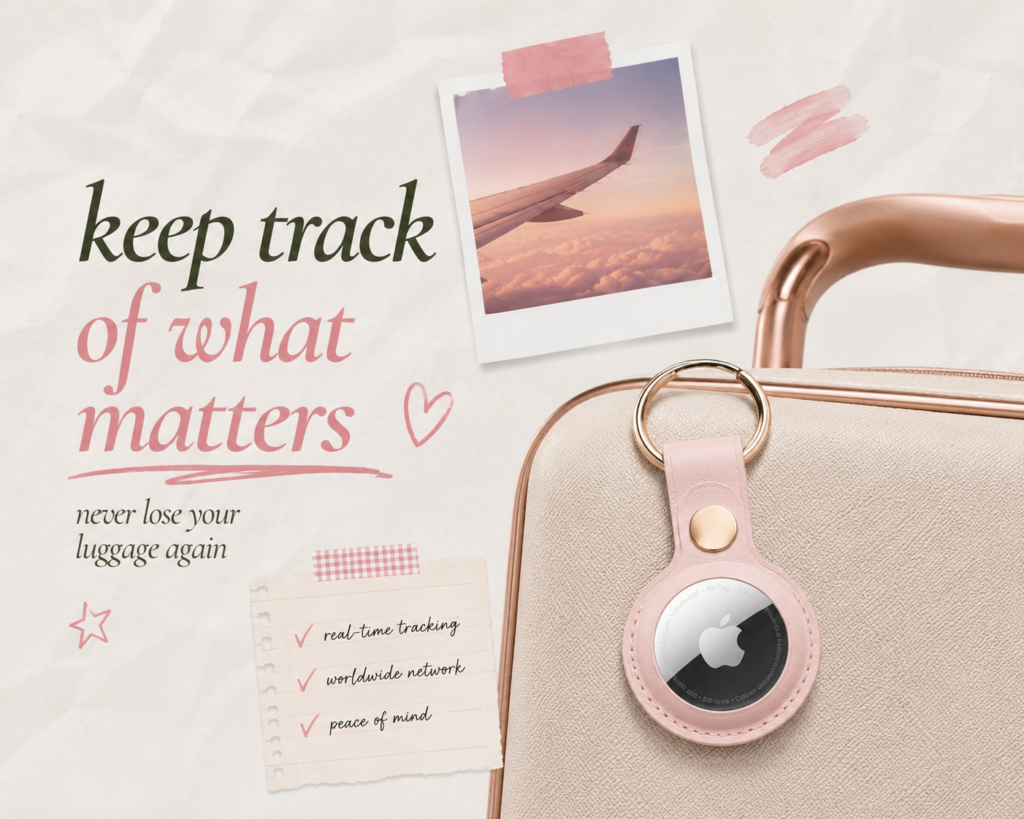
An AirTag is a coin-sized tracker that uses Apple’s Find My network to show your bag’s real-time location — and yes, it’s worth the $29.
Here’s what it actually solves: the twenty minutes standing at baggage claim convincing yourself your suitcase is “probably just running behind,” when actually it’s still in the city you left. Drop an AirTag in a checked bag and you get real data instead of a spiral — you can see it’s still on the tarmac, still in transit, or (worst case) headed somewhere you’re not. Apple’s 2026 AirTag update added a longer range and a louder built-in speaker, which makes it easier to actually locate the bag once you’re in the same terminal, not just confirm it exists.
It won’t get your bag back faster on its own — you still have to file the claim with the airline — but it turns “no idea” into “here’s exactly where it is,” which is worth $29 on its own.
What’s a cute (and actually effective) travel hand sanitizer?
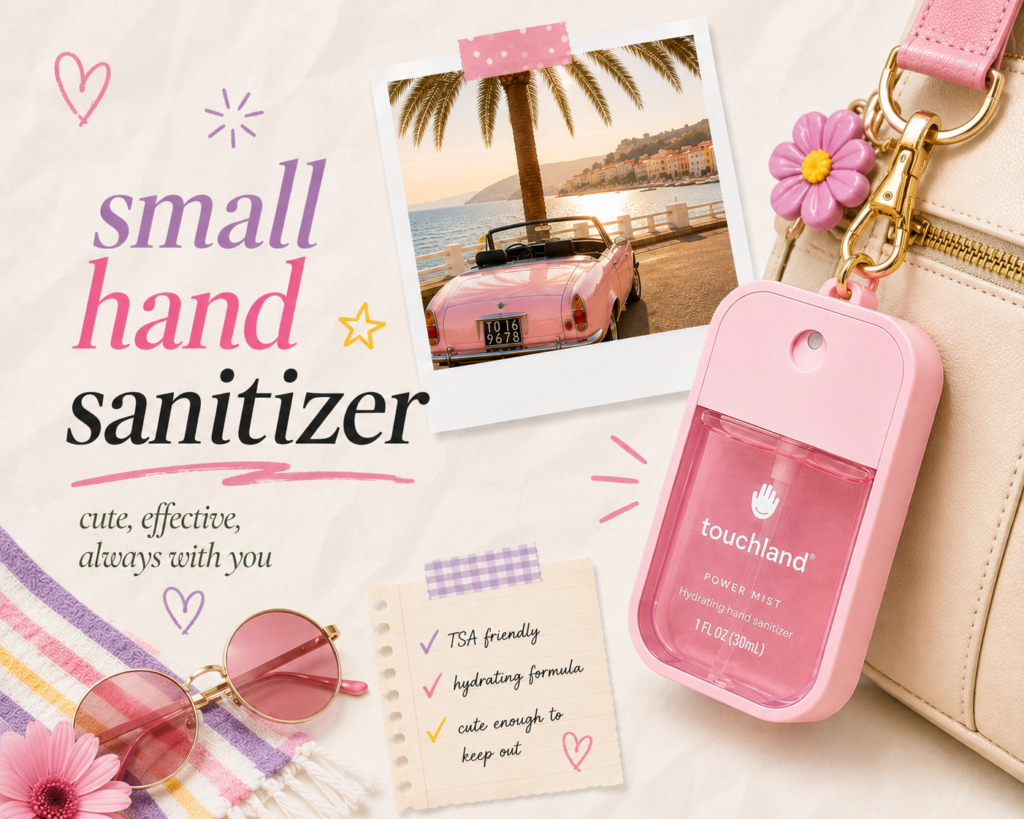
The best travel sanitizer is one you’ll actually pull out of your bag — which is why the cute bottle matters as much as the formula.
A gas station pump bottle works, technically. It also sits at the bottom of your bag untouched because it smells like a hospital and looks like it belongs in one. Brands like Touchland and Alōh made the mist-style sanitizer into something you’d actually leave sitting out on a hotel nightstand — refillable, scented like something you’d wear on purpose, and small enough to clip to a bag strap. Keep it under 3.4 ounces and it clears TSA without a second look.
This is the essential that sounds the most skippable and ends up getting used the most — on the plane tray table, before the airport pretzel, after the rental car steering wheel that seventeen strangers have touched today.
Should you bring an instant camera on vacation?
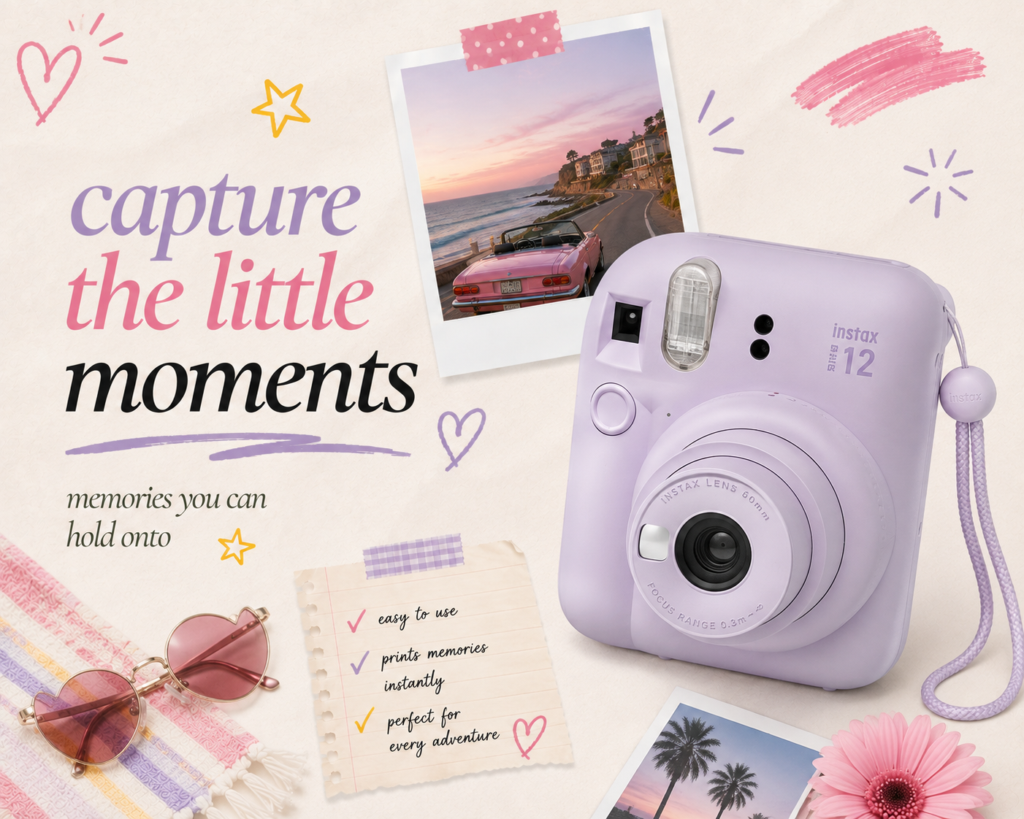
Yes, if you want the kind of photo you’ll actually print and put somewhere, instead of the 400th photo trapped in your camera roll.
An instant camera like the Fujifilm Instax Mini 12 forces a kind of intentionality your phone doesn’t: you get one shot, it’s physical, and it comes out of the camera in ten seconds looking a little imperfect in the most charming way. It’s also, weirdly, the fastest way to get a table of people to put their phones down for thirty seconds — everyone wants to see the photo develop.
If you want something closer to a hybrid, the Instax Mini Evo Cinema shoots stills and short video clips and still prints — more camera, still pocket-sized. Either way, it’s the essential nobody asks you to bring and everyone’s glad you did.
Final Thoughts
None of these are the essentials you’ll see on a generic packing list — no “bring a scarf that doubles as a blanket.” They’re the six things that solve an actual, specific travel problem: the phone at the pool, the suitcase explosion, the silent hotel room, the lost-bag spiral, the sanitizer you’ll ignore if it’s not cute, the photo you’ll actually keep. Pack those six and the rest of the trip has a much better chance of going the way you pictured it.
People also ask these questions about travel essentials
Q: What are the most important travel essentials for a carry-on?
A: Beyond the basics (chargers, documents, medication), the highest-impact small items are a waterproof phone pouch, packing cubes, and a portable charger. They solve the three most common trip disruptions: a wet phone, a chaotic suitcase, and a dead battery.
Q: Are packing cubes worth it for a short trip?
A: Yes — even on a 2-3 day trip, packing cubes make unpacking and repacking faster and keep clean and dirty clothes separated, which matters more the shorter and more packed the trip is.
Q: Do AirTags work internationally?
A: Yes. AirTags use Apple’s Find My network, which relies on nearby Apple devices to relay location, so they work anywhere with reasonable iPhone density — which covers most international airports and cities.
Q: Is instant film expensive to keep buying?
A: Instax Mini film generally runs a few dollars for a pack of prints, so it’s worth budgeting for if you’re planning to shoot a lot on a trip — bring more film than you think you’ll need, since you can’t preview or reshoot for free.