

🤔 Brainteaser of the day: I’m a seven-letter word. Remove my third letter and I become longer. What word am I?
Click here to see the answer.
✅ Today’s Checklist:
- The credit card audit Thania ran on her own wallet
- This summer’s guilty pleasure TV
- Pet of the week: Meet Jameson George
QUICK LINKS
💡 Could one word change how people think?
💰 Ninety-nine money hacks for the rent, the groceries, the travel, all of it.
🌴 Upgrade your employee gifting with unique summer gifts for every budget.
⏳ The time AI saves is mostly being wasted, and how to fix that.
TRAVEL POINTS

I Audited My Credit Card Stack. Here’s How to Run Yours.
A few years ago I signed up for a Southwest card because my feed told me to. Free flights, no baggage fees, the whole influencer fantasy. I used it twice, missed the spend threshold that made any of it worthwhile, and ate a $99 annual fee for a card that sat untouched in my wallet.
Since then I’ve built up a stack I assumed was fine: an Amex Gold, an Amex Delta Reserve, a Bank of America Travel Rewards card. I never actually sat down and checked whether any of it was working the way I thought. So I did, card by card, for real, and I’m walking through exactly what I found so you can run the same check on your own wallet this weekend.
Card One: Amex Gold, $325/Year
My assumption going in: this is my everyday card, so it’s probably fine. What I actually found: it’s the right card for the job, but I’ve been sloppy about it.
It earns 4x at restaurants and US supermarkets, and it carries up to $424 a year in credits, Uber Cash, dining credits at places like Grubhub and Five Guys, Dunkin’, Resy, a Hotel Collection credit. I’m already using the Dunkin and Grubhub credits without thinking about it.
The Uber Cash credit is the one I’m actually skipping, since I’m more of an UberEats person and that spend already earns a credit on my Delta Reserve instead. Resy and the Hotel Collection credit are still an open question I need to check my statements for.
Verdict: keep it as my everyday card, but the real work is remembering to actually claim what it already offers.
Card Two: Delta Reserve, $650/Year
This is the one I was least sure about. I got it for the 50K bonus and the lounge access, and I’ve been telling myself the perks “come out to about $100 a month,” which is really just a guess I never checked.
The real number is better than my guess, but only if I use it correctly. It earns 3x on Delta purchases and 1x on everything else, which means it was never supposed to be a daily-spend card, and I only put general purchases on it at the start, to clear the minimum spend for the welcome bonus.
The credits run closer to $560 a year across Resy, rideshare, and Delta Stays, plus a $2,500 MQD Headstart toward Medallion status and MQD Boost, which earns $1 of Medallion Qualification Dollars per $10 spent. Silver status starts at 5,000 MQDs, so the headstart alone gets me halfway there before I’ve flown anywhere.
Verdict: worth keeping, and I’m actually already using it the way it’s meant to be used. The work now is routing Delta-specific spend and the credit-eligible categories through it on purpose instead of by accident, starting with actually checking which restaurants are on Resy and remembering to pay with the Delta card when they are.
Card Three: Bank of America Travel Rewards
The easy one. I use this for 0% intro APR offers, not points, and that’s the correct use. Its 1.5x flat rate isn’t worth trying to optimize. Nothing to fix here, just confirming I’m not wasting energy trying to make this card do something it’s not built for.
The Cheat Sheet
Here’s the audit boiled down to what I’m actually supposed to do, screenshot-ready:
- Gold → restaurants, US supermarkets, Dunkin, Grubhub. Default card for everything that isn’t Delta-related.
- Delta Reserve → Delta flights and Delta Vacations, plus Resy restaurants and Delta Stays bookings when I check first. Nothing else touches this card.
- BofA Travel Rewards → 0% APR offers only. Never for points.
- Missing from the stack: a flat 2% card (something like a Citi Double Cash, or Amex Blue Business Plus if you run any business spend) for gas, subscriptions, and general online purchases. Nothing I currently carry earns well there, and that’s the one real hole.
What This Audit Actually Taught Me
Running through my own stack card by card surfaced a pattern I wasn’t expecting: tI had the right cards. I just hadn’t assigned them jobs.
Here’s the process I’m taking forward, and the one worth copying on your own wallet:
- Audit spend by category first, cards second. Pull three months of statements and sort by category: groceries, dining, travel, everything else. You can’t assign a card to a category you haven’t measured.
- Assign one card per category based on where it actually earns the most. Groceries and dining go to whichever card multiplies those hardest. Airline-specific spend goes to that airline’s card, and nowhere else.
- Run a fee-justification test once a year. Add up every credit and perk you genuinely used, not the ones printed on the card’s landing page. If that number clears the annual fee, keep the card. If it doesn’t, downgrade or cancel it.
- Redeem through transfer partners, never cash back. A point redeemed for a statement credit is worth about a cent. The same point transferred to an airline or hotel partner regularly runs 1.5 to 2 cents.
One more habit I picked up while researching this: price anything you’re about to book three ways before touching your points. The cash fare, the price inside your card’s travel portal, and the price after a transfer to a partner program.
Whichever number is worst, ignore it. Frequent flyer creators like Marina Mogilko build entire strategies around this comparison, and it holds up whether you’re booking a $300 domestic flight or a business-class seat.
Pull up your own cards and ask the same questions I just asked mine. Happy points acquiring!

Thania (TA Content Mgr)
AI SKILLS

The Free AI Class That’s Already Saved People Thousands of Hours
You already know AI can save you time. The problem is getting it to actually do that.
Most people are stuck in the same loop: vague outputs, frustrating back-and-forth, and results that need more fixing than if you’d just done it yourself. Learning a few high-impact shifts in how you prompt changes everything.
Miss Excel’s free 1-hour session has helped 400,000+ professionals cut the guesswork and get real results from AI, fast.
Here’s what you’ll walk away with:
- A hallucination detector so bad AI output stops slipping through
- Simple prompt frameworks that get you cleaner, more accurate results from the jump
- Practical techniques to cut the back-and-forth and get what you actually asked for
One hour, and you’ll finally feel like AI is working for you instead of the other way around.
STAFF PICKS

📚 Read: Flirting with Murder by Amanda Sellet
A witty cozy mystery where the banter is as much the point as the body count. If you like your whodunits light on the gore and heavy on the charm, this one’s a breezy weekend read.
📺 Watch: Love Island USA (Peacock)
The summer guilty pleasure is back, with a fresh cast coupling up and recoupling in a villa built for drama. It’s pure escapism, and the new season is exactly the kind of nightly ritual that gets a group chat going.
🎧 Listen: 2 Hard 4 The Radio by Drake
A loose, late-night Drake cut that leans into mood over polish. Good company when you want something low-stakes humming in the background.
VISUAL WORKSPACE
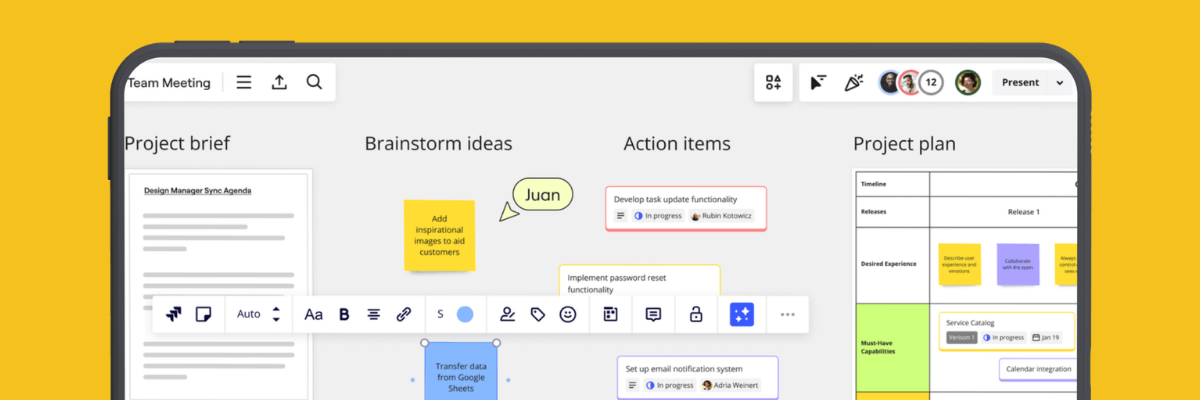
One Canvas Where Messy Thinking Turns Into a Plan
If you’ve ever tried to run a brainstorm over a Google Doc, you know the feeling. It’s technically fine. It’s also kind of meh. Ideas don’t flow in bullet points. They need space to sprawl, connect, and breathe.
Miro is the collaborative visual workspace where that thinking actually happens. Remote, hybrid, or all in one room: everyone gets a shared canvas to build on in real time.
Strategy sessions, sprint planning, workshops, retrospectives all land better when you can see them laid out visually.
Three things worth bookmarking:
🔀 Flowchart Maker: Map out any process step by step and spot the bottlenecks before they slow your team down.
🗂 Project Management Hub: Kanban boards, Gantt charts, and timelines in one shared space so nothing falls through the cracks.
✨ Miro AI: Turn a wall of sticky notes into structured next steps, and summarize workshop chaos in seconds.
JUST FOR FUN

COMMUNITY
 Upcoming Events
- Thurs 7/16 @ 10AM PT: The Decision Default with Laura Weldy (SGS Only* | Join the waitlist)
- Fri 7/17 @ 9AM PT: AI and Your Money: The New Financial Skill Nobody Taught You with Tess Waresmith (SGS Only* | Join the waitlist)
* Smart Girl Society is our private community for women who want deeper conversations, accountability, and tools that actually make life easier. Join the waitlist to get in the next round.

PET OF THE WEEK

Pet of The Week: Jameson George
Jameson has more personality than physics should allow. His best friend is a 120-pound Lab named Jasper, his hobbies include parkouring off the walls, and his preferred sleeping spot is squarely on someone’s face.
🐾 Got a cute fur baby? Submit them to be our pet of the week in an upcoming issue.
SPILL THE TEA
Take Our Poll
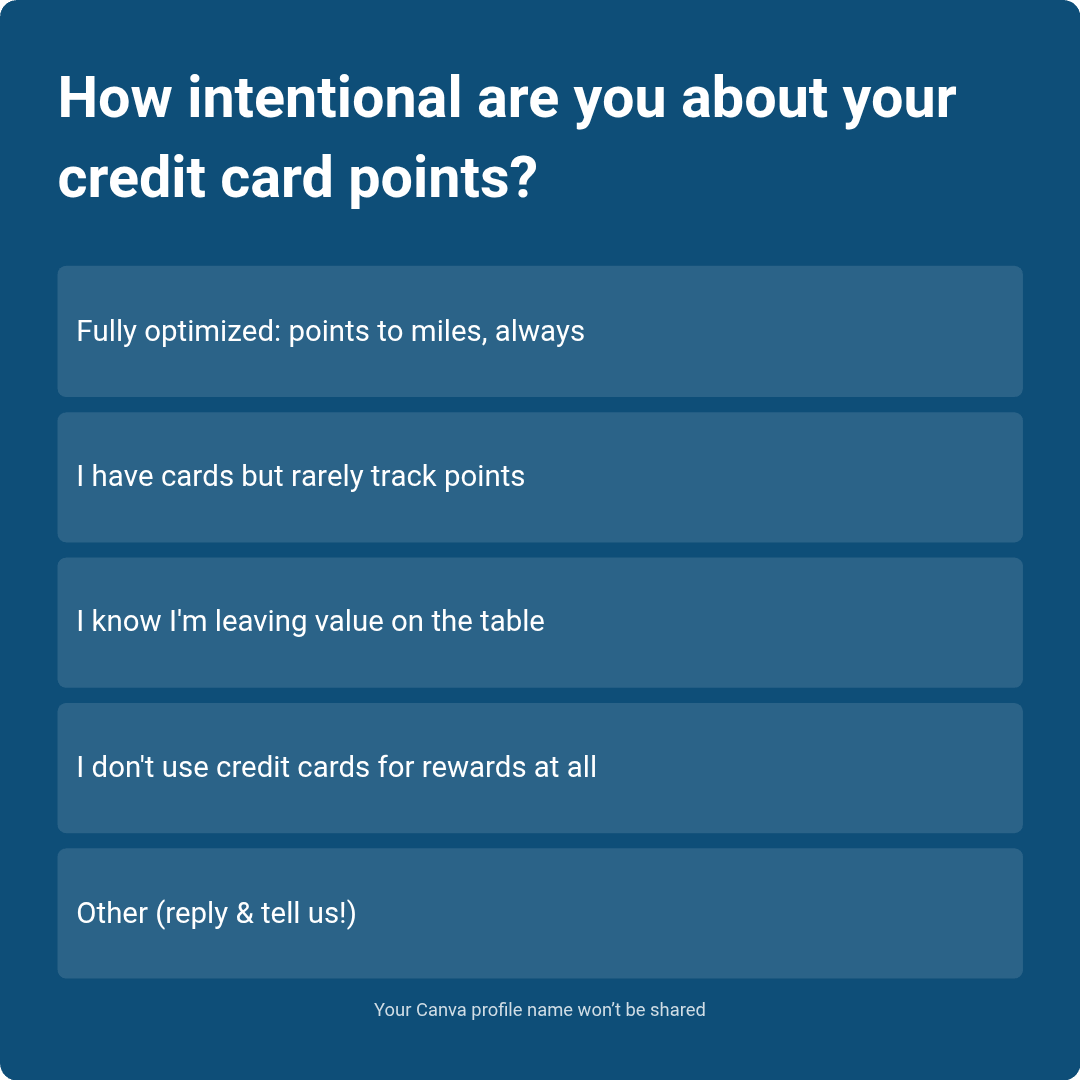
Have more feedback? 💌 Reply to this email and tell us.
✨ P.S. Want more inspiration and positivity to kick off your week? Sign up for our Motivational Monday texts (U.S. only).

👀 Want to see if your company is a good fit for our 250k+ ambitious readers? Join our Sponsor Waitlist here.