✅ Today’s Checklist:
-
Dr. Carrie on what high-achieving moms get wrong about kids’ screen time
- A therapist on moving past survival mode without forcing it
- Recipe of the week: Honey Garlic Butter Salmon Skewers
🤔 Trivia: What term describes AI systems that create new text, images, music, or video from prompts? Find out.
QUICK LINKS
🌿 Support your gut, skin, and whole-body health with this clinically studied Daily Synbiotic.
⏰ Georgetown’s Cal Newport says these two daily routines are the key to deeper focus and actually logging off.
🤖 Turns out the next frontier of AI might literally be above us.
🌸 Seven spring looks you can actually pull off with what you already own.
PARENTING

What High-achieving Moms Get Wrong about Kids’ Screen Time
Here’s what I hear constantly: “I know screens are a problem. But I’m exhausted. And screens are the only thing that buys me twenty minutes to decompress.”
There’s no shame in that. It’s survival.
The goal is to stop letting screens run the show.
I recently sat down with Titania Jordan, Chief Parenting Officer at Bark Technologies, on her podcast Parenting in a Tech World, to talk about how moms can navigate this. Titania is one of the most trusted voices in child tech-safety in the country, and she is so wonderful to share her own personal story as a working mom. She gave her son access to too much screen time, too early, and before either of them were ready. She’s still dealing with the consequences. And she has spent her career making sure other parents don’t have to.
The screen battle comes down to who controls the device. Willpower won’t fix this (neither yours nor your child’s).
When you hand a child an unguarded iPad or smartphone, the algorithm is in charge. When you put the right guardrails in place, which are simpler than you think and require no technical expertise, you get to say yes to connection while saying no to the harm.
You stop being the screen time police and return to being the loving, connected parent.
For the working-mom who is already mentally pulled in twenty-seven different directions before she walks in the door at night, that shift is everything.
Titania is one of six expert moms speaking at the free Parenting in the Digital Age Summit on May 12 and 13.
She’ll walk you through exactly what safer tech looks like, what the middle ground between “no phone” and a fully loaded smartphone actually is, and what real families are doing that works.
👉 Register for the free summit here.

Dr. Carrie Mackensen, clinical psychologist, author of the forthcoming Digitally Dysregulated, and host of the Parenting in the Digital Age Summit.
AI WORKFLOW
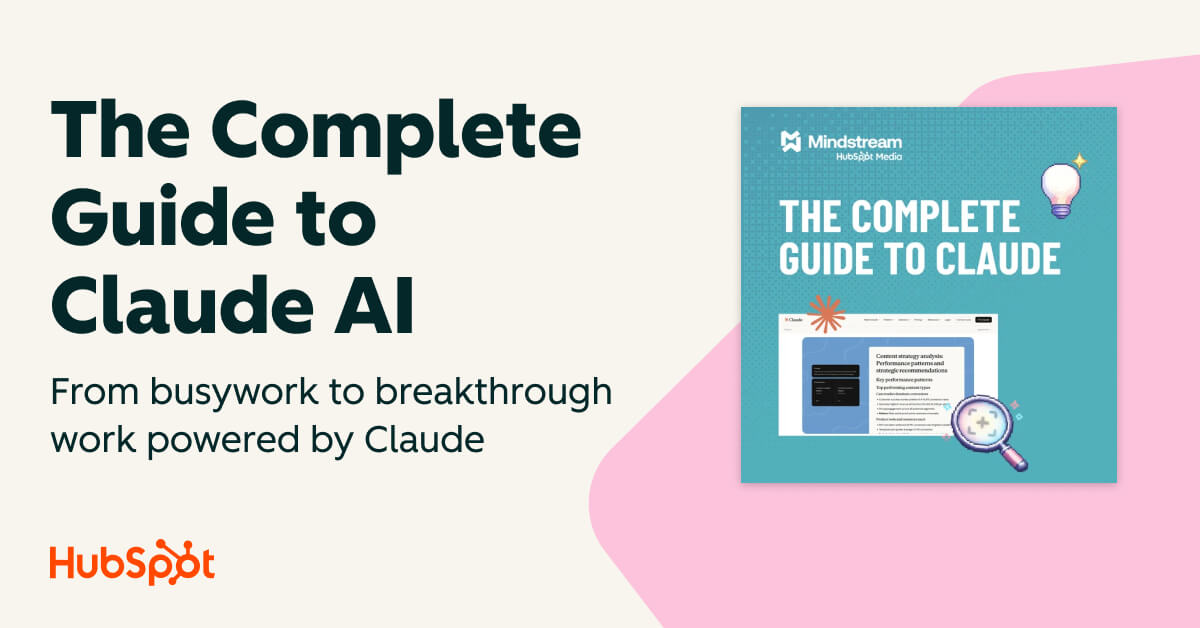
The Complete Guide To Transform Your Workday With Claude
Most professionals using Claude are using it to draft emails and look things up. Basically a smarter search engine. They’re missing the actual leverage.
The people who set Claude up properly are running real workflows on it: meeting summaries, follow-ups, content marketing with adaptive tone and multi-channel reach, data analysis that turns raw numbers into decisions. All delegated, consistent, and running while they focus on real work.
The free Claude AI at Work guide is the walkthrough for getting there.
Inside, you’ll find:
- The Executive Assistant setup
- Content marketing frameworks (adaptive tone, multi-channel, performance tracking)
- Data analysis playbooks
- A step-by-step blueprint for rolling Claude out across your whole team
The shift is operational: from backup brain to actual engine.
MENTAL HEALTH
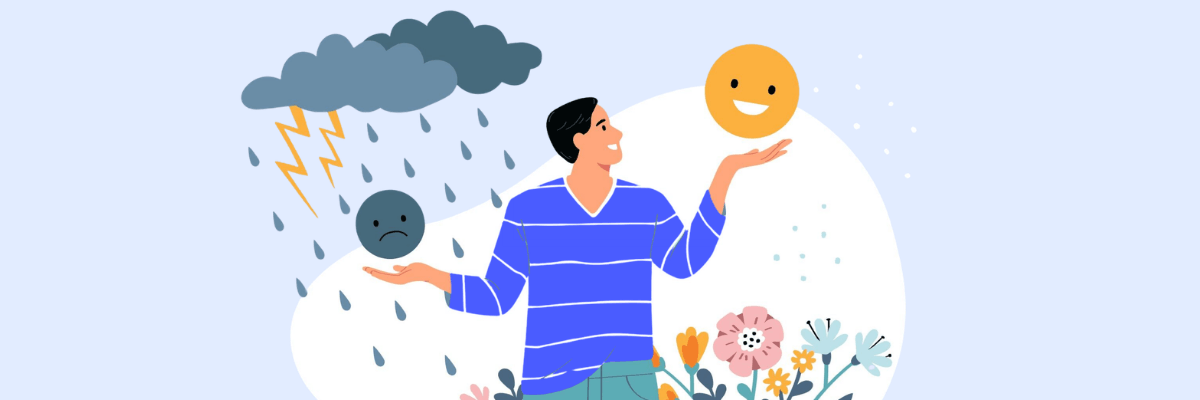
A Therapist’s Take: Moving Beyond Survival Mode
If there’s one thing humans are good at, it’s surviving. We’re wired to focus on what’s right in front of us: what needs fixing, what needs attention, what needs to get done. But we don’t always give that same attention to what’s happening inside.
As a therapist in private practice in Los Angeles, I spend a lot of time with people who feel overwhelmed by their own thoughts, emotions, or just the effort it takes to get through the day. And one thing I see over and over again is how little space we give ourselves to pause, take a beat, and check in.
Part of this makes sense. Our brains are wired for survival as they’re constantly scanning for potential threats and trying to keep us safe. But not everything our brain flags requires action. Sometimes what we’re feeling just wants to be noticed, no fix required.
When we start to look inward, we can begin to understand the difference between when something actually needs our attention and when we can create a little space for a feeling to exist without reacting to it. And from there, we can gently support our nervous system in settling so it can recognize safety, not just danger. That’s where we begin to move out of constant survival mode and into something more grounded… and even into moments of contentment and joy.
There’s still quite a stigma around mental health. Our society often encourages us to think it’s easier to fix something outside of ourselves than to gently explore what’s happening within. Mental health is also deeply personal, there’s no one-size-fits-all experience. But somewhere along the way, acknowledging our inner world became associated with being “less than,” instead of being seen for what it actually is: human.
Taking time to understand yourself is resilience. It’s how we move from just getting through the day to feeling more grounded in it. And maybe that’s part of how we not only survive but also do what humans have the potential to do… thrive.
Mental health exists on a spectrum. For some people, it might look like stress or low-grade anxiety that ebbs and flows. For others, it can feel much more intense, impacting daily functioning, relationships, or a sense of safety in their own mind or body.
In those moments, support matters. Turning inward is a meaningful place to start, but you don’t have to do it alone. Therapy, community, and sometimes additional support can be an important part of channeling safety and acting in resilience.
Small ways to begin shifting out of survival mode:
Name what’s happening.
Say to yourself: “I’m feeling anxious” or “this feels like a lot right now.” Naming it can help demystify it.
Ask: “Is this urgent, or does it just feel urgent?
This helps separate what actually needs action from what your brain is reacting to.
Slow your body first.
Before trying to fix your thoughts, take a few slower breaths, unclench your jaw, or drop your shoulders.
Look around you.
Find 3–5 things you can see, their color, and then their function. This helps remind your brain that you’re here, and you’re okay in this moment.
Take a small pause.
Even 30–60 seconds to check in with yourself can create a shift.
Shift how you talk to yourself to invite in compassion.
Try something like: “This is hard, and I’m doing my best.”
You don’t have to do all of this at once and you definitely don’t have to do it perfectly. We’re all wired to survive but this isn’t about getting it right; it’s about taking time to notice what works for you. This journey is anything but linear but that’s the best part about being human, we’re all just figuring it out as we go.

Kate M. Grogan (LMFT)
MOTHER’S DAY GIFTING
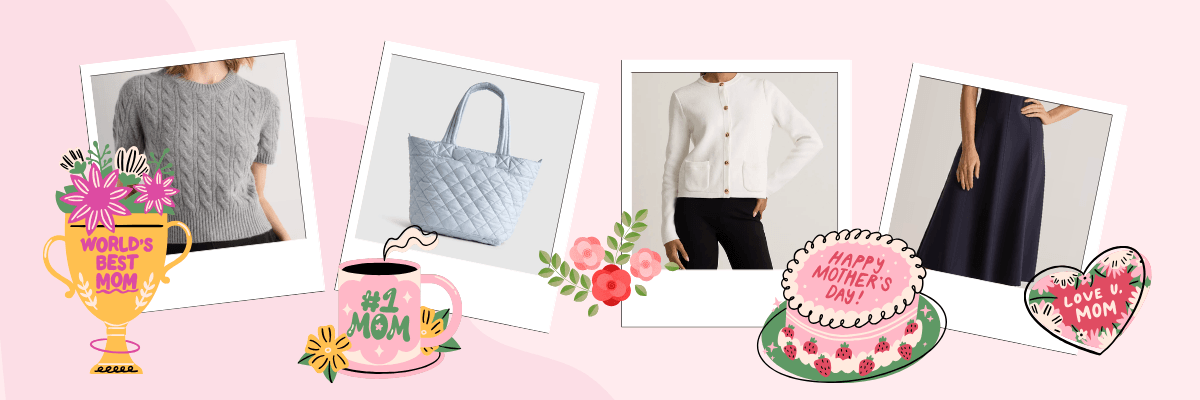
What To Get the Mom Who Does Everything
If you’re gifting your mom this Mother’s Day, skip the “nice in theory” gifts and go for pieces she’ll actually wear.
Start with the lightweight cashmere short sleeve sweater. It’s soft, breathable, and instantly polished. It’s the kind of top she’ll throw on and somehow look put together without trying.
Add the cotton sweater jacket, her new go-to layer for mornings, errands, and everything in between.
For everyday outfits, the organic cotton peasant blouse paired with ultra-stretch ponte ankle pants gives her comfort without sacrificing structure. Easy, flattering, and wearable anywhere.
On the days she doesn’t want to think about what to wear (which, let’s be honest, is most days), the linen dress or ponte midi dress takes care of everything in one step.
And because moms carry everything, the quilted recycled nylon tote holds it all, without feeling bulky or overwhelming.
Finish with classic staples like loafers or mid-heel mules she can wear all day.
These pieces are thoughtful, stylish, and something she’ll reach for again and again.
STAFF PICKS
Stuff We’re Loving This Week
👉 He replaced 80% of his staff with AI. Hear how and why he did it at this free event on 5/19. RSVP.
📚 The books you keep meaning to read, distilled into actionable takeaways. 25% off for TA readers.
🗞️ Why 1.5M+ pros start the day with The Hustle: biz, tech, and growth stories that don’t bore you, all in 5 minutes.
🔥 Grill season looks smarter with a stainless steel kabob set.
JUST FOR FUN
COMMUNITY
 Upcoming Events
- Thurs May 7 @ 9AM PT: Communication Workshop: Developing Conflict Intelligence (SGS Only* | Join the waitlist)
- Fri May 8 @ 9AM PT: Where to Invest First (401k, Roth IRA, or Brokerage?)
- Tues-Wed May 12-13 @ 6-9AM PT: How Screens Hijack Your Kid’s Brain and What to Do About It
* Smart Girl Society is our private community for women who want deeper conversations, accountability, and tools that actually make life easier. Join the waitlist to get in the next round.
👩🍳 Recipe of the Week: Honey Garlic Butter Salmon Skewers.
😋 Have a recipe you love? Share it here.

SPILL THE TEA
Take Our Poll
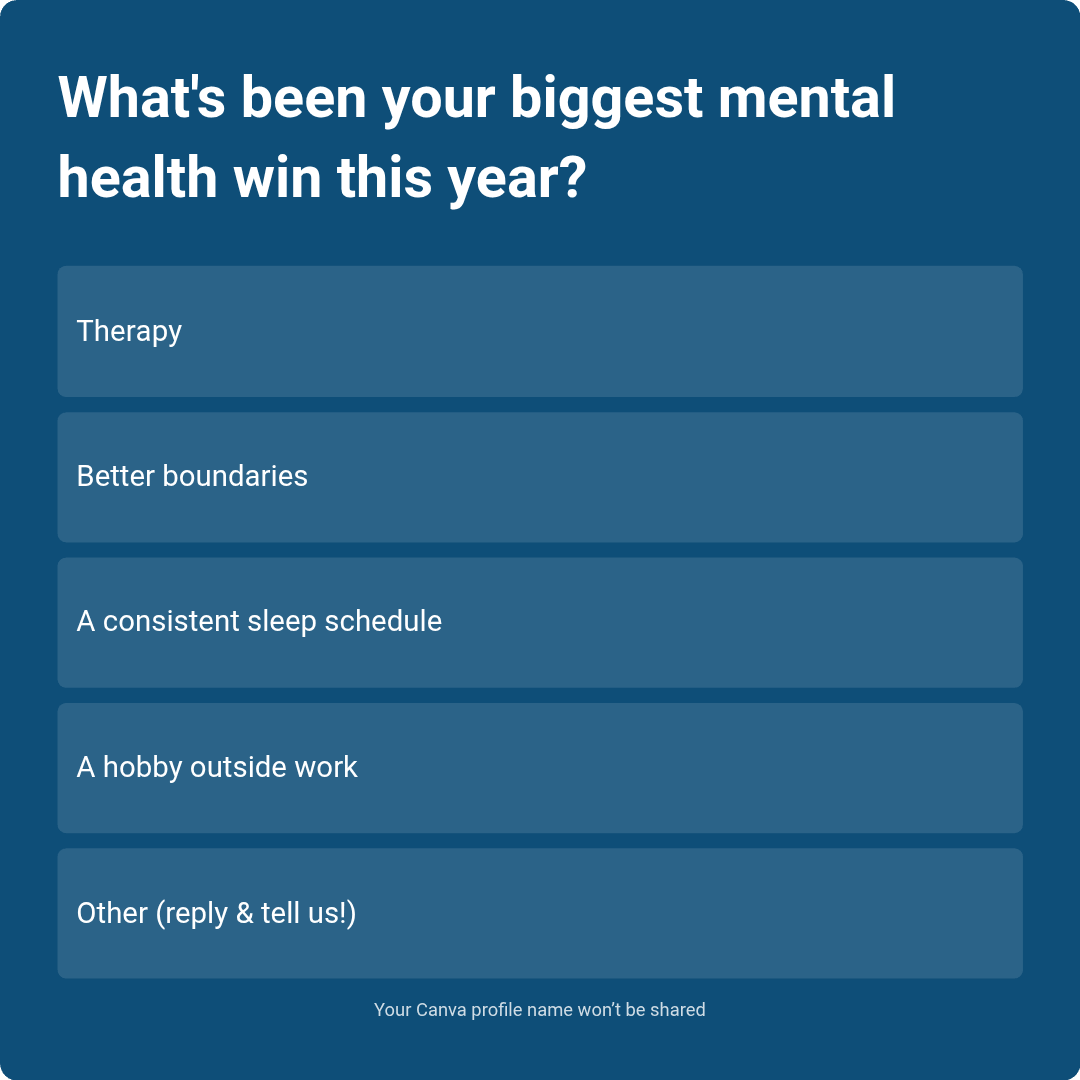
Have more feedback? 💌 Reply to this email and tell us.
✨ P.S. Want more inspiration and positivity to kick off your week? Sign up for our Motivational Monday texts (U.S. only).
👀 Want to see if your company is a good fit for our 250k+ ambitious readers? Join our Sponsor Waitlist here.