✅ Today’s Checklist:
- Your boss will love you if you do this in meetings
- Cameron on building up confidence
- Recipe of the week: Harissa Eggs in Whipped Goat Cheese
🤔 Trivia: What common houseplant is famous for surviving in very low light and neglect? Find out.
QUICK LINKS
📣 Hope you never need these, but three crisis comms strategies worth having ready just in case.
📋 Only 50% of companies prioritize women’s career advancement.
💤 Why sleep is the foundation of your mental health.
🎉 The way smart freelancers handle failure is genuinely different.
CAREER

How to Be the Direct Report Your Boss Wants to Promote
Managing up is one of the most underrated career skills out there. When you make your manager’s life easier, you stop being someone who needs to be managed and start being someone worth investing in. That shift, from employee to trusted collaborator, is what separates the people who get promoted from the people who wonder why they aren’t.
One of the clearest places to practice managing up is in your meetings, both one-on-ones and team settings. Most people treat meetings as something to show up to. The ones who are building real careers treat them as a chance to lead from wherever they sit.
The difference preparation makes
A passive direct report shows up, contributes when asked, and leaves. That’s the baseline, and the baseline doesn’t get noticed.
An engaged direct report operates differently. She’s looked at the agenda before the meeting and added her own items, or built one entirely if it didn’t exist. She’s linked relevant docs in advance so nothing has to be hunted down mid-conversation. She’s reviewed her notes from the last meeting and knows exactly what was discussed, what was decided, and what she committed to delivering. By the time the meeting starts, she’s already three steps ahead.
That level of prep isn’t people-pleasing. It’s operating like the mini CEO of your own role. It signals that you take your work seriously, that you respect other people’s time, and that you can be trusted to run things without hand-holding.
One-on-ones are your biggest opportunity
A one-on-one with your manager is not a status check for their benefit. It’s your meeting to use, and the way you show up to it says a lot about how seriously you take your own career.
Come with a running list of what you’ve been working on, what’s coming up, and anything you need a decision on or support with. Don’t wait to be asked about blockers, surface them proactively and bring a proposed solution when you can. That one habit alone will make you stand out, because most people wait to be asked, and by then the blocker has already slowed something down.
This is also where visibility becomes a real career tool. Sharing your wins in a one-on-one isn’t bragging, it’s giving your manager the information they need to advocate for you in rooms you’re not in. When your manager knows what you’re accomplishing, they can speak to your contributions with specifics. They can brag about the team, which reflects well on them, and in turn they can champion you up the chain. That cycle starts with you making sure your work is seen.
In team meetings, hold the thread
Team meetings are another place where engaged direct reports quietly differentiate themselves. Taking your own notes means you always know what was said, what was decided, and what’s expected of whom. You’re not relying on someone else’s summary or a half-remembered conversation from two weeks ago. You can pull up context, reference past decisions, and keep things moving in a way that makes the whole meeting more productive.
Taking your own notes is different from volunteering to be the team secretary. The goal is to keep yourself resourced and informed, not to absorb the administrative labor of the room. Whether or not someone else is capturing official notes, you have your own record of what matters to you and what you’re accountable for.
When you also come prepared with the documents, data, or references you anticipate others might need, you’re not just participating in the meeting. You’re contributing to the quality of it. That’s what makes a manager genuinely enjoy working with you, because you’re making her job easier without her having to ask.
Be a collaborator, not just a contributor
The goal of all of this is to change the dynamic of how you’re perceived at work. When you show up prepared, proactive, and genuinely useful, your manager stops spending mental energy managing you and starts thinking of you as someone she can rely on, delegate to, and champion.
That’s the person who gets the stretch assignment. That’s the person who gets pulled into conversations above her level. That’s the person who gets promoted, not because she worked the hardest, but because she made leadership look easy. You don’t want to just be an employee doing the job. You want to be the person your manager brags about. Start there, and everything else tends to follow.
FREE WEBINAR
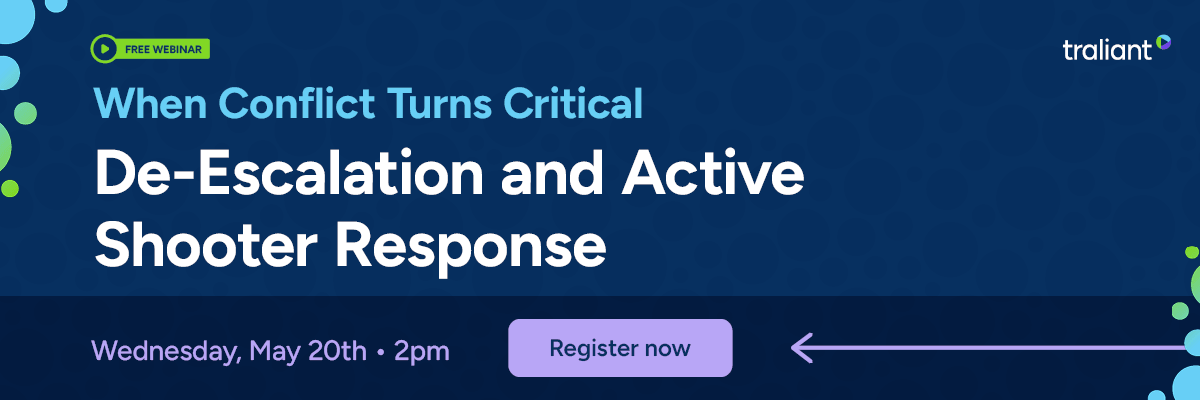
When the Tense Conversation Becomes the Crisis
HR leaders see these moments every day: a frustrated employee, a heated meeting, a workplace situation escalating faster than anyone expected. The cost of mishandling them is real, with disrupted teams, lost productivity, and managers stretched thinner than they should be.
The everyday tense moment is the harder thing for HR to prepare for, and the most effective de-escalation training equips employees to handle both that daily friction and the worst-case scenarios.
Traliant’s free webinar walks HR teams through that approach, from low-stakes conflicts up through higher-risk scenarios like active threats.
📅 Wed, 5/20 2-3PM ET: When Conflict Turns Critical: De-Escalation and Active Shooter Response
What you’ll take away:
- Practical ways to reduce disruption from everyday employee conflict
- How to build stronger judgment in high-pressure moments
- What effective de-escalation and response training should include
- SHRM/HRCI credit for attending
PERSONAL DEVELOPMENT

Where Confidence Really Comes From
“Wow, you are so confident.”
I started hearing some version of that a couple of years ago. Not about anything dramatic, just the way I talked about myself, the fact that I’d make a decision and not hedge it, the way I’d say my actual opinion in a group without shrinking it down first.
The feedback caught me off guard, because I’ve always been a strong, opinionated woman with the people closest to me.
If you know me, you know. I’m an only child, I’ve been independent since birth.
There was a version of me, though, that came out around new people or at work, a quieter version who second-guessed herself, softened her sentences, and questioned her own instincts halfway through expressing them. I wasn’t particularly happy with how I looked back then either, and I had a habit of making myself smaller to match.
The gap between those two versions of me was where the work had to happen.
Here’s the more useful thing I can offer: confidence isn’t one thing. It’s not a switch you flip.
Rebuilding it starts with figuring out exactly where yours is leaking, and then going to that specific spot and patching it. The women I know who actually did this work didn’t become confident overnight. They got specific about where they weren’t.
Why confidence is so hard in the first place
Before the how, the why. If you don’t understand what’s actually draining your confidence, you’ll just keep pouring water into a bucket full of holes.
For a lot of us, it’s perfectionism: impossibly high standards, and brutal self-criticism when we don’t meet them. This one is mine. If you’ve ever done something 95 percent right and fixated on the 5 percent, you know the feeling.
For others, it’s fear of failure or rejection. You don’t try the thing because if you don’t try, you can’t fail. You don’t say the thing because if you don’t say it, no one can reject it. The safety of not attempting starts to feel better than the risk of falling short.
For some, it’s comparison, especially the low-grade version that happens every time you pick up your phone. You aren’t comparing yourself to other women. You’re comparing yourself to the most flattering 30 seconds of their week.
For others, it’s internalized criticism. If you grew up being corrected more than celebrated, your nervous system learned early that staying small was safer than being seen. That’s not a character flaw, it’s a survival response that’s out of date.
And for many of us, it’s what the psychologist Dr. Russ Harris calls the confidence game: we set the bar so high it can’t be cleared, then punish ourselves for not clearing it. The game is rigged, and we’re the ones who rigged it.
If any of these resonate with you, that’s your starting line.
Now, comes the work
Once you know where your confidence is leaking, the rebuild gets a lot more targeted. Here’s what the research (and my own years of practice) says actually moves the needle.
Act first, feel later.
Confidence doesn’t arrive before the action, it arrives after.
You don’t wait to feel ready. You do the uncomfortable thing at a small scale, survive it, and let the evidence stack up. Speak up once in a meeting where you normally wouldn’t. Send the email without five rewrites. The feeling catches up to the action, not the other way around.
Rewrite the voice in your head.
The way you talk to yourself is a habit, not a fact. Start with one question: “Would I say this to someone I love?” If the answer is no, you’ve caught the voice. You don’t have to believe a kinder version yet. You just have to stop co-signing the cruel one.
Set boundaries, especially quiet ones.
Every time you say no to something that drains you, you’re telling yourself your time and energy matter. That message lands internally, whether anyone else notices or not.
Do things that make you feel like yourself.
Move your body in a way that feels strong. Sleep enough to have access to your own brain. Read, cook, make something. The unglamorous basics are load-bearing.
Be picky about who you’re around.
Notice who makes you feel sharper, funnier, and more yourself, and notice who makes you feel like you need to shrink. Spend more time with the first group. This isn’t ruthless, it’s honest.
For me personally, lifting heavy things changed my relationship to my own body, and practicing independence changed my relationship to my own mind.
And by independence, I don’t mean booking a solo trip to Italy. I mean being comfortable in your own presence, making decisions without polling your group chat first, trusting your own read on a situation.
I also lived alone during the hardest years of this work, and I do think it mattered. But you don’t need a studio apartment and a Sex and the City moment to rebuild your confidence. The apartment just helped me hear myself. You’ll find your own version.
And for what it’s worth: I’ve been in therapy for years. Not in crisis, just in maintenance. I recommend it the way I recommend going to the dentist.
How this shows up at work
Once the foundation is there, work starts to feel different. Not because the job changed, but because you did.
You make a decision and don’t relitigate it for three days. You delegate without apologizing. You push back on a partner when the ask isn’t right. You give feedback cleanly, without 14 softeners stacked on top. You take feedback without spiraling, because your sense of self is no longer housed inside a single meeting. You speak in the tone you use at home with the people who know you, because you’ve stopped performing a smaller version of yourself for work.
Here’s the part that matters if you lead anyone: your team can feel it. Confidence is contagious, and so is its absence. Your steadiness becomes the ceiling or the floor of theirs.
One more thing: The world rewards confidence even when it’s completely untethered from competence. You’ve watched people say wrong things with total conviction and get listened to anyway.
I’m not telling you to copy them. I’m suggesting you stop leaving the room to them. We do not need more loud, hollow confidence. We need more grounded women actually saying what they think, in the rooms they’re already in.
Confidence is a diagnosis and a practice.
You figure out where yours is leaking. You go to that specific spot. You do small, unglamorous reps nobody will clap for. You surround yourself with people who don’t require you to shrink. And one day, someone you trust will look at you and say “wow, you’re so confident.”
You’ll know exactly how you got there. In private, on purpose, one specific repair at a time.

Cameron (TA Newsletter Operations)
P.S. I’m just one reply away, and I’m always here to be your hype woman. If you’ve done this work yourself, we’d love to hear what helped you rebuild your confidence. Hit reply and tell us.

TOOL STACK

When Every Loose End Lands on Your Desk
HR records scattered across docs. Payroll that needs a second check. Scheduling buried in a long message thread. Project updates hiding across three platforms. Sales data living somewhere else entirely.
You spend half your day stitching it all together, and the day still ends with loose ends.
The weight gets a lot lighter when the right systems are doing their share of the work.
- BambooHR: keeps employee records, onboarding, and time-off tracking in one organized place, so the information you need is always easy to find.
- Paychex: handles payroll calculations, tax filings, and direct deposits, so paydays run smoothly and accurately.
- Bigin: helps small teams manage contacts, deals, and customer follow-ups without overcomplicating the sales process.
- Zoho Accounting: gives you a clear, real-time view of expenses, invoices, and cash flow.
- Quickbase: keeps projects, approvals, and timelines visible to everyone who needs them.
- Connecteam: simplifies scheduling, time tracking, and team communication on one platform.
- GoDaddy POS: syncs payments, inventory, and sales data automatically.
When these systems work together, the day feels easier to manage and far less draining to wrap up.
STAFF PICKS
Stuff We’re Loving This Week
📆 On 5/14, learn about the AI tools you actually need to see ROI from your organization. Join for free.
😌 The Mindful App is free to try, with meditations, quick resets, and reads worth bookmarking.
✨ Thanks to NARS light reflecting foundation, skin looks expensive in every light.
🎾 An athletic dress cute enough for errands and built for pickleball.
COMMUNITY
Upcoming Events
- Tues-Wed May 12-13 @ 6-9AM PT: How Screens Hijack Your Kid’s Brain and What to Do About It
- Thurs May 14 @ 9AM PT: Designing Your Next 12 Months Like a Promotion Strategy
- Fri 5/15: Team Step Challenge Begins (SGS Only* | Join the waitlist)
- Fri May 15 @ 3PM PT: Craft Night: Bring Your Own Craft (SGS Only* | Join the waitlist)
* Smart Girl Society is our private community for women who want deeper conversations, accountability, and tools that actually make life easier. Join the waitlist to get in the next round.
👩🍳 Recipe of the Week: Harissa Eggs in Whipped Goat Cheese.
😋 Have a recipe you love? Share it here.
SPILL THE TEA
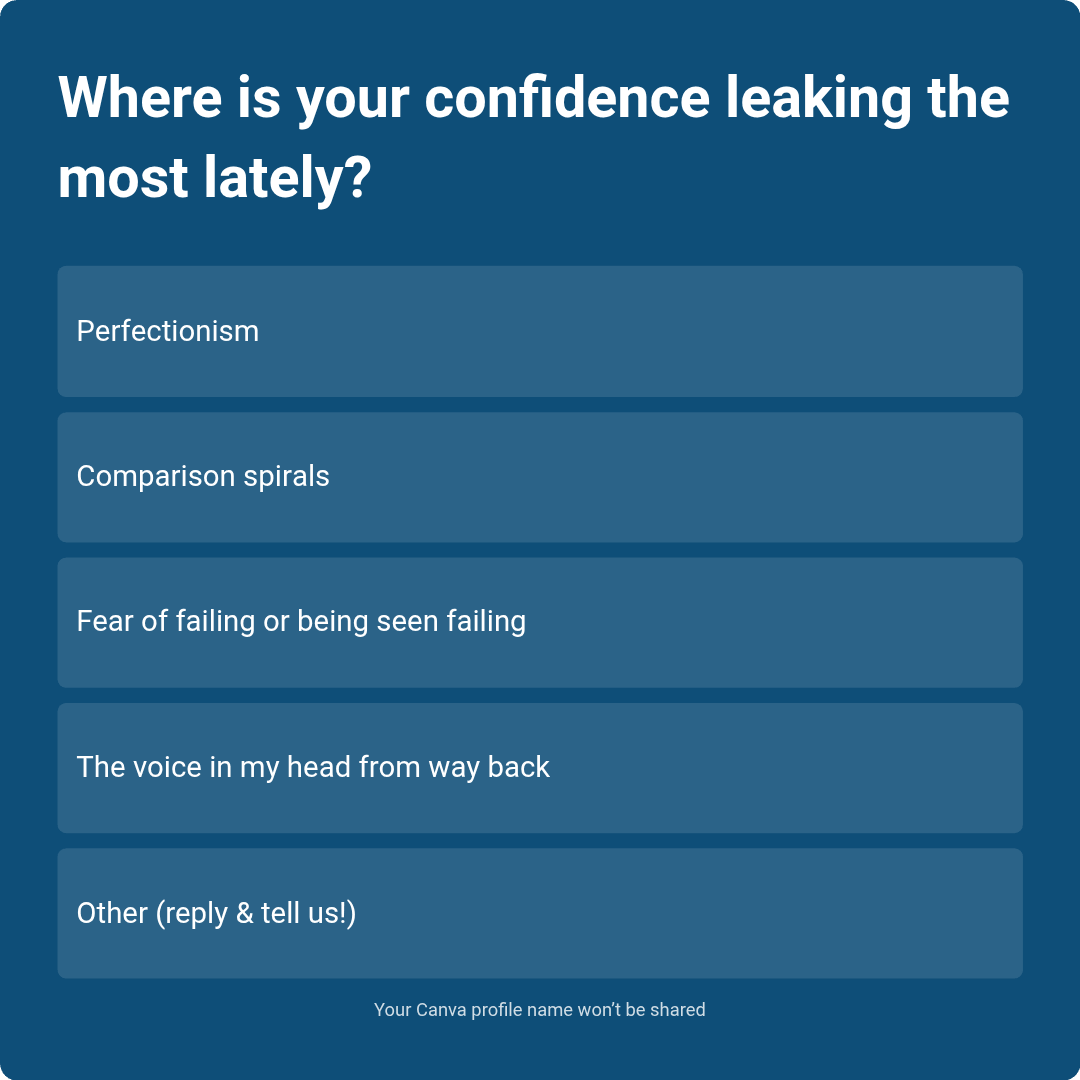
Take Our Poll
Have more feedback? 💌 Reply to this email and tell us.
✨ P.S. Want more inspiration and positivity to kick off your week? Sign up for our Motivational Monday texts (U.S. only).
👀 Want to see if your company is a good fit for our 250k+ ambitious readers? Join our Sponsor Waitlist here.