

✅ Today’s Checklist:
- Use Claude to manage your calendar
- Cameron shares her IBS journey
- Recipe of the week: Salmon Bowl
🤔 Trivia: Who became the first woman elected Prime Minister of the United Kingdom? Find out.
QUICK LINKS
🎮 Need a fun team break? These online group games actually deliver.
🧠 What chronic stress does to your body (and what you can do about it).
🌀 Fourteen ways to stop overthinking the thing you’ve been overthinking for three weeks.
🧩 Decision fatigue is real, and here’s how to stop hitting the wall at 4pm.
CALENDAR HACK

Let Claude Run Your Calendar (It’s Free)
If your calendar feels like a second job, it’s because it kind of is. Between scheduling meetings, reorganizing when things inevitably shift, and trying to carve out actual time for focused work, managing your calendar can eat up more mental energy than it should. The good news: Claude can handle a lot of that for you, it’s free, and the setup takes about five minutes.
1) Sign up for Claude
If you don’t already have an account, head to claude.ai and create one. No paid plan required. The Google Calendar connector is available to all users on the free plan, so you can get the full benefit of this feature without upgrading.
2) Connect your Google calendar
Once you’re in, navigate to the Connectors section in the app. This is where you can link Claude to your existing tools, including Google Calendar. Connect your account, give it the necessary permissions, and you’re ready to go. The whole process takes a few minutes and you only have to do it once.
One note if you’re trying to set this up through a work account: if your company is on a Team or Enterprise plan, your organization’s admin will need to enable connectors at the organization level before you can access them. If it isn’t showing up for you, that’s likely why.
3) Open a chat and start delegating
Once your calendar is connected, open a chat with Claude and talk to it the way you’d talk to an assistant. Ask it to schedule a meeting, move something that’s conflicting, block off focus time, or clear your afternoon. You can be as specific or as casual as you want.
Here’s the part worth knowing upfront: every action Claude takes on your calendar requires your explicit approval before anything actually changes. Claude will tell you what it plans to do and wait for you to confirm. So there’s no risk of it rearranging your week without your sign-off. Not sure where to start? This walkthrough shows exactly how the calendar integration works in practice and is worth a watch before you dive in.
4) Use it to plan your entire week
One of the most underrated things you can do with Claude is hand it your full task list and let it help you build out your week. Give it your tasks, your estimated time for each one, and any priorities or deadlines, and ask it to organize everything into a realistic daily or weekly schedule. It will map things out based on what you’ve told it and slot tasks around your existing commitments.
This is especially useful on Sunday evenings or Monday mornings when you’re trying to get ahead of the week. Instead of staring at a blank planner and a chaotic to-do list, you hand the thinking off and start the week with a plan already in place.
Work smarter
Calendar management is one of those tasks that feels small but adds up fast. The back and forth of scheduling, the mental load of remembering what needs to move when something changes, the Sunday anxiety of not knowing how the week is going to come together. Offloading that to Claude frees up the mental space for the work that actually needs you. And the fact that it costs nothing to start makes it one of the easiest productivity upgrades you can make right now.
PERSONALIZED WELLNESS

The Bloodwork Your Annual Physical Skips
You know something is off. Energy is lower, sleep is weirder, workouts hit differently, and the bloodwork keeps coming back “normal.” Most labs weren’t built to catch midlife shifts, so the patterns get missed and the symptoms get explained away.
A clinician at Midi reviews your hormones, cholesterol, thyroid, and inflammation markers, then builds a plan mapped to your biology. Insurance covers visits in every state.
Book your virtual visit today and find out what your labs have been missing.
GUT CHECK

For My Hot Girls With Tummy Issues
Somewhere between 25 and 45 million Americans have IBS. Two out of three of them are women… and almost none of us are talking about it.
If you’re doing the math, that’s a population the size of Texas negotiating with their digestive system every day, mostly in silence, mostly without a real plan.
I’ve been one of them for as long as I can remember. Long before I had a name for it, I was just the girl with the sensitive stomach. The formal diagnosis came later, and what came after that was the slower, more frustrating realization that “IBS” is sometimes the answer a doctor gives when they don’t want to keep looking.
So here is the editorial I wish someone had handed me at 12, and then again at 20. Whether you have IBS, suspect you have IBS, or have a friend, daughter, sister, or coworker who keeps saying she has a sensitive stomach, this one’s for you.
What IBS actually is
Irritable bowel syndrome is a disorder of how your gut and your brain talk to each other.
It’s not in your head, but the brain-gut connection is real, which is why stress can light up your symptoms even though it didn’t cause the condition in the first place.
The technical name for IBS is a “functional gastrointestinal disorder,” which is medical-speak for your gut isn’t working right, but nothing is structurally broken when we look at it.
There are 4 subtypes, sorted by what your bowel habits look like on a bad day:
- IBS-D: diarrhea-predominant
- IBS-C: constipation-predominant
- IBS-M: mixed, where you flip between the two
- IBS-U: unclassified, when your symptoms don’t neatly fit the other three
There is no blood test or scan that confirms IBS. There is no cure. And, somewhat infuriatingly, there is no single medication that treats it across the board.
How common is IBS?
Roughly 11% of people worldwide have IBS, and women are diagnosed at nearly twice the rate of men. In the U.S., that adds up to somewhere between 25 and 45 million people. About 2 out of every 3 of them are women.
Most people are diagnosed before 50, and a lot of us, like me, start showing symptoms much earlier. If you’ve been assuming everyone has the stomach you have, the math says probably not.
The textbook symptoms
Textbook IBS is recurring abdominal pain tied to your bowel habits, plus at least two of these:
- Pain that gets better (or worse) after a bowel movement
- A change in how often you’re going
- A change in what your stool looks like (yes, really, this matters)
Layer in the supporting cast: bloating that makes your jeans feel hostile by 4 p.m., gas, cramping, and that unique flavor of fatigue that comes from your body spending all its energy on your digestive tract.
The symptoms that are NOT just IBS
This is the part I want to put in bold and tape to every doctor’s office door. The following are called “alarm features,” and they should never, ever be brushed off with an IBS shrug:
- Blood in your stool
- Unintentional weight loss
- Iron-deficiency anemia
- Symptoms that wake you up at night (real IBS tends to leave you alone while you sleep)
- A family history of inflammatory bowel disease, celiac disease, or colon cancer
- New symptoms that appear after age 50
- Persistent vomiting or trouble swallowing
If any of these are part of your picture and a doctor still hands you the IBS label without doing further workup, that is your sign to push back or find a new doctor. The conditions that mimic IBS, like celiac disease, Crohn’s, ulcerative colitis, and microscopic colitis, are treatable, and some of them get worse the longer they go unaddressed.
How to actually find out if it’s IBS (and not something else)
A proper IBS diagnosis is not just we ruled out everything else.
The current gold standard is something called the Rome IV criteria, which is a symptom-based checklist your doctor uses. You should have recurrent abdominal pain at least one day a week for the last 3 months, with symptoms starting at least six months ago, tied to bowel habits.
Before that label sticks, a thorough doctor should rule out:
- Celiac disease, with a simple blood test (the tTG-IgA antibody test).
- Critical note: you have to be eating gluten for this test to work. If you have gone gluten-free first, the test can come back falsely negative.
- Inflammatory bowel disease (IBD), often through a stool test called fecal calprotectin and sometimes a colonoscopy
- Lactose or fructose intolerance, through breath tests
- Thyroid issues, with basic bloodwork
- Bile acid malabsorption, if your symptoms are diarrhea-heavy
Up to 24% of people who meet the Rome criteria for IBS actually have one of these other conditions hiding underneath. So if your gut tells you something else is going on, listen to it. Literally.
How to deal with it when it really is IBS
There is no cure, but “no cure” is not the same as “nothing you can do.” A real management plan usually pulls from a few categories at once.
Food
The most evidence-supported dietary approach is the low-FODMAP diet, developed at Monash University in Australia. FODMAPs are short-chain carbohydrates that are poorly absorbed in your small intestine and then fermented by the bacteria in your gut, producing gas and pulling extra water into your intestines. For people with sensitive guts, that combo is the chaos. Studies show about 75% of IBS patients feel meaningfully better on a low-FODMAP plan, often within a week.
Important note:
The diet is meant to be temporary. You strictly eliminate high-FODMAP foods for two to six weeks, then methodically reintroduce them to find your specific triggers. Doing this with a registered dietitian is ideal because the elimination phase is restrictive and you don’t want to live there forever.
Stress and your nervous system
Because your gut and your brain are in constant conversation, what calms your nervous system tends to calm your gut. The two interventions with the strongest research are gut-directed hypnotherapy and cognitive behavioral therapy. Yoga, regular sleep, and consistent movement also pull weight here.
Targeted symptom support
Depending on your subtype, your doctor may prescribe medications for the specific symptom that’s bothering you most:
- Laxatives or linaclotide for constipation
- Loperamide or rifaximin for diarrhea
- Antispasmodics for cramping
- Peppermint oil capsules have surprisingly solid research behind them for cramping and bloating
- Please always consult your doctor prior to starting any medications.
The basics nobody wants to hear
Small, regular meals. Enough water. Less alcohol. Less caffeine. Less fried-and-fatty.
These aren’t sexy (or fun tbh), but they’re consistently the foundation of every IBS plan that actually works.
The foods that tend to be friendlier
If you want a starting point before you commit to a full elimination diet, these are generally well-tolerated by IBS guts:
- Proteins in their plain form: chicken, turkey, fish, eggs, firm tofu. Plain. Unprocessed. The marinades and the deli meats are often where the trouble hides.
- Grains like rice (any variety), oats, quinoa, buckwheat, and corn-based products.
- If you suspect gluten could be a problem, be careful with non-GF grains!
- Vegetables like carrots, cucumber, zucchini, spinach, bell peppers, green beans, and potatoes.
- Fruits in moderate portions: strawberries, blueberries, kiwi (kiwi has actual research showing it helps with IBS-C), pineapple, cantaloupe, and underripe bananas.
- Fats like olive oil and small portions of nuts (walnuts, macadamia, peanuts).
- Dairy alternatives that are lactose-free, or naturally low-lactose options like hard cheeses.
The big-picture reason these foods tend to work: they’re low in the fermentable carbohydrates that ferment hard and fast in your gut, they don’t pull excess water into your intestines, and they’re easy on a digestive system that’s already on high alert.
What I wish someone had told me sooner
That a diagnosis is the start of a conversation, not the end of one.
That “you have IBS” doesn’t excuse a doctor from explaining what that means or helping you build a plan.
Those symptoms that scare you deserve a second opinion, especially when the first one was delivered in under five minutes.
That you can have IBS and something else. The label is not a ceiling.
And that the women in your life who say they just have a sensitive stomach are probably carrying around a lot more than you realize. Ask them how they’re doing. Ask their doctors better questions. Ask your own.
A sensitive gut is not something to apologize for. It’s information. The work is figuring out what your specific body is trying to tell you, and then refusing to settle for an answer that doesn’t actually help.

Cameron (TA News Ops)
WORK SMARTER
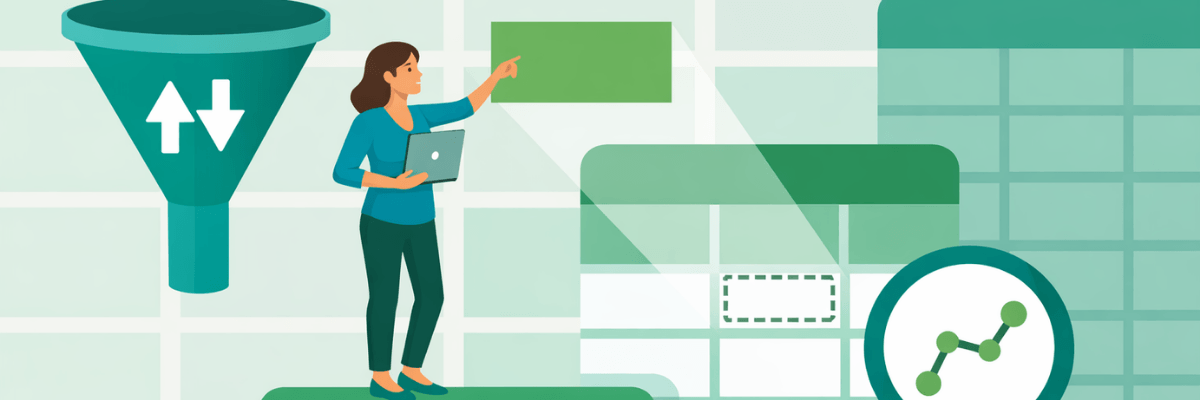
If You Use Excel at Work, This Will Save You Hours
Be honest: how much of your Excel workflow is manual because “that’s just how you learned it”?
Dragging formulas. Cleaning columns one by one. Double-checking you didn’t break something.
Chances are you learned Excel by Googling, copying formulas, and hoping for the best.
Miss Excel (Kat Norton) is hosting a free 60-minute class that teaches the shortcuts and automations most of us never learned — the kind that make you faster and way more confident when someone asks for numbers “real quick.”
You’ll learn how to:
- clean messy data in minutes
- use formulas that actually save time
- build simple reports and pivots
- automate repeat tasks
- move at keyboard-shortcut speed
If Excel shows up in your job even occasionally, this pays off immediately.
STAFF PICKS
Stuff We’re Loving This Week
📆 TOMORROW: Get the playbook for AI-native sales leadership at this free event. RSVP for free here>
👉 Bobbi Brown’s makeup is so good. Jones Road’s sale ends Thursday (code ASSIST = a free Best Blush).
🏸 Beginner-friendly two-pack tennis rackets for whoever decided this is the year of the sporty era.
☀️ The SPF your dermatologist actually keeps on her own bathroom shelf.
JUST FOR FUN

COMMUNITY
 Upcoming Events
- Thurs May 28 @ 4:30PM PT: Virtual Happy Hour (SGS Only* | Join the waitlist)
- Fri May 29 @ 10AM PT: Automate Your Life Workshop (SGS Only* | Join the waitlist)
- On Demand: Harassment Training Employees Actually Want to Watch
* Smart Girl Society is our private community for women who want deeper conversations, accountability, and tools that actually make life easier. Join the waitlist to get in the next round.
👩🍳 Recipe of the Week: Salmon Bowl.
😋 Have a recipe you love? Share it here.

SPILL THE TEA
Take Our Poll
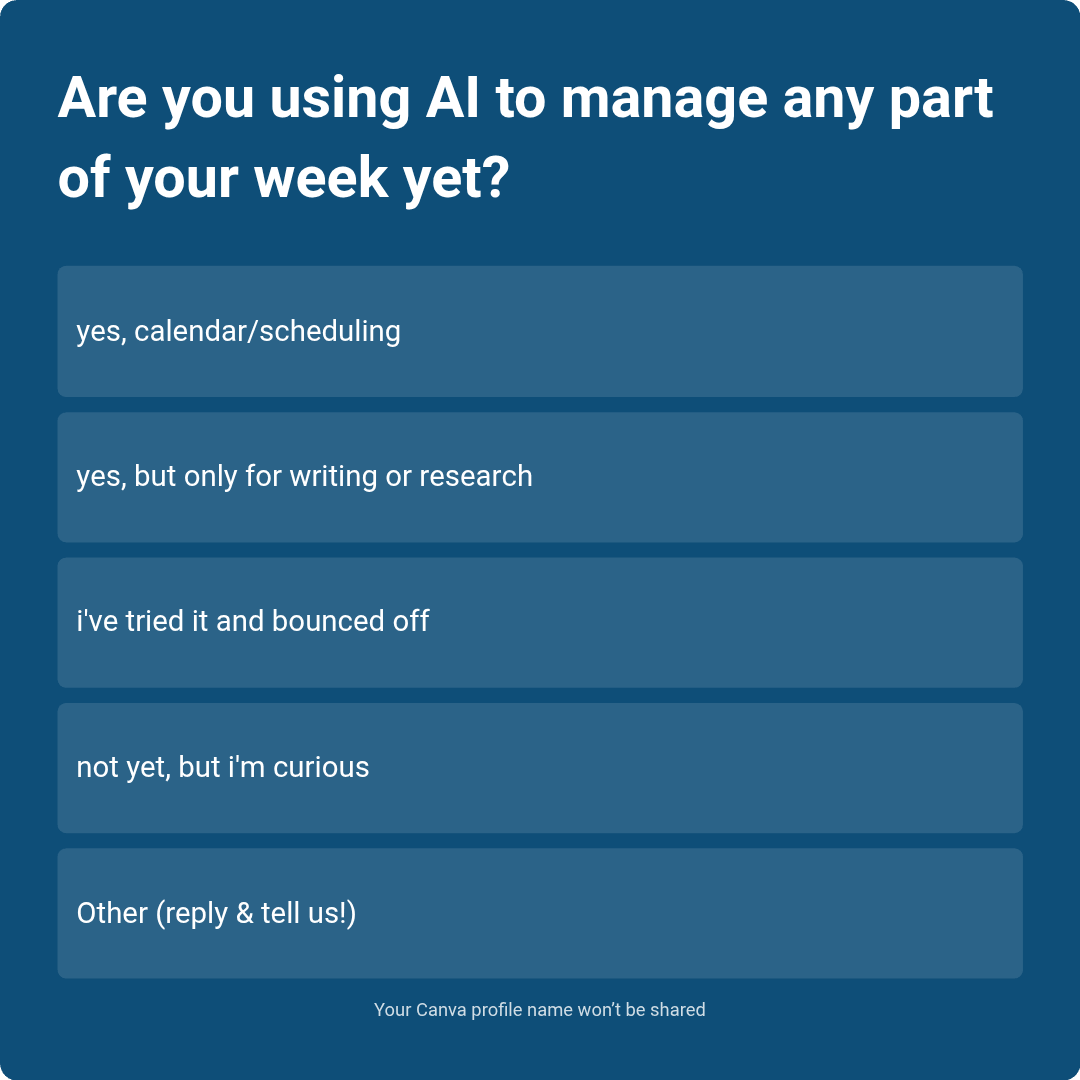
Have more feedback? 💌 Reply to this email and tell us.
✨ P.S. Want more inspiration and positivity to kick off your week? Sign up for our Motivational Monday texts (U.S. only).
👀 Want to see if your company is a good fit for our 250k+ ambitious readers? Join our Sponsor Waitlist here.