

✅ Today’s Checklist:
- Where your 401k fees go (and how to stop them)
- The blood-testing platforms worth the money, ranked
- Recipe of the week: Air Fryer Blackened Fish Tacos
🤔 Trivia: What’s the only fruit that has its seeds on the outside? Find out.
📆 Free live training, Thursday 7/9 @ 9am PT / 12pm ET: why your to-do list keeps letting you down, and the quarterly goal system to run instead. Grab your spot.
QUICK LINKS
🧠 Why executive coaching skills are the career edge AI can’t replicate.
☕ Six self-care moves that protect your focus when work runs hot.
👑 The real data on women in leadership, and the barriers still holding us back.
📨 Five conversations every team needs before Slack chaos sets the norms for you.
FINANCES

Your 401k Has Been Charging You Fees This Whole Time
You’ve been contributing to your 401k for years, maybe decades. You watch the balance grow, feel good about it, and move on. What you probably haven’t done is check what’s being subtracted from that balance every single year
That’s not a personal failing. 401k fees are designed to be invisible. They don’t show up as a line item the way a bank fee would — they get pulled straight from your investment returns before you ever see them. Which means most people have no idea they’re even paying them.
Here’s what’s actually happening in your account.
There are three types of fees (and you’re likely paying all of them).
The U.S. Department of Labor breaks them down like this:
- Investment fees (the big one): Charged by the funds themselves, expressed as a percentage of your balance. This is called the expense ratio. The average 401k participant paid 0.26% on equity funds in 2024, but if your plan is stacked with actively managed funds, you could be paying 1% or more.
- Plan administration fees: These cover recordkeeping, compliance, customer service. Either your employer absorbs them or they get charged to your account (sometimes as a flat annual fee), sometimes as a percentage on top of fund costs.
- Individual service fees: One-off charges for things like taking a loan from your plan or requesting a paper statement. Optional, but easy to overlook.
The math is the wake-up call
A 1% fee difference doesn’t sound like much. But $100k invested at 0.5% fees vs. 1.5% fees over 30 years — same contributions, same 7% return — produces a $142,000 difference. That’s not a bad market or a bad investment choice. That’s just the fee structure doing its thing in the background.
How to find out what you’re actually paying
Your plan is legally required to give you an annual fee disclosure document (look for “404(a)(5) disclosure” or “Annual Participant Notice” in your plan portal under Plan Documents). It lists every fund option and its expense ratio, plus any additional plan-level charges. Add up the expense ratio of your current funds plus any admin fee to get your all-in cost.
If you can’t find it, email HR and ask. They have to give it to you.
What you can do right now
- Switch to index funds within your plan. Most plans offer them, and they cost a fraction of actively managed funds, often under 0.10% vs. 0.75%+. Log in, compare expense ratios, reallocate.
- Roll old 401ks into a low-cost IRA. If you have a 401k sitting at a former employer, it may be charging fees with nothing offsetting them. Rolling it to Fidelity, Vanguard, or Schwab gives you access to funds as low as 0.03%.
- Ask your employer to add better options. Under ERISA, employers have a fiduciary duty to offer reasonable, diversified options at reasonable cost. A written request from employees, especially one citing DOL benchmarks, has weight.
The fees exist whether you pay attention to them or not. The difference is what you do with that information.
This article is for informational purposes only and does not constitute financial advice. Consult a licensed financial advisor for guidance specific to your situation.
PEOPLE OPS

The HR Mistakes That Cost You Good People
Your best employee just put in her two weeks. The onboarding was fine. The benefits were fine. The performance review happened… eventually. “Fine” and “eventually” are how you lose people who had options.
Most HR breakdowns live in the unsexy middle: the offer letter that took four days, the new hire without a laptop until week two, the comp that drifted below market until an exit interview caught it.
Three tools worth knowing:
BambooHR is for small and mid-size teams that have outgrown spreadsheets. It centralizes employee data, automates onboarding, and gives managers a clean view of everything in one place.
HiBob is built for fast-scaling, distributed teams. Its people analytics surface retention risk and comp gaps before they show up in a resignation email.
Rippling handles HR, IT, and payroll from one dashboard. New hire joins, accounts get provisioned, payroll gets set up, equipment gets ordered automatically.
The companies keeping their best people right now treat HR as infrastructure.
👉 Not sure which tools your team actually needs? Browse 42 HR tools by category and find the right fit for your size, budget, and biggest headaches.
HEALTH & WELLNESS

Are These Blood Test Platforms Even Worth It?
I’m the person my friends text at midnight when their doctor says “your labs look fine” but they still feel terrible.
I was that patient for years: undiagnosed autoimmune disorder, chronic eczema, a body doing things that nobody could explain because the standard 12-marker blood panel kept coming back “normal.” I spent years advocating for my own labs, arguing for panels that weren’t “medically necessary,” submitting stool samples, testing my microbiome, doing the things that got me side-eyes from conventional doctors but ultimately cured me. So when I say I’ve been through my own set of blood testing, I mean it.
At this point in my life, I’m healthy and just always looking for ways to biohack and optimize. I want to live well into my 90s as a happy, healthy old lady. That’s genuinely the goal. So when I started hearing about companies like Function Health, I was intrigued and went down the rabbit hole researching all of them.
Here’s what I found.
The problem with the traditional system
Before I break down the platforms, you need to understand what they’re solving for because it’s bigger than “more blood tests.”
The standard medical system gives you roughly 12–15 markers at your annual physical. If nothing’s flagged in a critical range, you’re told you’re fine and sent home. What it doesn’t do: track trends over time across multiple doctors, spot early patterns before symptoms appear, or let you access anything in one place. Your cardiologist doesn’t see what your GYN ordered. Your new PCP doesn’t have the panel your last doctor ran two years ago. The data exists, but it’s scattered, siloed, and functionally useless for anyone trying to understand their health as a whole.
That’s what these companies are actually building: a centralized, longitudinal picture of your body’s biomarkers, tested frequently enough to catch what’s changing.
A breakdown of the players out there
1. Function Health: The One I’d Pick Today
Function tests 160+ biomarkers chosen by what they describe as the world’s top doctors covering heart health, hormones, immunity, metabolic function, early signs of cancer, and more. The premise is proactive detection: spotting changes before symptoms appear, so you can act earlier.
What makes Function stand out:
The imaging add-ons. No other company in this space offers this kind of depth at an accessible price point. Members can add MRI scans, a Lung CT, and a Heart CT, covering everything from early cancer screening to brain health to heart disease risk. Full details on what each scan covers here.
The centralized records. You can upload labs from previous records and health history so everything lives in one place over time. This is the piece that matters most to me. Instead of a drawer of PDFs from five different portals, you have a running timeline of your health that’s being tracked and benchmarked, so you can actually spot patterns and red flags before they become emergencies.
The testing cadence. They retest every 3–6 months. That’s how you build the baseline. One lab result tells you where you are; repeated testing tells you where you’re going.
The pricing. $365 for one year. Currently running a deal: two years for $500. They apply a $200 credit toward the Annual MRI for members. Concierge blood draw available as an add-on (they come to you).
My one real note on Function: the $999 MRI is an investment. But when I think about what it costs to get an MRI through the traditional system — fighting for coverage, making a case for why it’s “medically necessary,” paying out-of-pocket if they deny it — $999 as a member is genuinely the most affordable access point I’ve seen for this kind of imaging.
2. Superpower: If You’re Managing Supplements + Meds
Superpower’s setup looks similar to Function at first glance, but it goes broader: it factors in your supplements and medications alongside your labs, which is something Function doesn’t explicitly address. They also have an in-app marketplace for prescription supplements and year-round access to a care team, so you’re not just getting data, you’re getting ongoing guidance on what to do with it.
Pricing: $200/year.
Who it’s for: If you’re already managing a supplement protocol or on medication and you want your lab results interpreted in that context, Superpower fills a gap Function doesn’t. If you’re just starting your health optimization journey and want the most comprehensive biomarker picture, Function’s depth is still stronger.
3. Mito Health: Solid But Less Comprehensive
Similar concept to Function and Superpower, priced at $350/year. The catch: their base membership doesn’t include the same breadth of testing. Some of what’s standard on Function and Superpower shows up as a paid add-on at Mito. Worth knowing before you compare sticker prices.
4. SiPhox Health: Build-Your-Own Option
SiPhox lets you select your specific biomarkers rather than buying a bundled panel, and appears to allow more frequent testing than the others. If you already know your body well and want to track specific markers closely (think: someone deep in their optimization era who knows exactly what they’re monitoring), this is worth a look. The pricing wasn’t fully transparent on their site — an introductory offer of $74 was advertised but the cadence wasn’t clear, so read the fine print before signing up.
5. Hundred: Budget-Friendly Function Alternative
Hundred offers a similar experience to Function at $200/year — a solid lower price point if imaging isn’t on your radar. No CT or MRI add-ons available, which is a meaningful gap for anyone who wants the full-body picture. But if you’re mainly focused on biomarker tracking and want a clean, centralized platform at a lower commitment, this is worth considering.
6. Hers: Simple Panel, Limited Info
Hers launched what appears to be a 40-marker panel at under a dollar a day. Their site doesn’t disclose which 40 markers are included, which is a red flag when you’re trying to evaluate what you’re actually getting. This reads more like a discounted comprehensive panel than a true proactive health platform, a reasonable entry point, but not the same category.
7. Hone — One-Time Test, Not a Platform
Hone offers a one-time panel (40 markers) for $65. No longitudinal tracking, no records storage, no imaging. Good for a snapshot; not useful if what you want is to monitor changes over time.
MY TAKE
If I had to pick one today, it’s Function.
The depth of testing, the imaging add-ons, the centralized records, the pricing relative to what you’d pay trying to cobble this together through the traditional system — it’s the most complete option I’ve found.
If you’re deep in supplement/medication management and want a care team factoring that into your results, layer in Superpower. If you’re already tracking specific markers and want to build your own protocol, look at SiPhox.
Note: I’m not a doctor and nothing here is medical advice. I haven’t personally signed up for any of these platforms — this is based on my research into each one.

Thania (TA Content Mgr)
MENOPAUSE AT WORK

The Workplace Has a Menopause Problem and the Data Is Hard to Ignore
You powered through the 3am wake-ups, blamed yourself for the brain fog in meetings, and pushed past fatigue a good night’s sleep stopped fixing years ago. You kept showing up, because nobody around you was naming what was happening.
Hone Health is naming it. Their Menopause Time Off Movement exists because 1 in 5 women have left a job or retired early over perimenopause symptoms, and most workplaces still have no policy for it. Hone is backing it with a $50K microgrant fund: fifty $1,000 grants for women who need time to rest or get care without losing a paycheck.
The care starts with a $65 biomarker test, 50+ markers, a real physician reviewing your results and building a protocol around your biology. Their supplement trio (Slumber, Focus, Thrive, $95 total) targets sleep, brain fog, and energy.
You’ve pushed through this on your own long enough. Here’s where you get real data and a doctor in your corner.
STAFF PICKS
Stuff We’re Loving This Week
✈️ Travel Hack: The secret to the highest hotel cashback? Linking it to the stock market.
🌴 A 10-minute self-tan mask that gives you a real glow, fast.
🏠 We love that you can toss this vintage-style area rug right in the wash.
🧼 Grab the Curativa Bay wellness bundle, code ASSIST takes 20% off.
JUST FOR FUN

🗓️ Upcoming Events
- Thurs 7/2 @ 8am PT: AI Workflow Implementation Sprint: Week 1 Live Session
- Wed 7/8 @ 9AM PT: Critical & Creative Thinking Workshop with NextArrow (SGS Only* | Join the waitlist)
- 7/9 @ 9AM PT: How to Set (and Achieve) Quarterly Goals with Clarity and Confidence
- Fri 7/10 @ 7AM PT: AI Workflow Implementation Sprint: Week 2 Live Session
* Smart Girl Society is our private community for women who want deeper conversations, accountability, and tools that actually make life easier. Join the waitlist to get in the next round.
👩🍳 Recipe of the Week: Air Fryer Blackened Fish Tacos (thanks to TA reader, Lacretia, for sharing!).
🔥 The cookware that does it all: HexClad’s hybrid design sears like stainless steel and cleans up like nonstick. With up to 50% off right now, there’s never been a better time to make the switch.
😋 Have a recipe you love? Share it here.
SPILL THE TEA
Take Our Poll
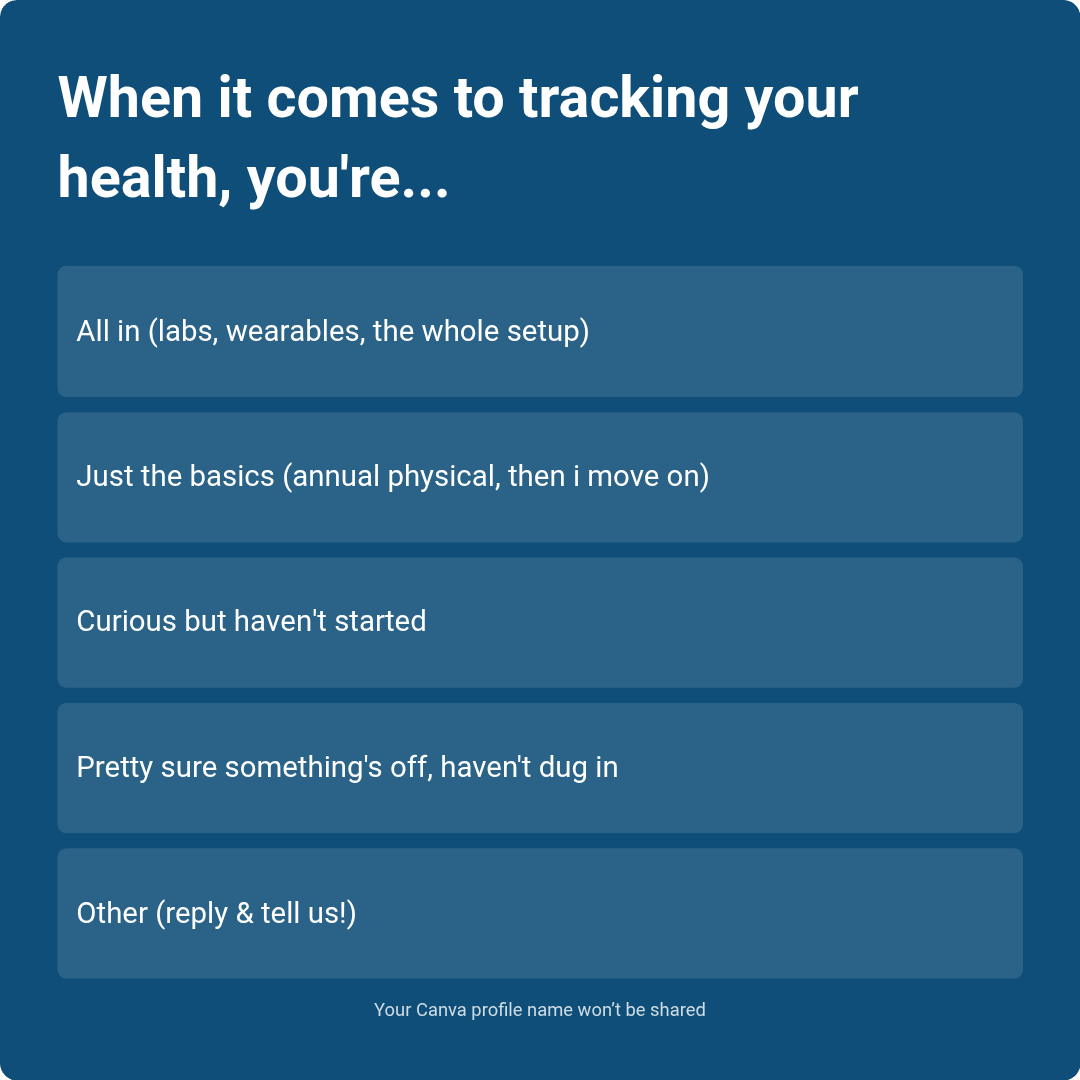
Have more feedback? 💌 Reply to this email and tell us.
✨ P.S. Want more inspiration and positivity to kick off your week? Sign up for our Motivational Monday texts (U.S. only).

👀 Want to see if your company is a good fit for our 250k+ ambitious readers? Join our Sponsor Waitlist here.