
Be honest with yourself for a second: how many products are currently sitting in your shower with less than a quarter left in the bottle?
The curl cream your favorite influencer wouldn’t shut up about. The volumizing shampoo that made your coworker’s hair look unreasonably good that one time. The leave-in that came home with you purely because it was 30% off.
None of them worked the way the label promised. It’s a “none of this was actually formulated for your hair” problem, and it’s fixable, once you know the two stats that matter way more than whatever hair type quiz you took in 2019.
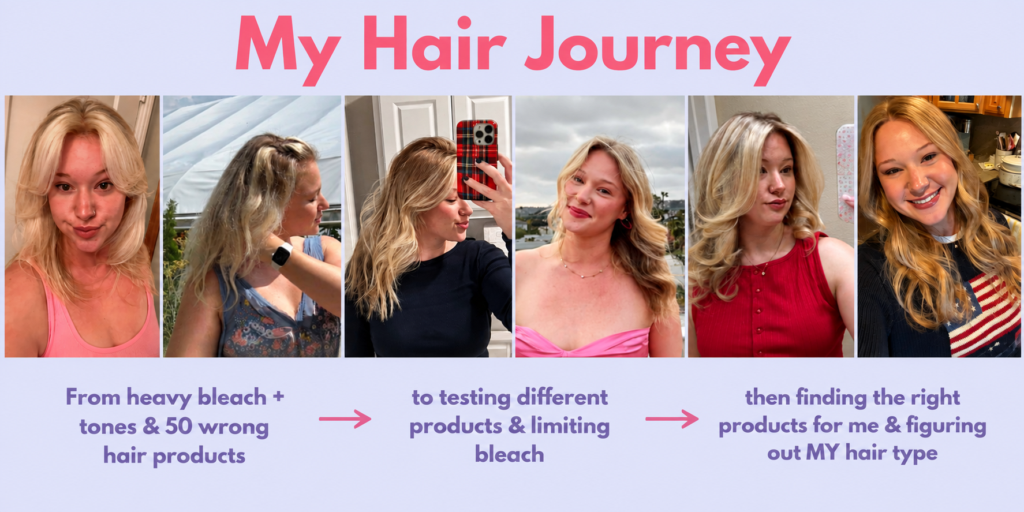
Cameron on our team actually ran herself through this whole system a while back, porosity test and all, and swears it’s the first time shopping for hair products stopped feeling like a slot machine.
Here are 7 things worth knowing before you buy a single new bottle.
1. Your “hair type” is real, but it’s not the whole story
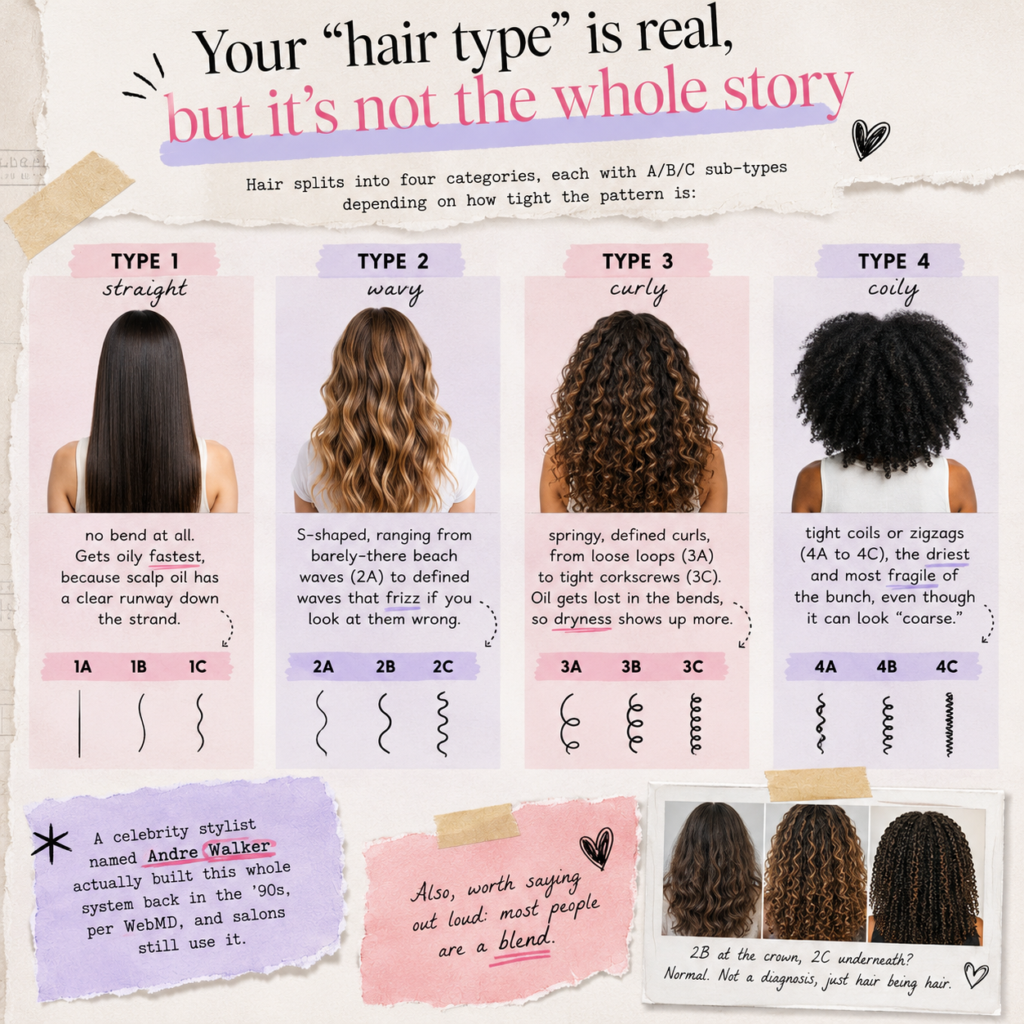 Hair splits into four categories, each with A/B/C sub-types depending on how tight the pattern is:
- Type 1 (straight): no bend at all. Gets oily fastest, because scalp oil has a clear runway down the strand.
- Type 2 (wavy): S-shaped, ranging from barely-there beach waves (2A) to defined waves that frizz if you look at them wrong (2C).
- Type 3 (curly): springy, defined curls, from loose loops (3A) to tight corkscrews (3C). Oil gets lost in the bends, so dryness shows up more.
- Type 4 (coily): tight coils or zigzags (4A to 4C), the driest and most fragile of the bunch, even though it can look “coarse.”
A celebrity stylist named Andre Walker actually built this whole system back in the ’90s, per WebMD, and salons still use it. Also, worth saying out loud: most people are a blend. 2B at the crown, 2C underneath? Normal. Not a diagnosis, just hair being hair.
2. The real main character is porosity, not your curl pattern
Ask literally any stylist why two people with the “same” curl pattern need completely different products, and the answer is almost never about type. It’s about porosity: how well your hair actually absorbs and holds onto moisture, per Healthline.
Low porosity hair is stubborn. Product sits on top and never really sinks in. High porosity hair is the opposite kind of dramatic: it soaks everything up immediately, then loses it just as fast. Same amount of product, wildly different results, and it has nothing to do with whether you’re a 2B or a 3A.
3. The float test is fun, but a little bit fake
You’ve probably heard this one: drop a clean strand of hair in a glass of water. Sinks fast, high porosity. Floats, low porosity.
Here’s the twist nobody mentions: cosmetic chemists have pushed back on this. Lab Muffin Beauty Science points out that whether a strand sinks or floats is mostly about surface damage and your hair’s natural oily coating, not the actual moisture absorbing inside the strand. So a strand can sink for reasons that have nothing to do with “real” porosity.
Do the test if you want, it’s genuinely fun and a little unhinged. Just also pay attention to how your hair behaves in real life: does product sit on top for hours, or does your hair drink it up and go dry again by 3pm? That’s the more honest read.
4. Fine strands want “weightless,” full stop
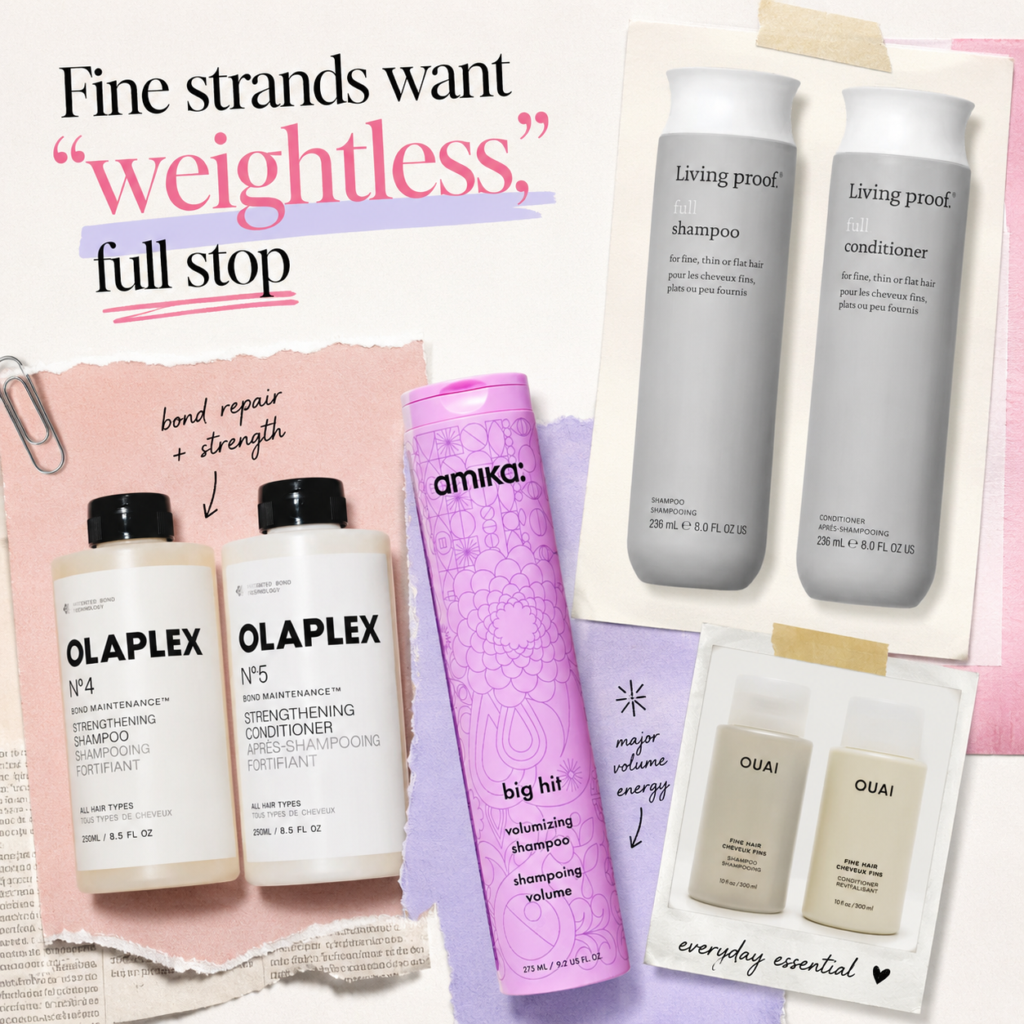
If your strands are fine, the label is doing you a favor when it says “volumizing” or “weightless.” Grab it. Living Proof’s Full Density shampoo and conditioner, amika’s Big Hit Volumizing Shampoo (built specifically for fine-to-medium hair, types 1 through 3A), and Olaplex’s No. 4 and No. 5 all clean without coating your strands in the heavy stuff that makes fine hair go flat by lunch. If you want a smaller everyday option, QUAI’s Fine Hair shampoo and conditioner does the job too.
Whatever you do, put down anything labeled “intense moisture.” That’s a different hair type’s whole personality, and on fine strands it just reads as greasy.
5. Coarse or thick strands can (and should) go rich
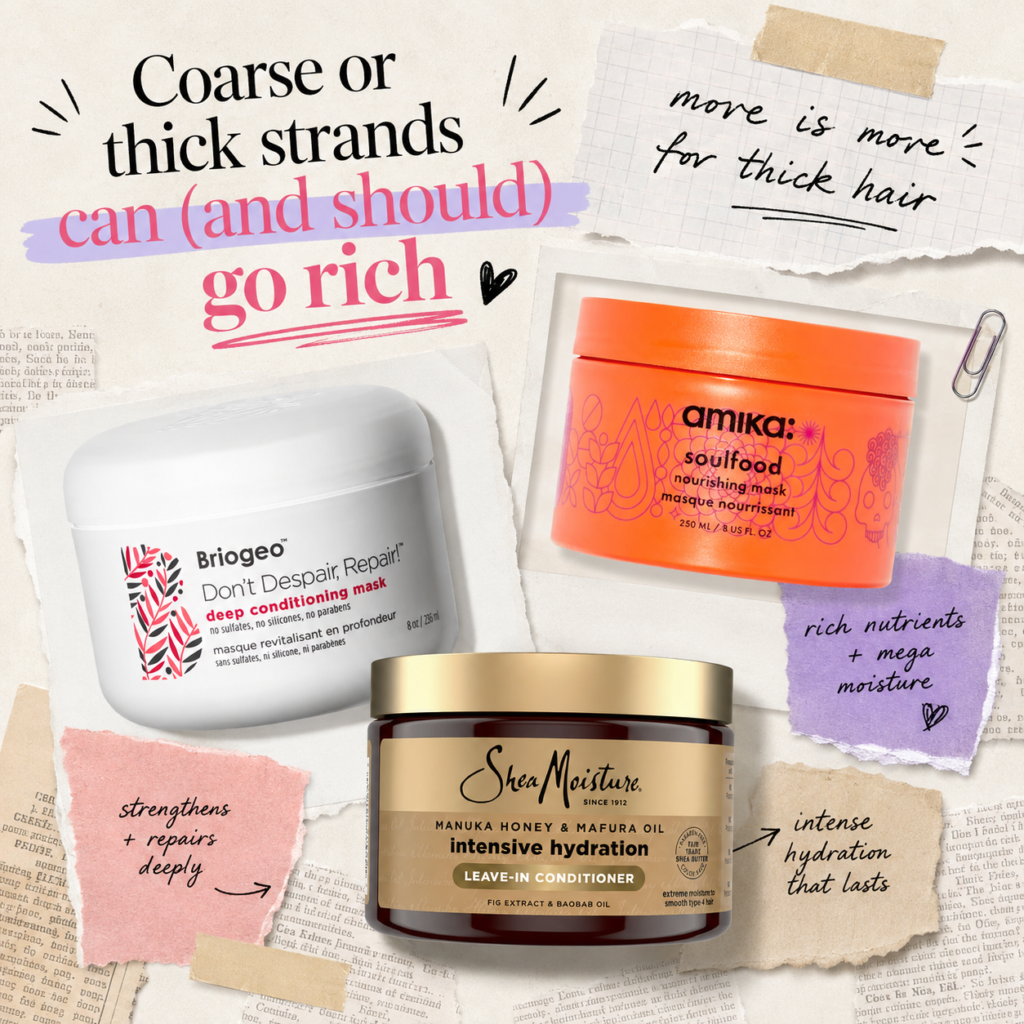
This is the one hair type where “more is more” is actually correct advice. Briogeo’s Don’t Despair Repair mask, Shea Moisture’s Manuka Honey line, and amika’s Soulfood Nourishing Mask (formulated for hair types 1 through 4C, with jojoba oil and sea buckthorn to put back what the shower strips out) can all handle regular use without weighing this hair type down. Dense formulas actually register here instead of disappearing the second you rinse.
6. High and low porosity need opposite pep talks
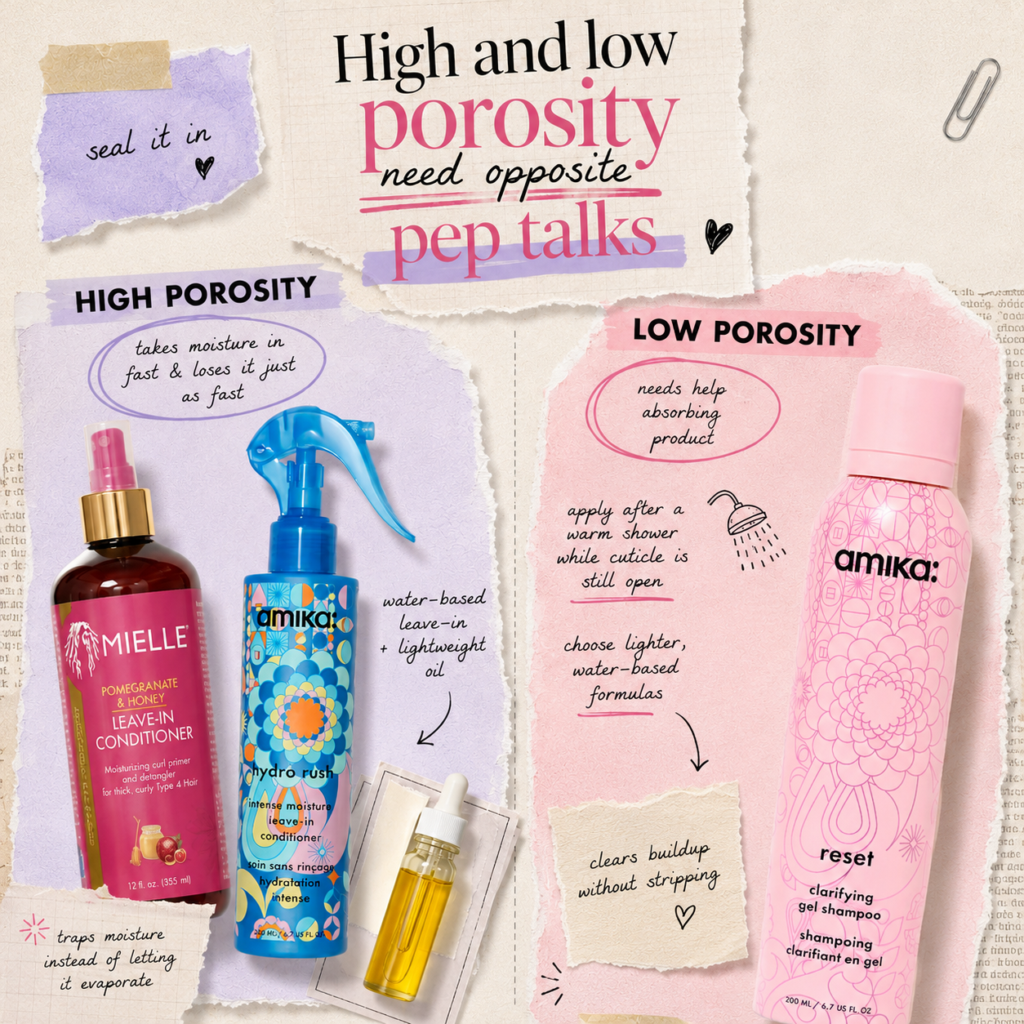
High porosity takes moisture in fast and loses it just as fast, so the job is sealing it in. A water-based leave-in like Mielle’s Pomegranate & Honey or amika’s Hydro Rush Intense Moisture Leave-In, followed by a lightweight oil (argan or grapeseed both work), traps that moisture instead of letting it evaporate within the hour.
Low porosity needs help just getting product to absorb at all. Apply conditioner or masks right after a warm shower, while the cuticle’s still a little open from the heat, and reach for lighter, water-based formulas instead of heavy butters, which just sit there looking dramatic and doing nothing. If scalp buildup is making things worse, amika’s Reset Clarifying Gel Shampoo, sulfate-free and built to lift buildup without stripping, can clear the runway.
7. Curl types 2–4, meet your new favorite acronym: LOC
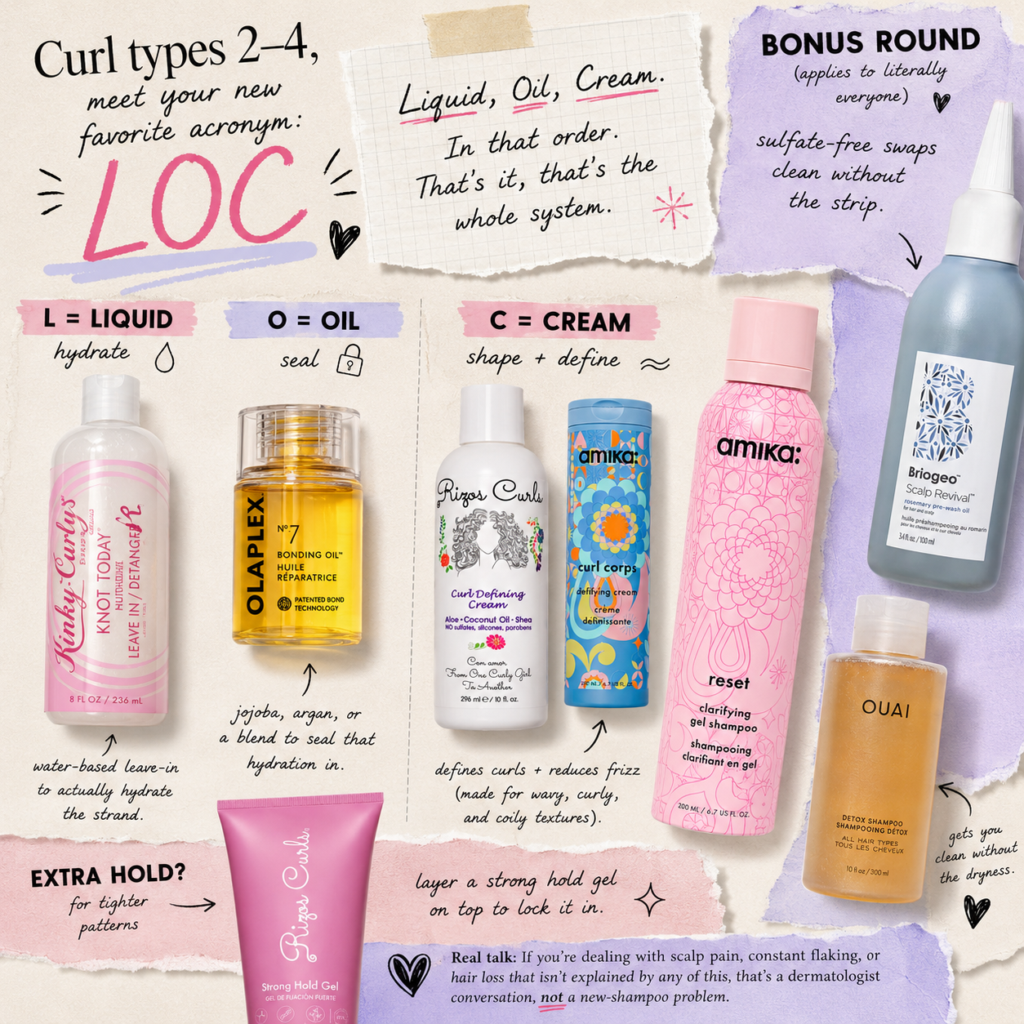
Liquid, oil, cream. In that order. That’s it, that’s the whole system, and stylists keep coming back to it for a reason.
Liquid: a water-based leave-in, like Kinky-Curly Knot Today, to actually hydrate the strand.
Oil: jojoba, argan, or a blend, like Olaplex’s No. 7 Bonding Oil, to seal that hydration in before it escapes.
Cream: Rizos Curls Defining Cream or amika’s Curl Corps Defining Cream (made for wavy, curly, and coily textures, sea buckthorn and oat peptide included, for hold without the crunch) to shape the curl and shut down frizz. Tighter patterns that need serious hold can layer Rizos Curls’ Strong Hold Gel on top.
Bonus round, because it applies to literally everyone: sulfates clean hair effectively, but that same strong detergent action can leave hair and scalp drier than they need to be, something dermatologists back up rather than just internet lore, per NBC News. A sulfate-free swap, like Briogeo’s Scalp Revival Pre-Wash Oil, amika’s Reset shampoo, or QUAI’s Detox Shampoo, still gets you clean without the strip. Worth prioritizing if your hair leans dry, curly, coily, or color-treated, since those textures don’t have oil to spare.
(Quick real talk: if you’re dealing with actual scalp pain, constant flaking, or hair loss that isn’t explained by any of this, that’s a dermatologist conversation, not a new-shampoo problem.)
The Takeaway
You don’t need twelve products lined up like trophies. You need the two or three that match your porosity and your strand thickness, because that combo will tell you more than any quiz ever will. Everything else is just an expensive way of finding that out the hard way.
People Frequently Ask These Questions
Q: Can my hair actually be more than one type?
A: Yes, and it usually is. 2B at the crown, 2C underneath, is a completely normal texture blend, not a sign you’re doing something wrong.
Q: Is the float test actually reliable?
A: It’s a fun starting point, not gospel. Cosmetic chemists say it mostly picks up on surface damage, not true water absorption, so pair it with how your hair actually behaves day to day.
Q: Do fine hair and coarse hair really need totally different products?
A: Pretty much. Fine strands want volumizing or weightless formulas so they don’t go flat. Coarse or thick strands can handle, and usually need, richer formulas to feel like anything happened at all.
Q: Will sulfate-free shampoo still get my hair clean?
A: Yes. It just cleans without stripping as much natural oil, which is why it’s the better call for dry, curly, coily, or color-treated hair.
Q:Who should actually use the LOC method?
A: Curl types 2 through 4. Straight hair (type 1) doesn’t need the layering since it doesn’t lose moisture the same way curlier textures do.