
Somewhere between “we used to want each other constantly” and “I would rather fold laundry,” a lot of women quietly start wondering if something is wrong with them. Here’s the short version: probably not. Libido isn’t a single dial that’s supposed to sit at the same number for everyone, forever. It moves, it varies by person, and it’s shaped by everything from your sleep last week to the medication in your cabinet to what’s going on in your relationship. This guide covers why your sex drive looks nothing like your best friend’s, what’s actually behind low libido, the things that help before you spend a dollar, and the products, books, and tools worth adding to the mix.
Key takeaways
- There’s no universal “normal” libido. Cleveland Clinic notes that low sex drive affects up to 1 in 5 men, and even more women, at some point in life.
- Desire comes in two main styles: spontaneous (wanting sex out of nowhere) and responsive (desire that shows up after arousal starts). Most women lean responsive, most men lean spontaneous, and both are completely normal.
- Mismatched libido between partners isn’t a red flag on its own. Researchers call it desire discrepancy, and it’s one of the most common reasons couples end up in therapy.
- Low desire only becomes a diagnosable condition (HSDD) when it causes you real distress, not just because your drive is lower than someone else’s.
- Sleep, stress, alcohol, certain medications, and hormonal shifts (postpartum, perimenopause, birth control) are some of the biggest, most fixable levers.
- FDA-approved medications exist for low desire in women, alongside lubricants, vibrators, books, and apps that can meaningfully help.
Why is everyone’s libido so different?
Desire comes in two distinct styles, and most of the confusion around “mismatched” libido starts with not knowing which one you have.
Dr. Rosemary Basson, a sexual medicine specialist, mapped this out in her Non-Linear Model of Female Sexual Response after noticing that many of her patients didn’t experience desire as a bolt out of the blue. She named two patterns. Spontaneous desire works like a microwave: wanting sex shows up on its own, no setup required. Responsive desire works like an oven that needs preheating: desire arrives after pleasurable touch, connection, or arousal is already underway, not before it.
The split isn’t even close to fifty-fifty. Roughly 70% of men and only 10 to 20% of women experience spontaneous desire regularly, while about 30% of women (and a much smaller share of men) run mostly on responsive desire. If you’ve never once felt desire appear out of nowhere and assumed that meant something was off, that’s most likely just your wiring, not a malfunction.
Is there such a thing as a “normal” sex drive?
No, and that’s not a cop-out answer. Cleveland Clinic is direct about it: “Everyone’s sex drive is different, and it can change throughout your life.” There’s no baseline number of times per week or month you’re supposed to hit.
What Cleveland Clinic does put a number on is how common low libido is: it affects up to 1 in 5 men, and even more women, at some point in life. That reframes the whole question. Low desire isn’t a rare malfunction you should feel isolated by. It’s closer to the norm at some point for most people, which is exactly why it’s worth understanding instead of quietly worrying about alone.
What actually causes low libido?
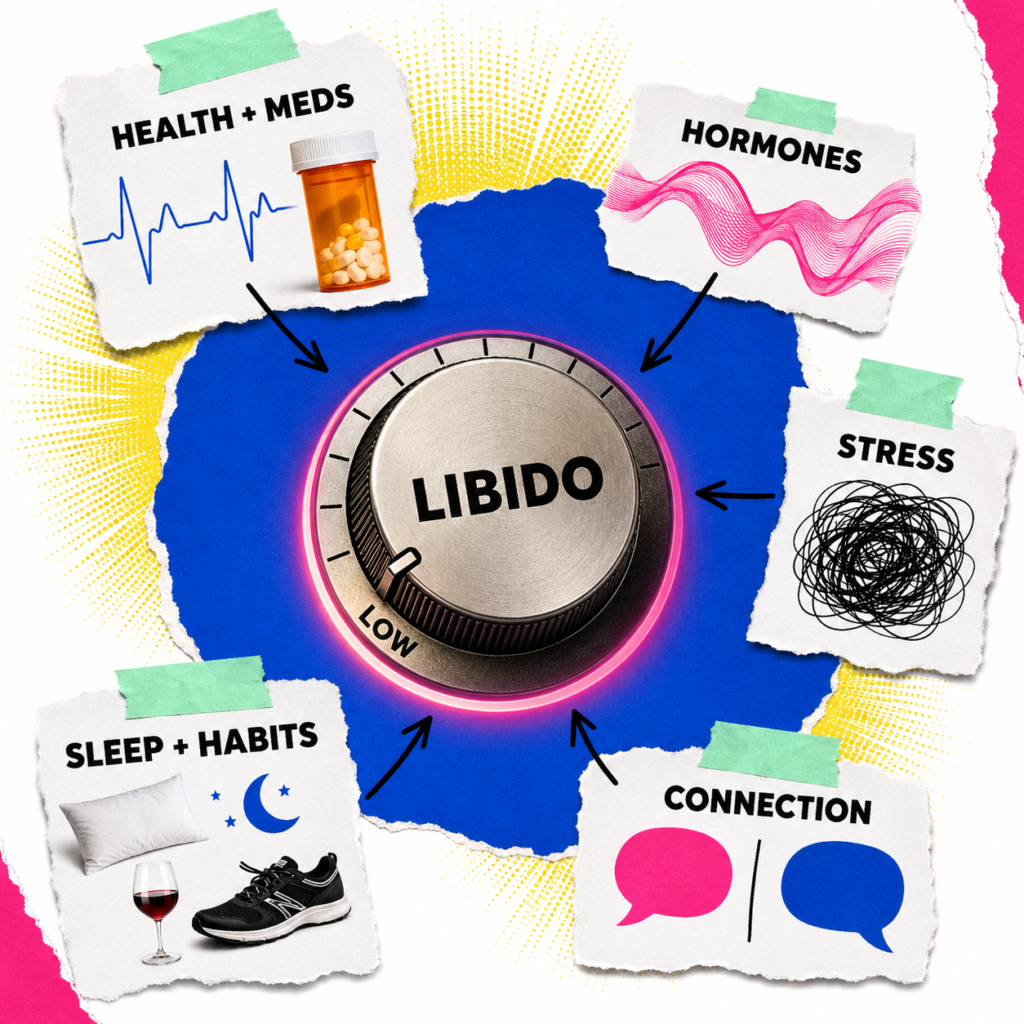
Low libido is almost never one thing. It’s usually two or three factors stacking on top of each other.
Physical health. Diabetes, heart disease, chronic pain, and thyroid conditions can all lower desire, and certain medications, especially antidepressants and blood pressure drugs, are common culprits too. SSRIs specifically are worth calling out. Harvard Health notes that 35% to 50% of people with untreated major depression already have some sexual dysfunction before they ever start medication, which makes it genuinely hard to tell what’s the depression and what’s the drug. If you’re on an SSRI and notice a change, that’s worth a conversation with your prescriber. Dose adjustments, timing changes, or switching to an option like bupropion can make a real difference, and you should never stop a psychiatric medication on your own.
Mental and emotional load. Depression, anxiety, chronic stress, poor body image, and past trauma all show up in the bedroom before they show up anywhere else.
Lifestyle. Alcohol, poor sleep, and too little (or too much) exercise all lower desire. Sleep in particular is underrated here: one study found women’s libido increased by 14% for every additional hour of sleep they got, and chronic sleep loss can lower testosterone in a way that suppresses desire further, which means the “too tired for sex” cliché is often just biology being honest with you.
Relationship factors. Unresolved conflict, poor communication, and plain old disconnection lower desire just as reliably as anything physical does.
Why do couples’ sex drives clash so often?
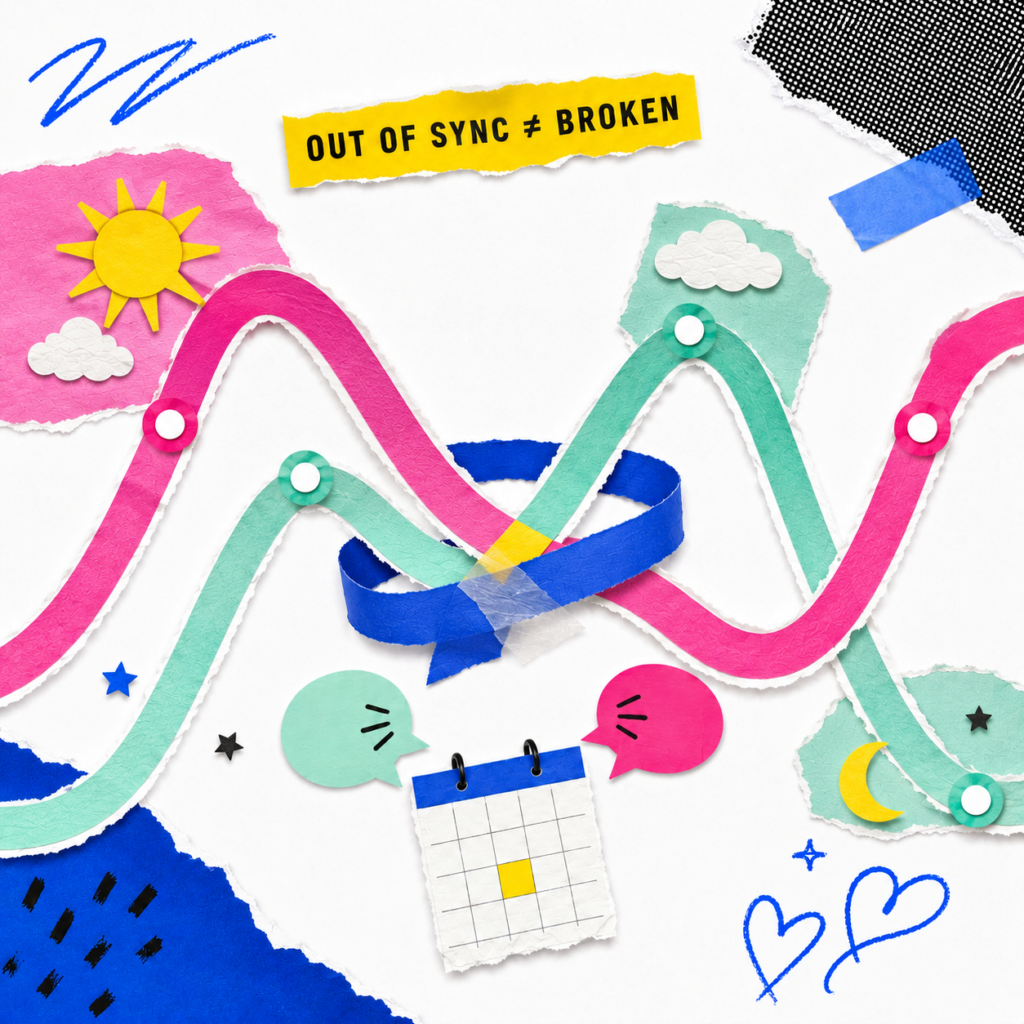 Because it’s statistically closer to expected than not. Researchers call the gap between partners’ desire levels “desire discrepancy,” and a 2020 study on the topic found it’s among the main reasons couples show up in therapy in the first place. Even happy, well-matched couples aren’t perfectly in sync all the time. Desire naturally ebbs and flows for each person, and those cycles don’t always line up.
That reframe matters. A mismatch isn’t proof your relationship is broken or that your partner has stopped being attracted to you. It’s closer to weather than a verdict. The couples who navigate it well tend to talk about it directly, plan for it (scheduling intimacy sounds unromantic and works anyway), and lean on responsive desire, since starting something physical, even a hug or a slow makeout, can build desire that wasn’t there five minutes earlier.
When does low desire count as a medical condition?
Only when it’s causing you real distress, not simply because it’s lower than you’d like or lower than someone else’s.
That’s the clinical definition of Hypoactive Sexual Desire Disorder (HSDD): a chronic, ongoing lack of interest in sex that causes personal or relationship distress, according to the Sexual Medicine Society of North America. Distress is the deciding factor. Low desire that doesn’t bother you isn’t a disorder; it’s just where you are right now.
HSDD is more common than most people realize. An estimated 22% of women and 5% of men experience it on an ongoing basis, and up to 40% of women may receive the diagnosis at some point in their life, making it the most common female sexual dysfunction. Causes overlap heavily with the list above: physical conditions, hormonal shifts, mental health, and relationship strain. Diagnosis isn’t a blood test or a scan; it comes down to how much distress you’re carrying and whether it’s affecting your life.
What can help, before you buy anything?
The free interventions genuinely move the needle, and they’re worth trying before or alongside anything you’d add to a cart.
Protect your sleep. This is the highest-leverage, lowest-effort fix on the list. If you’re chronically underslept, that’s very likely showing up in your desire before it shows up anywhere else.
Look at your alcohol intake. A drink can lower inhibitions, but regular heavier drinking works against arousal and desire, not for it.
Name the mismatch out loud. If your libido and your partner’s aren’t matching up, say so directly instead of letting it sit as an unspoken tension. Couples who talk about desire discrepancy openly navigate it better than couples who don’t.
Lean into responsive desire. If you’re someone who rarely feels spontaneous desire, stop waiting for it. Starting with low-stakes physical affection, even just a real kiss or a back rub with no expectations attached, is often what activates desire rather than the other way around.
Consider a sex therapist. A certified sex therapist can work through the psychological and relational side (stress, body image, trauma, communication patterns) that a prescription can’t touch. This isn’t just for couples in crisis; plenty of people go for what amounts to a tune-up.
What products can actually help?
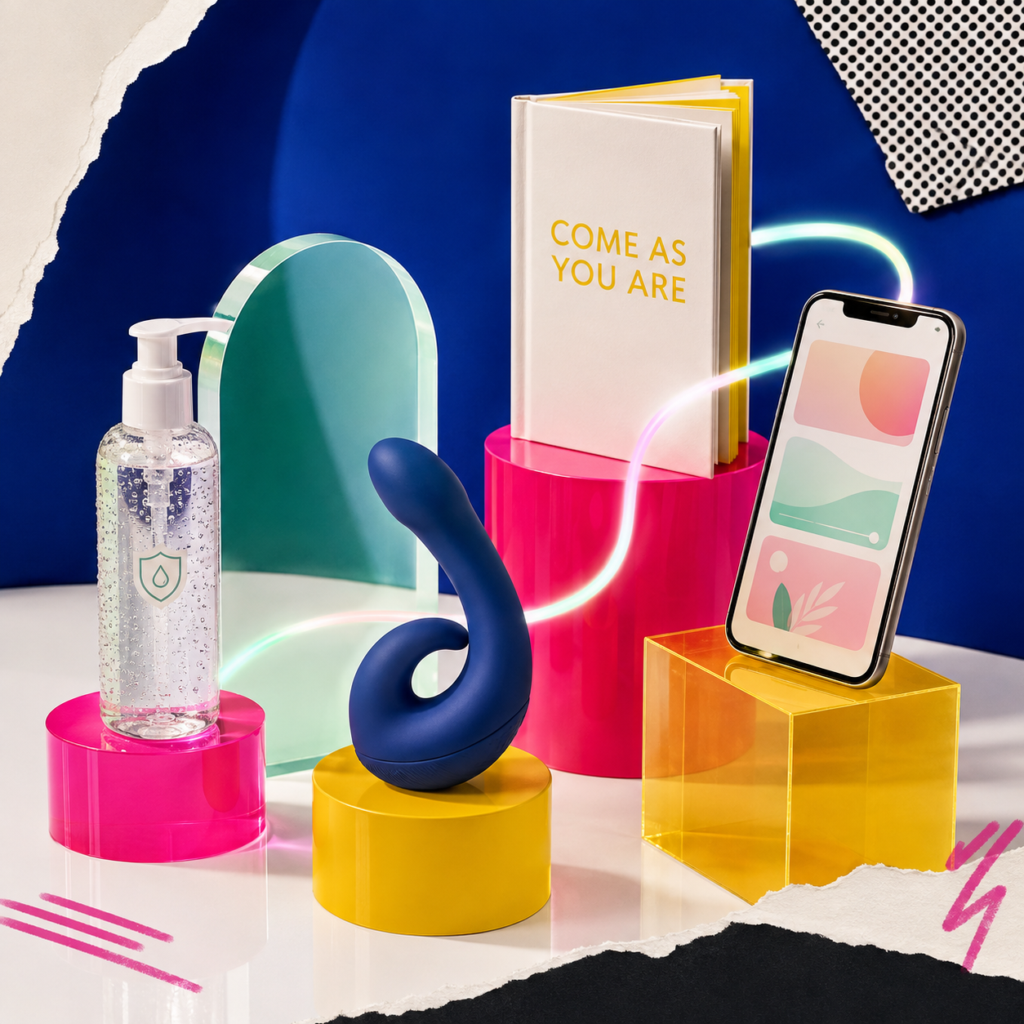
Once the fundamentals are covered, a few specific products are genuinely worth having around.
A lubricant that actually works with your body. Cleveland Clinic recommends starting with a water-based lubricant: minimal ingredients, low irritation risk, and safe with condoms, though it doesn’t last as long. Silicone-based lubricant lasts longer and feels thicker, but skip it if you’re using silicone toys, since it degrades the material. Skip natural oils entirely (coconut, olive, almond) and anything petroleum-based: they’re not FDA-approved as lubricants, they break down latex condoms, and they can raise infection risk. “Natural doesn’t always mean safer or better,” as Cleveland Clinic puts it. If a lubricant is stinging, tingling, or warming, that’s usually added fragrance or flavoring doing more harm than good, not a feature.
A vibrator built for how responsive desire actually works. The MysteryVibe Crescendo 2 is a doctor-designed, body-safe silicone vibrator with a patented flexible design that bends into different shapes to fit different bodies and different moments, solo or with a partner. It runs six individually controlled motors along its length so there’s no dead zone, offers 16 vibration patterns through the MysteryVibe app (or onboard buttons, no app required), is shower-safe, and comes with a 24-month warranty. (Placeholder link, swap for your affiliate URL once you have it.) For anyone who runs on responsive desire, having something built specifically to help arousal along, rather than assuming desire will show up first, is exactly the point.
A book that actually explains the science. Come As You Are by Emily Nagoski is the most commonly recommended, research-grounded book on this topic for a reason: it’s where the spontaneous-versus-responsive framework above reaches most readers, in plain language, without judgment. (Linked to Goodreads as a neutral placeholder; swap for a bookseller or affiliate link if you have one.)
An app built for couples, not just individuals. Coral is a sexual wellness app designed with clinicians and sex therapists, built around guided intimacy exercises and daily prompts for couples working through exactly this kind of mismatch, rather than generic content aimed at one partner. (Linked to the app’s own site as a neutral placeholder; swap for an affiliate link if you have one.)
What medical treatments exist for low libido?
For women whose low desire crosses into HSDD and isn’t explained by a medical condition, medication, or relationship problem, there are FDA-approved options.
Addyi (flibanserin) is a daily pill taken at bedtime, available since 2015, that typically takes about two months to start working. It can’t be mixed with alcohol due to a real risk of low blood pressure and fainting, and dizziness, sleepiness, and nausea are the most common side effects, each affecting roughly 10 to 11% of users. Vyleesi (bremelanotide) works differently: it’s an on-demand injection taken at least 45 minutes before sex, with fewer alcohol restrictions but a higher rate of nausea, around 40% of users, along with flushing and injection-site reactions. Both require ruling out other causes first, since they’re specifically for HSDD, not low desire with an identifiable cause.
Other options a doctor might raise: vaginal DHEA for postmenopausal dryness-related low desire, and bupropion, sometimes prescribed off-label since it’s one of the few antidepressants that can increase rather than reduce libido. For some menopausal women whose desire doesn’t improve on hormone therapy alone, doctors may also consider low-dose testosterone added under specialist supervision. That last one is genuinely effective for the right candidate, but it’s off-label in most places, requires baseline and follow-up bloodwork, and isn’t a first step; it’s something to discuss with a menopause specialist if the more standard options haven’t worked.
When should you see a doctor?
See a doctor or a certified sex therapist when low desire is bothering you, not because it’s lower than a number you think you’re supposed to hit. A sudden, unexplained change (especially alongside pain, fatigue, mood changes, or other new symptoms) is worth a visit specifically to rule out an underlying medical cause. If you’re on a medication you suspect is affecting your libido, bring it up with the prescriber before changing anything on your own. And if the issue feels more relational than physical, a sex therapist is a completely legitimate and common next step, not a last resort.
Your libido isn’t broken, it’s just yours
The goal was never to get your sex drive to match anyone else’s, including the version of yourself from five years ago. Understanding what type of desire you have, what’s actually affecting it, and what genuinely helps gets you a lot further than comparing yourself to a standard that was never real to begin with.
People also ask about libido and sex drive
Q: Why is my sex drive so much lower than my partner’s?
A: Desire naturally varies by person and rarely matches perfectly between partners. Researchers call this desire discrepancy, and it’s one of the most common reasons couples seek therapy. It’s not automatically a sign of a relationship problem.
Q: What’s the difference between spontaneous and responsive desire?
A: Spontaneous desire appears on its own, without buildup. Responsive desire develops after arousal or affection is already underway. Most men lean spontaneous and most women lean responsive, and both patterns are considered normal.
Q: Is low libido a medical condition?
A: It only becomes one, specifically Hypoactive Sexual Desire Disorder (HSDD), when it causes real personal or relationship distress. Low desire that doesn’t bother you isn’t a disorder.
Q: Can medication cause low libido?
A: Yes. Antidepressants, especially SSRIs, and blood pressure medications are common causes. Talk to your prescriber before changing a dose or stopping a medication on your own.
Q: What actually helps with low libido?
A: Protecting your sleep, cutting back on alcohol, open communication with a partner, and leaning into responsive desire (starting with affection instead of waiting for desire to appear first) are the highest-impact free changes. Lubricant, a vibrator suited to your body, and in some cases FDA-approved medication can help further.
Q: Are there FDA-approved medications for low sex drive in women?
Want more of this in your inbox? Wellness Wednesday brings you research-backed wellness, real talk, and product picks the team actually uses. Sign up here.
Last updated: August 2026
This article is informational and not medical advice. If low libido is affecting your well-being or your relationship, talk to a licensed doctor or a certified sex therapist.