
✅ Today’s Checklist:
- Nail your first 90 days in a new role
- Fix a to-do list that won’t fit in the day
- Why being in the room matters
🤔 Riddle me this: I arrive with longer days, sunscreen smells, and calendars suddenly packed with plans. What am I? (Find the answer on the bottom).
QUICK LINKS
💰 The salary negotiation framework for the raise you’ve been talking yourself out of asking for.
📋 Twenty ChatGPT prompts for GTD, Pomodoro, and every other productivity method you’ve meant to try.
✨ Five small work habits that compound faster than you’d expect.
🌿 Stress relievers for when work has your nervous system tied in knots.
FIRST 90 DAYS

The First 90 Days That Actually Set You Up to Win
Starting a new job is exciting and nerve-wracking, and the temptation to come in fast and prove yourself is real. That instinct is understandable. It’s also one of the fastest ways to land off-balance with the team you’re trying to win over.
Research backs this up: your first 90 days largely determine your performance, longevity, and contribution in a role. The professionals who thrive aren’t the ones changing everything. They’re the ones who slow down so they can move faster later.
Here’s how to approach it.
Days 1–30: listen, observe, use your built-in superpower
For your first month, your job is to observe. Learn the language, watch how decisions actually get made, map the key players and how they relate to each other. Take notes in every meeting, partly to remember and partly because writing things down forces you to pay attention.
The overlooked move: being new is a superpower. For about 90 days you have a built-in reason to ask anyone in the org for time, and most people will say yes. Build a VIP list of 10–20 people who can influence your trajectory (your manager, teammates, cross-functional partners, leaders two levels up), and start sending coffee requests:
“Hi [Name], I’m [Your Name] and I just joined [Team]. Would love to grab 20 minutes to learn about your role and where we’ll work together.”
Good questions to bring:
What are you and your team working on?
If you had a magic wand, what could our team do to make your life easier
What’s your best advice for someone new here?
Document what people share, including personal details like hobbies or kids’ names. Those notes become your relationship roadmap.
Say yes to the social stuff. The happy hours, the team lunches, the casual Friday hallway conversations. A lot of the real context lives in informal moments, and showing up signals you’re invested in the people, not just the job.
Hold the urge to suggest big changes. Even if you can already see what could be improved, coming in with solutions before you understand the problems almost never lands the way you’d hope.
Days 31–60: start connecting the dots
By now you’ve got a clearer picture. This is when you start building a point of view. What did you notice in month one? What are people frustrated by? What’s working that no one’s talking about?
Look for “double dip” wins: themes that came up in multiple conversations. If three different people named the same pain point, that’s a signal worth a strategy.
This is also when to get crisp on what your manager actually needs from you. Concrete priorities, what success looks like, where the bar is. Align before you execute.
Days 61–90: deliver, then close the loop
Now you execute. Look for one or two places to make a tangible impact — something that shows you’ve been paying attention and that you can be trusted to follow through.
Then close the loop with the people who informed your thinking. Go back to your VIP list and share what you did with what they told you. That follow-through is what turns a pleasant coffee chat into a real working relationship, and it signals you actually listen and act.
Set goals for the next 6–12 months grounded in what you now know. Be specific about what you want to do, why it matters, and how you’ll get there.
The one thing that holds across all 90 days
Trust gets built slowly and lost quickly, and the foundation of it is consistency. Be the same person on day three that you are on day ninety. Show up curious. Follow through. Ask more than you tell.
The strongest impressions in new roles don’t come from the people with the most answers. They come from the ones who ask the best questions, and actually do something with what they hear.
If you’re stepping into a new role as a manager, the first 90 days for managers is here.
RISK PREVENTION
When Harassment Training Gets Tuned Out, the Risk Doesn’t Go Away
Most harassment training was designed for a checkbox, not for the people sitting through it. Employees click through. Managers nod along. The signals — the comment that should have been called out, the dynamic that should have been escalated — keep getting missed.
The legal exposure compounds. So does the culture cost.
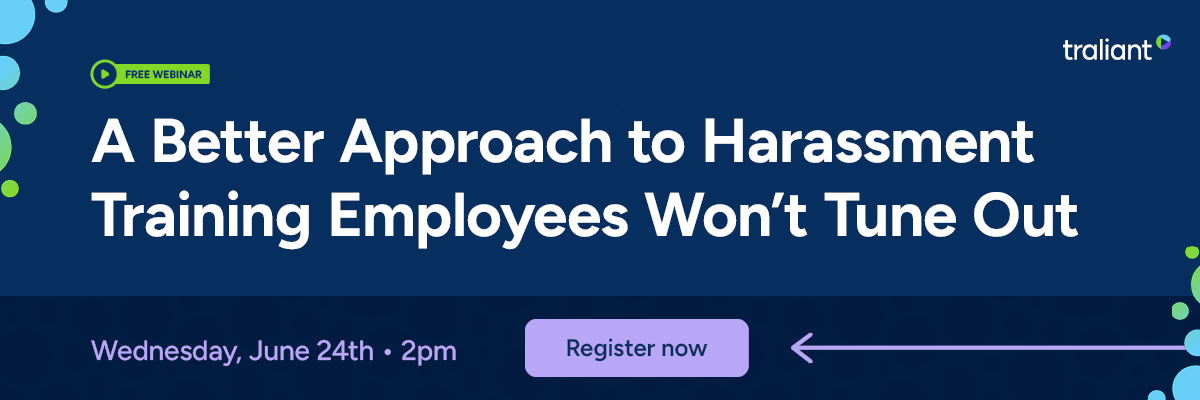
Traliant’s redesigned 2026 Preventing Workplace Harassment training is built around realistic, TV-style workplace scenarios employees recognize from their own day. Led by Chief Learning Officer Shelby Cooney, the free June 24 webinar (2–3 pm ET) previews the program.
What HR leaders walk away with:
- Why traditional harassment training disengages employees (and how to spot it on your team)
- How realistic workplace scenarios help employees recognize concerns earlier
- How role-specific learning sharpens manager preparedness and reporting confidence
- How customization and smart assignment logic build more defensible programs
SHRM and HRCI credit included for attending.
BIGGEST CHALLENGE

How To Manage A To-Do List That’s Longer Than The Day
“As a founder, my biggest challenge is a to-do list that is sometimes too long for a day. I have ClickUp to get organized and optimized, still navigating that platform.” — Paige M.
First of all, congratulations on doing your own thing. Building something from scratch is no small feat, and the chaos of a never-ending to-do list is basically a rite of passage in the startup world.
A to-do list that’s too long for the day is usually a prioritization problem in disguise. And prioritization is actually much easier to fix than productivity.
Not everything on your list deserves to be there
The first and most important shift a founder can make is learning to ruthlessly evaluate what actually moves the needle. Every task on your list should earn its spot by answering one question: does this drive revenue, retain customers, or build something essential?
Done is better than perfect, and something done adequately by someone else almost always beats something perfect that never gets finished because you ran out of hours.
Do a calendar audit
Before you reorganize your to-do list, audit where your time is actually going. Pull up the last two months of your calendar and look for patterns.
Where are you spending the most time? Where are you losing it? Are there repetitive tasks showing up week after week that could be automated or handed off? Are there meetings or commitments that are not serving the business at the level they should be?
This audit will show you exactly where the leaks are, and that is where to start plugging them.
Automate, delegate, and outsource more than feels comfortable
Part of growing as a founder is moving away from the individual contributor mindset. The goal is to get to a place where your to-do list contains only the things that only you can do.
Everything else is fair game for delegation or automation. A few places to start:
- AI tools (ie: Claude, Granola, Tavily, Wispr, etc) can dramatically reduce the time spent on writing, research, scheduling, customer communication, and more. If a task is repetitive and language based, there is likely an AI tool that can handle it faster than you can.
- A virtual assistant based overseas or a talented college student can take on administrative tasks, social media management, inbox triage, and more at a fraction of the cost of a full time hire.
- Platforms with databases and wikis are powerful once set up properly. (We use Notion but pick whatever you like!) If you are still learning a platform,, consider spending a few hours watching tutorials or hiring someone to build out your workspace. The upfront investment pays off quickly.
Prioritize like a founder, not a to-do list checker
At the start of each day, identify the two or three tasks that would make the day a success if nothing else got done. Those go first. Everything else is secondary.
This reframes the goal from clearing the list, which is often impossible, to moving the business forward in the most meaningful way possible every single day.
A shorter, smarter to-do list means doing the right things, in the right order, with the right support around you.
SMARTER PRINTING

When Your Print Vendor Catches the Mistake Too Late
Too many print vendors run like fulfillment machines. Files go in, product comes out, and the problems (wrong specs, off color, layout slip, missed timeline) surface only when the boxes show up at your door.
Printwell catches that before production. A real team reviews every project up front: potential issues flagged early, questions asked, details double-checked. Production stays in house, which means tighter control over quality, communication, and timeline from start to finish.
For teams producing catalogs, magazines, direct mail, brochures, lookbooks, or anything else the brand can’t afford to get wrong, that level of oversight is the difference between a confident press run and a Slack message you didn’t want to send.
STAFF PICKS
Stuff We’re Loving This Week
📆 IN TWO DAYS: Join Scott Galloway to learn how to transform your teams into AI powerhouses. RSVP FREE.
🏡 Slippers that feel like a small luxury the moment you change into them after work.
🕯️ This California candle smells exactly like the place you wish you were vacationing.
⌚ The everyday watch that finishes every outfit without trying.
JUST FOR FUN

COMMUNITY
 Upcoming Events
- Thurs 6/4 @ 9AM PT: Watch Me Work: Claude (SGS Only* | Join the waitlist)
- Tues 6/9 @ 1PM PT: Co-working Session (SGS Only* | Join the waitlist)
- Thurs 6/11 @ 9AM PT: Management Workshop: Employee Development (SGS Only* | Join the waitlist)
- Thurs 6/11 @ 12PM PT: Speaking Like an Executive (SGS Only* | Join the waitlist)
* Smart Girl Society is our private community for women who want deeper conversations, accountability, and tools that actually make life easier. Join the waitlist to get in the next round.
 Work Wisdom of the Week:
“Be in the room. My mentor, who has retired since she shared that sentiment with me, said women need to be in the room. Even if it is an after-work event with all men and you want to just go home after the day, go, be in the room. It’s where the decisions are discussed and ideas abound. Be there.”

Jill Petri (SVP, Commercial Fair and Responsible Banking Manager)


SPILL THE TEA
Take Our Poll
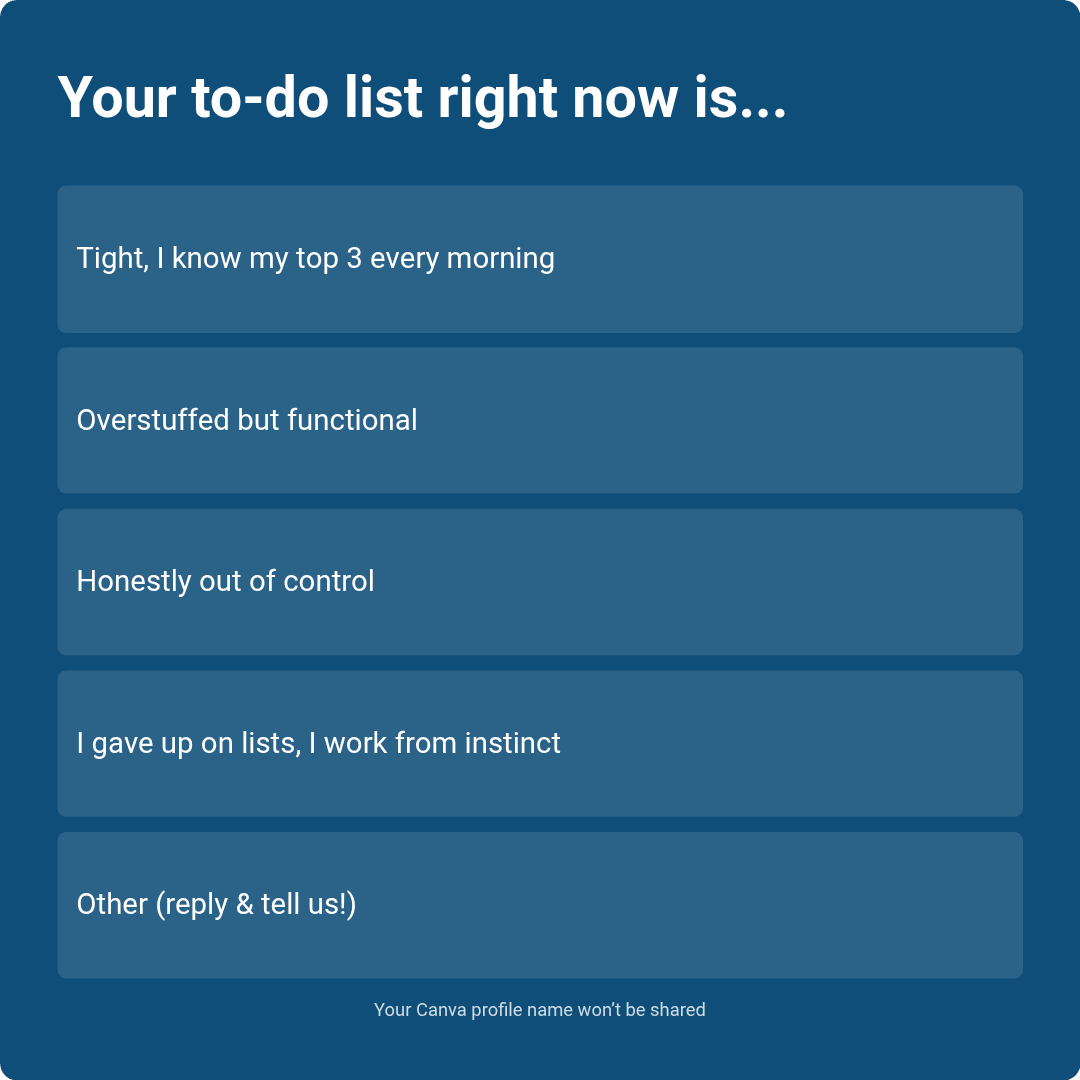
Have more feedback? 💌 Reply to this email and tell us.
✨ P.S. Want more inspiration and positivity to kick off your week? Sign up for our Motivational Monday texts (U.S. only).
👀 Want to see if your company is a good fit for our 250k+ ambitious readers? Join our Sponsor Waitlist here.